
Life, 1911-11-30 · page 15 of 40
Life — November 30, 1911 — page 15: what you’re looking at
What you’re looking at
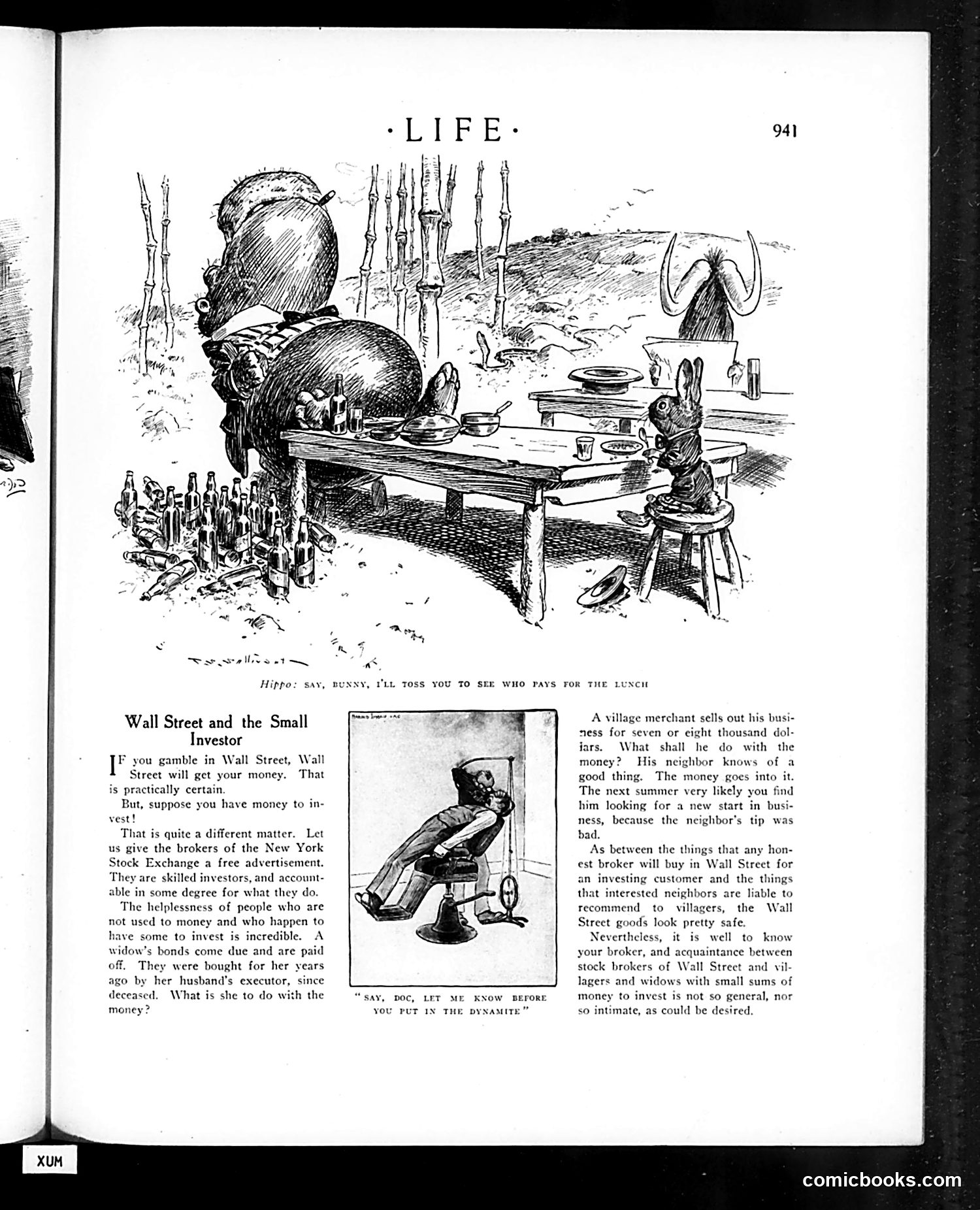
This satirical piece uses two cartoons to critique investment practices. The top cartoon shows animals at a dining table—likely representing foolish investors—gambling over who pays for lunch, suggesting casual financial recklessness. The bottom illustration depicts a man in a chair being pitched a dubious "dynamite" investment tip, captioned to warn investors before committing funds. The accompanying article argues that while professional Wall Street brokers are "skilled investors," ordinary people—widows managing inherited bonds, village merchants with sudden capital—are vulnerable to bad advice. The satire's point: unsophisticated investors lack connections to trustworthy brokers and instead rely on well-meaning but ignorant neighbors' tips, leading to financial losses. The piece advocates for better access between small investors and legitimate Wall Street firms, not because Wall Street is altruistic, but because its regulated brokers are preferable to amateur "tips."
📄 Transcribed text from this page (OCR, searchable)
Machine-transcribed from the original scan — historical spelling and the odd misread are preserved.
wer ellis et Hippo: sav, Wall Street and the Small Investor I you gamble in Wall Street, Wall Street will get your money. That is practically certain. But, suppose you have moncy to in- vest! That is quite a different matter. Let us give the brokers of the New York xchange a free advertisement. re skilled investors, and account- able in some degree for what they do. The helplessness of people who are not used to money and who happen to have some to invest is incredible. A widow’s bonds come due and are paid off. They were bought for her years ago by her husband's executo: deceased. What is she to do with the money? since BUNNY, I'LL TOSS YOU TO SEE WHO PAYS FoR THE LUNCH say, you voc, KNOW BEFORE PUT IN THE DYNAMITE” LET ME A village merchant sells out his busi- ness for seven or eight thousand dol- jars. What shall he do with the money? His neighbor knows of a good thing. The money goes into it. The next summer very likely you find him looking for a new start in busi- ness, because the neighbor's tip was bad. As between the things that any hon- est broker will buy in Wall Street for an investing customer and the things that interested neighbors are liable to recommend to villagers, the Wall Street goods look pretty safe. Nevertheless, it is well to know your broker, and acquaintance between stock brokers of Wall Street and vil- lagers and widows with small sums of money to invest is not so general, nor so intimate, as could be desired. comicbooks.com