
Life, 1911-09-28 · page 31 of 42
Life — September 28, 1911 — page 31: what you’re looking at
What you’re looking at
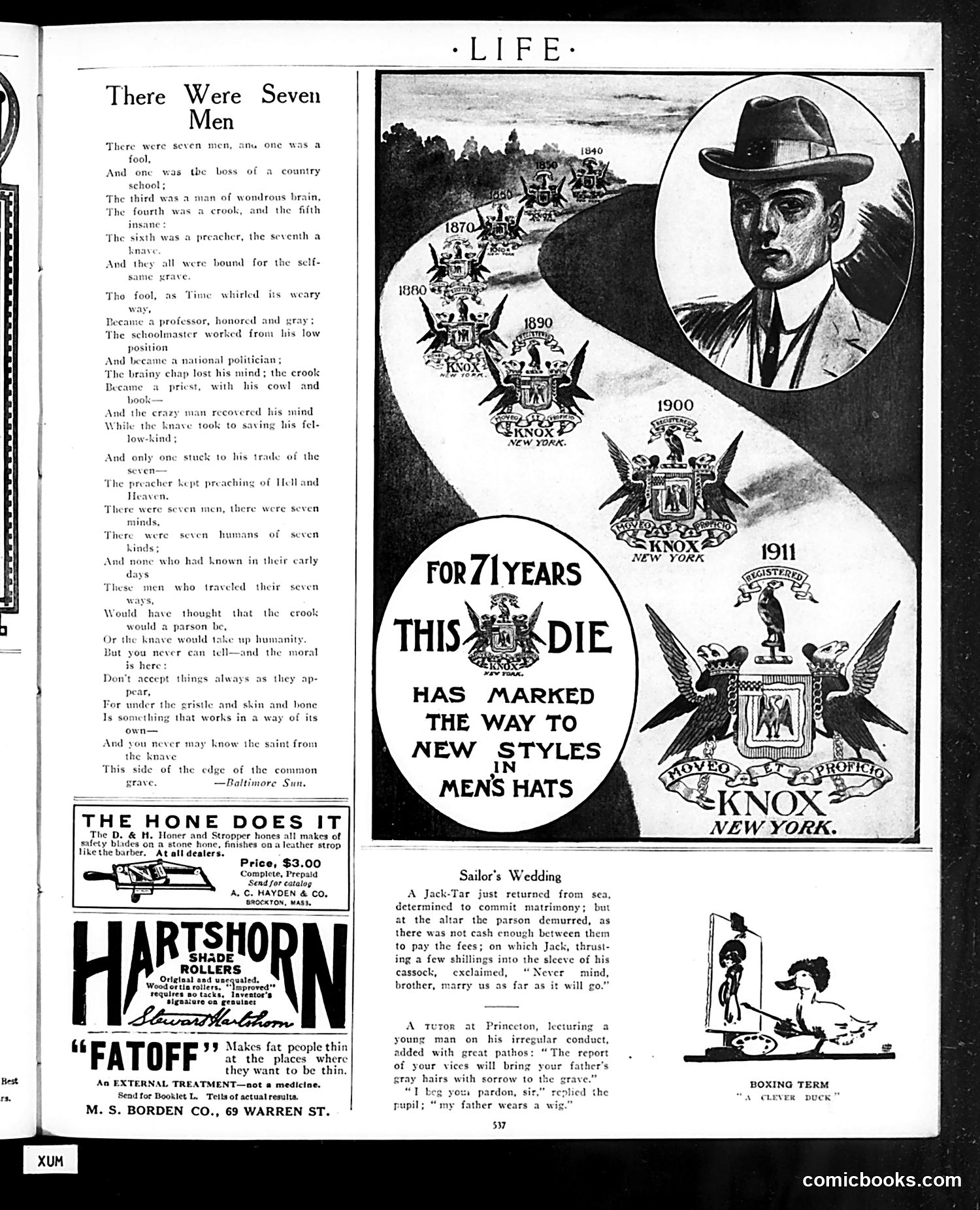
This page combines satirical poetry with period advertisements and humorous anecdotes, typical of early 20th-century *Life* magazine. **Main Content:** "There Were Seven Men" is a morality poem contrasting seven archetypes (fool, school official, scholar, madman, preacher, politician, crook) who all meet the same fate. The satire suggests that despite their different stations and supposed virtues, death equalizes everyone—and that appearances deceive. The final moral warns against judging by externals. **Advertisements:** Product ads for shaving hones, hat styles (Knox brand), and a weight-loss treatment reflect contemporary consumer culture. **Humorous Anecdotes:** Brief jokes about a sailor attempting to pay a clergyman to marry him ("as far as it will go") and a Princeton student's impudent reply to a moral lecture. These exemplify the magazine's satirical tone mocking authority figures and social pretension. The overall effect is characteristic *Life* satire: deflating social hierarchies and hypocrisy through verse, humor, and visual juxtaposition with commercial culture.
📄 Transcribed text from this page (OCR, searchable)
Machine-transcribed from the original scan — historical spelling and the odd misread are preserved.
——— , There Were Seven Men There were Seven men, anu one was a fool, And one was tbe boss of a country school; of wondrous brain, and the fifth The third was a The fourth was : insane : The sixth was a preacher, the seventh a 2 crook, knave And they all were bound for the self- same grave as Time whirled its weary professor, honored and gray; ster worked from his low a national politician ; y chap lost his mind; the crook \ priest, with his cowl and And only one stuck to his trade of the seven- The preacher kept preaching of Hell and Heaven, There were seven men, there were seven There were seven humans of seven hinds; And none who had known in their early days These men who traveled their seven ways, Would have thought that the crook would a parson be, would 1 Or the knay up humanity But you never can tell—and the moral is here: Don't accept thi pear, gs always as they ap- nd bone For under the gristle and skin Is something that works in a own— of its And you never may know the saint from the knave This side of the edge of the common grave. —Raltimore Su THE HONE DOES IT The D, & M. Honer and Stropper hones all makes of safety bi on a stone hone, finishes on a leather strop likethe barber. At all dealers. Price, $3.00 Complete, Prepaid Send for catalog A. C. HAYDEN & CO, BROCKTON, MASI, th m 99 Makes fat people thin at the places where they want to be thin. Aa EXTERNAL TREATMENT—not a medicine. Send for Booklet L. Teits of actual results. M. S. BORDEN CO., 69 WARREN ST. HAS MARKED THE WAY TO NEW STYLES MENS HATS Sailor's Wedding A Jack-Tar just returned from sea, determined to commit matrimony; but at the altar the parson demurred, as there was not cash enough between them to pay the fees; on which Jack, thrust- ing a few shillings into the sleeve of k cassock, exclaimed, “Never mind, brother, marry us as far as it will go. A tvror at Princeton, lecturing a young man on his irregular conduct, added with great pathos: “The report of your vices will bring gray hairs with sorrow to pardon, sir," replied the father wears a wi pupil; 537 BOXING TERM CLEVER puck” comicbooks.com