
Life, 1911-07-06 · page 7 of 44
Life — July 6, 1911 — page 7: what you’re looking at
What you’re looking at
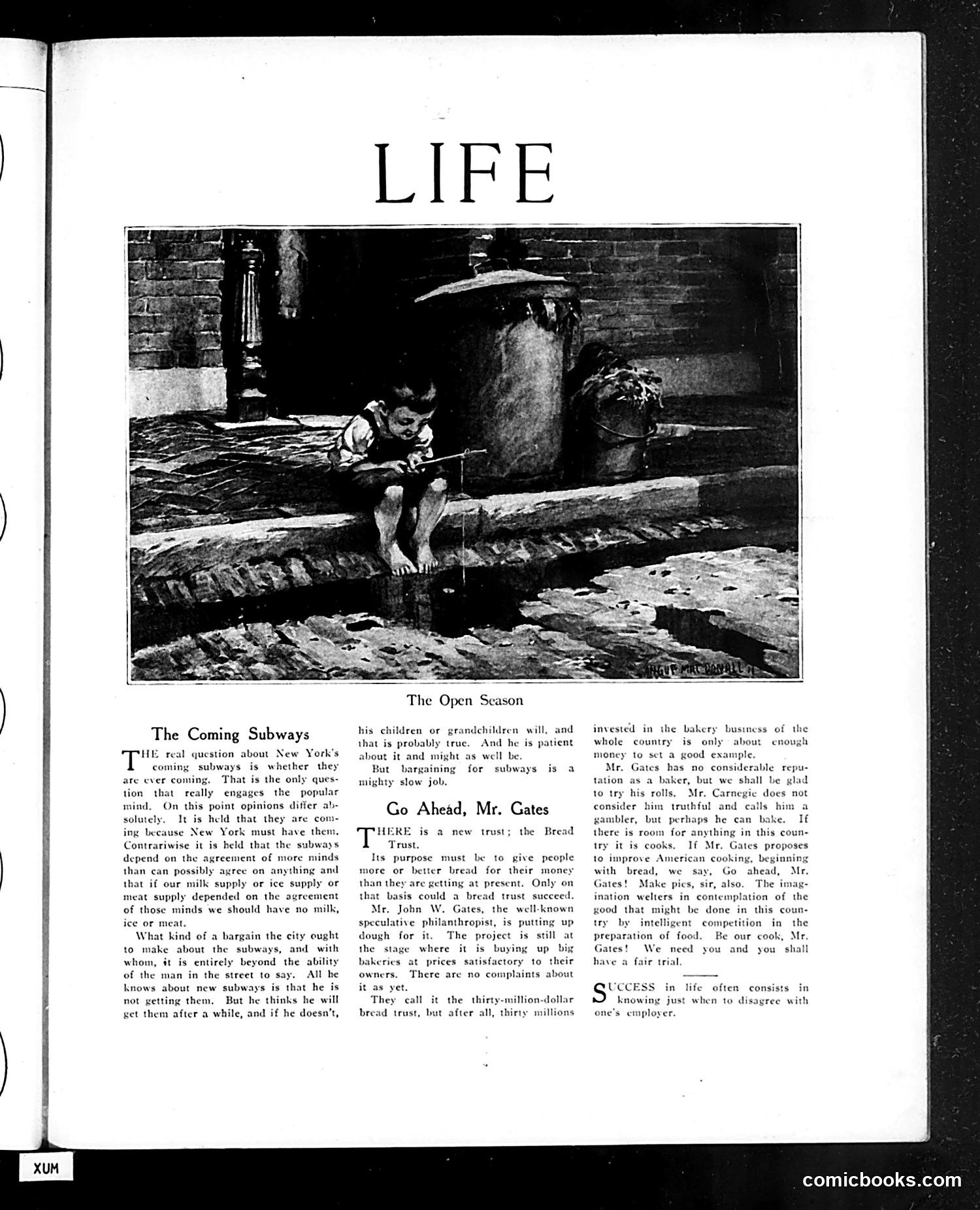
This page contains three opinion pieces under the heading "LIFE," featuring a photograph titled "The Open Season" showing a child fishing. The articles discuss: 1. **"The Coming Subways"** — argues that New York's proposed subway system is debated but ultimately necessary, noting disagreement about construction details. 2. **"Go Ahead, Mr. Cates"** — supports John W. Gates's bread trust initiative, arguing it could improve bread prices and quality for consumers. Gates is described as a "well-known speculative philanthropist" attempting to address high bakery costs. 3. A brief statement about success in professional life. The content reflects early 20th-century concerns about urban infrastructure, food prices, and corporate monopolies presented as potential solutions to consumer problems.
📄 Transcribed text from this page (OCR, searchable)
Machine-transcribed from the original scan — historical spelling and the odd misread are preserved.
The Coming Subways HE real question about New York's subways is whether they are ever coming. That is the only qu tion that really engages the popular mind. On this point opinions differ ab- solutely, It is held that they are com- ing because New York must have the Contrariwise it is held that the subways depend on the agreement of more minds than can possibly agree on anything and that if our milk supply or ice supply or meat supply depended on the agreement of those minds we should have no milk, ice or meat. What kind of a bargain the city ought to make about the subways, and with whom, it is entirely beyond the ability of the man in the street to say, All he knows about new subways is that he is not getting them. But he thinks he will get them after a while, and if he doesn’t, coming The Open Season his children or grandchildren will, and that is probably true. And he is patient about it and might But bargaining for mighty slow job. Go Ahead, Mr. Gates HERE is Trust. Its purpose must be to give people more or better bread for their money than they are getting at present. Only on that basis could a bread trust succeed. Mr. John W. Gates, the well-known speculative philanthropist, is putting up dough for it. The project is still at the stage where it is buying up big bakeries at prices satisfactory to their There are no complaints about well be. subways is a a new trust; the Bread owners. it as yet. They call it the bread trust, but after all, thirty thirty-million-dollar nillions business of the invested in the bakery whole country is only money to set a good example. enough Mr. Gates has no considerable repu- tation as a baker, but we shall be glad to try his rolls, Mr, Carnegie does not consider him truthful and calls him a gambler, but perhaps he can bake. If there is room for anything in this coun- try it is cooks, If Mr. Gates propos to improve American cooking, beginn with bread, we say, Go ahead, Mr. Gates! Make pies, sir, also. The imag- ination welters in contemplation of the good that might be done in this cow try by intelligent preparation of food. Gates!’ We have a fair tri competition in the Be our cook, Mr. need you and you s UCCE in life often consists in knowing just when to disagree with one’s employer. comicbooks.com