
Life, 1911-06-01 · page 23 of 52
Life — June 1, 1911 — page 23: what you’re looking at
What you’re looking at
This Life magazine page contains two satirical pieces about American consumer culture. **"Males and Modes"** mocks gender differences in fashion adoption. The article contrasts women—who eagerly embrace new fashions and discard old clothing—with American men, who are indifferent to style changes and wear the same evening clothes for a decade. The humor lies in portraying men as so fashion-oblivious they rely on wives to update wardrobes, while tailors make minor alterations purely for their own amusement since men don't notice anyway. **"The Oppression of an Advertisement"** is satirical complaint about ubiquitous advertising. The author acknowledges the advertised product is likely good quality, but expresses exhaustion at encountering the same ad everywhere: in mail, newspapers, magazines (with intrusive insert pages), billboards, and even street cars. The comparison to dust from automobiles captures how inescapable and irritating pervasive advertising has become—unwanted, unavoidable intrusion into daily life.
📄 Transcribed text from this page (OCR, searchable)
Machine-transcribed from the original scan — historical spelling and the odd misread are preserved.
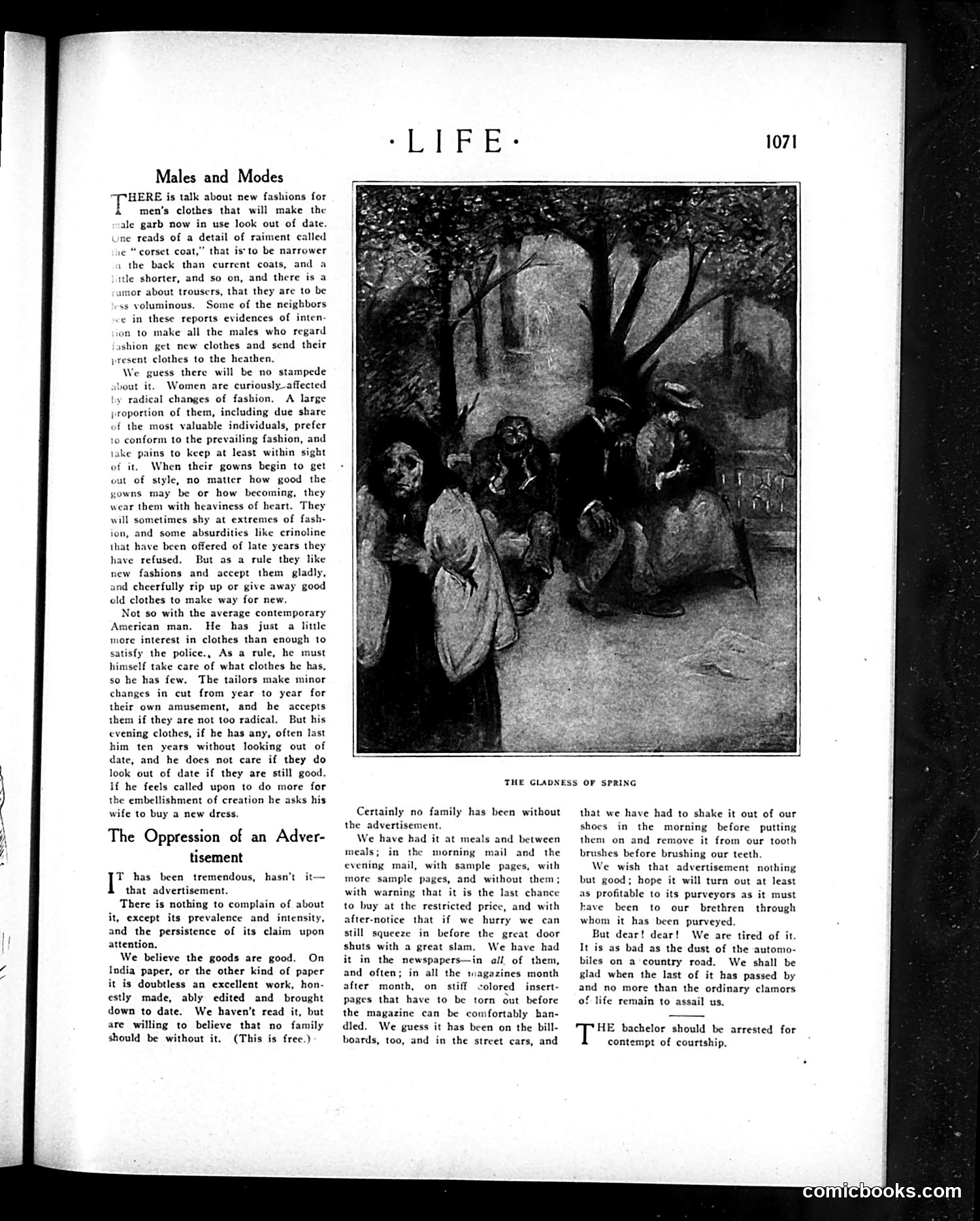
Males and Modes “THERE is talk about new fashions for & men’s clothes that will make the ale garb now in use look out of date. e reads of a detail of raiment called ie “ corset coat,” that is'to be narrower 1 the back than current coats, and a ttle shorter, and so on, and there is a amor about trousers, that they are to be ss voluminous. Some of the neighbors ¢ in these reports evidences of inten- on to make all the males who regard ishion get new clothes and send their present clothes to the heathen, We guess there will be no stampede bout it. Women are curiously-affected y radical changes of fashion. A large proportion of them, including due share of the most valuable individuals, prefer 10 conform to the prevailing fashion, and lake pains to keep at least within sight of it, When their gowns begin to get out of style, no matter how good the owns may be or how becoming, they wear them with heaviness of heart. They will sometimes shy at extremes of fash- ion, and some absurdities like crinoline that have been offered of late years they have refused. But as a rule they like new fashions and accept them gladly, and cheerfully rip up or give away good old clothes to make way for new. Not so with the average contemporary American man, He has just a little more interest in clothes than enough to satisfy the police., As a rule, he must himself take care of what clothes he has, so he has few. The tailors make minor changes in cut from year to year for their own amusement, and he accepts them if they are not too radical. But his evening clothes, if he has any, often last him ten years without looking out of date, and he does not care if they do look out of date if they are still good. If he feels called upon to do more for he embellishment of creation he asks his wife to buy a new dress. The Oppression of an Adver- tisement T has been tremendous, that advertisement. There is nothing to complain of about it, except its prevalence and intensity, and the persistence of its claim upon attention, We believe the goods are good. On India paper, or the other kind of paper it is doubtless an excellent work, hon- estly made, ably edited and brought down to date. We haven't read it, but are willing to believe that no family should be without it. (This is free.) hasn't it— THE GLADNESS OF SPRING Certainly no family has been without the advertisement. We have had it at meals and between meals; in the morning mail and the evening mail, with sample pages, with more sample pages, and without them; with warning that it is the last chance to buy at the restricted price, and with after-notice that if we hurry we can still squeeze in before the great door shuts with a great slam. We have had it in the newspapers—in all. of them, and often; in all the magazines month after month, on stiff colored insert- pages that have to be torn out before the magazine can be comfortably ban- dled. We guess it has been on the bill- boards, too, and in the street cars, and that we have had to shake it out of our shoes in the morning before putting them on and remove it from our tooth brushes before brushing our teeth. We wish that advertisement nothing but good; hope it will turn out at least as profitable to its purveyors as it must have been to our brethren through whom it has been purveyed. But dear! dear! We are tired of it. It is as bad as the dust of the automo- biles on a country road. We shall be glad when the last of it has passed by and no more than the ordinary clamors of life remain to assail us. HE bachelor should be arrested for contempt of courtship. comicbooks.com