
Life, 1911-04-27 · page 25 of 44
Life — April 27, 1911 — page 25: what you’re looking at
What you’re looking at
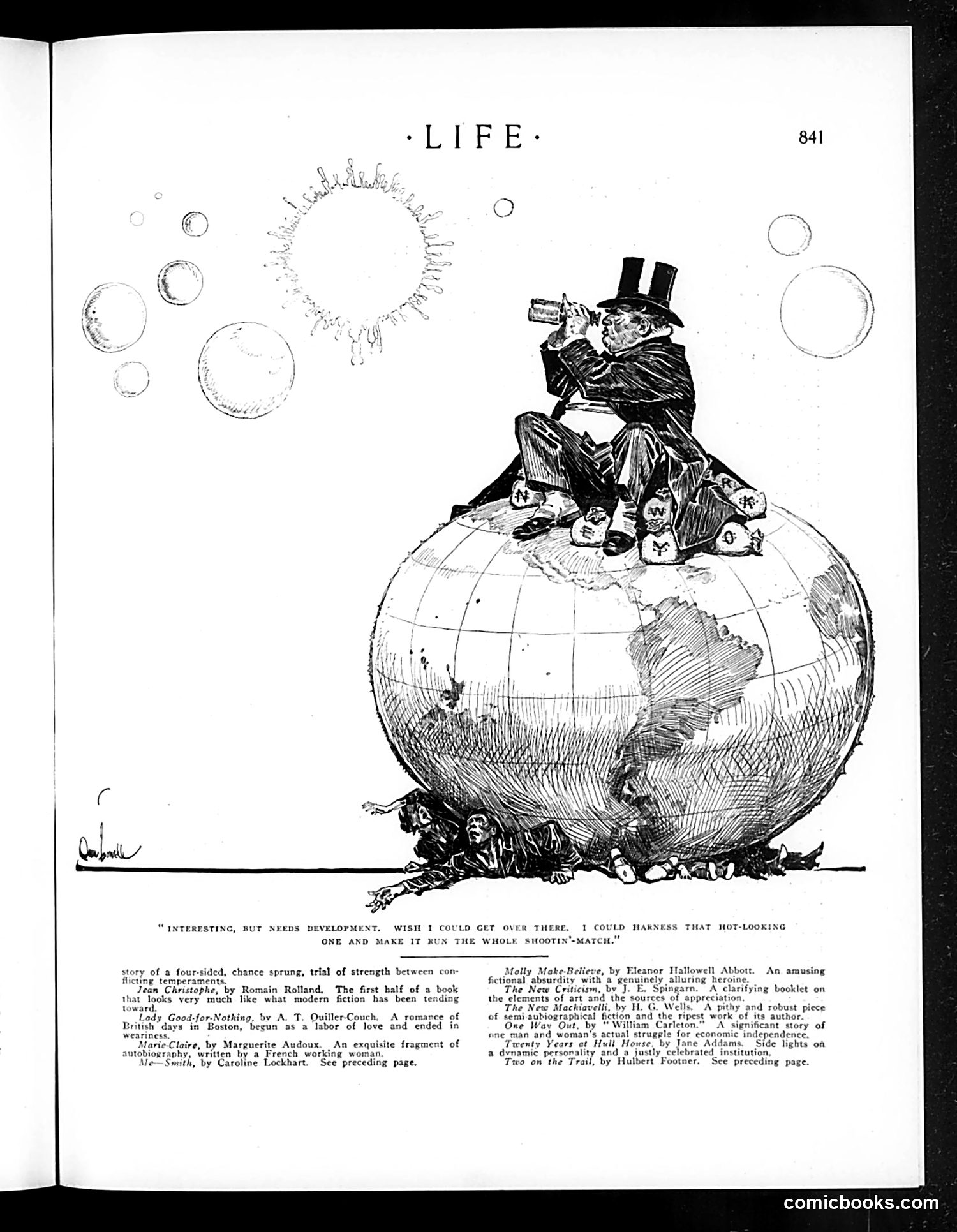
This Life magazine page features a satirical cartoon showing a figure in formal dress (top hat and coat) sitting atop a globe, looking through a telescope toward distant lands. He's surrounded by bubbles and dice, with text expressing desire to control distant territories: "I wish I could get over there. I could harness that hot-looking one and make it run the whole shootin'-match." **The satire targets**: American imperialist ambitions and capitalist expansion. The figure appears to represent American business interests or political power seeking to exploit and dominate foreign nations ("harness" them). The globe, dice, and bubbles suggest chance, gambling, and the viewing of world affairs as a game to be won and controlled. **The joke**: The man's casual, greedy attitude toward colonizing/controlling other lands, expressed in colloquial language, mocks American imperial pretensions and the reduction of sovereign nations to profitable ventures. This reflects early 20th-century progressive critique of American expansionism and corporate imperialism.
📄 Transcribed text from this page (OCR, searchable)
Machine-transcribed from the original scan — historical spelling and the odd misread are preserved.
“INTERESTING, BUT NEEDS DEVELOPM ONE AN of a four-sided, chance sprung, trial of strength between con- ng temperaments. Jean Christophe, by Romain Rolland. The first half of a book that looks very much like what modern fiction has been tending toward, Lady Good-for-Nothing, bv A. T. Ouiller-Couch. weariness. MarieClaire, by Marguerite Audoux. An exquisite fragment of autobiography, written by a French working woman. Me—Smith, by Caroline Lockhart. See preceding page. WISH I COULD GET OVER THERE. 1 COULD MAKNESS THAT HOT-LOOKING MAKE IT RUN THE WHOLE SHOOTIN'=-MATCH.” Molly Make-Believe, by Eleanor Hallowell Abbott. An amusing fictional absurdity with’ a genuinely alluring heroine. The New Criticism, by J. E. Spingarn. A clarifying booklet on the elements of art and the sources of apprec! he New Machiavelli, by HI. G. Wells. A pithy and robust piece A romance of of semiaubiographical fiction and the ripest work of its author. British days in Boston, begun as a labor of love and ended in One Way Out, by “William Carleton.” A significant story of a dynamic personality and a justly celebrated instit Two on the Trail, by Hulbert Footner. See preceding page. one man and woman's actual struggle for economic independence. v Years at Hull Howse. de lights on comicbooks.com