
Life, 1910-12-01 · page 63 of 108
Life — December 1, 1910 — page 63: what you’re looking at
What you’re looking at
This satirical poem by Carolyn Wells catalogs the social obligations and hypocrisies that burden middle-class Americans during Christmas, targeting early 20th-century consumer culture and social etiquette. The ballad mocks: - **Obligatory gift-giving**: The anxiety of reciprocal presents, feeling forced to give expensive items to maintain social standing - **Insincere gratitude**: Pretending to love unwanted gifts (Chinese chimes, marble cats, tacky lace) - **Tedious family gatherings**: Uncomfortable visits from critical relatives like Aunt Jane - **Children's chaos**: The disruption caused by misbehaving cousins and visitors' children - **Last-minute shopping desperation**: The frantic, failed hunt for specific gifts, settling for "horrid trash" The humor lies in the paradox of the closing lines: despite recognizing all this as foolishness, society demands we continue the charade anyway—suggesting Christmas has become less about joy and more about exhausting social performance.
📄 Transcribed text from this page (OCR, searchable)
Machine-transcribed from the original scan — historical spelling and the odd misread are preserved.
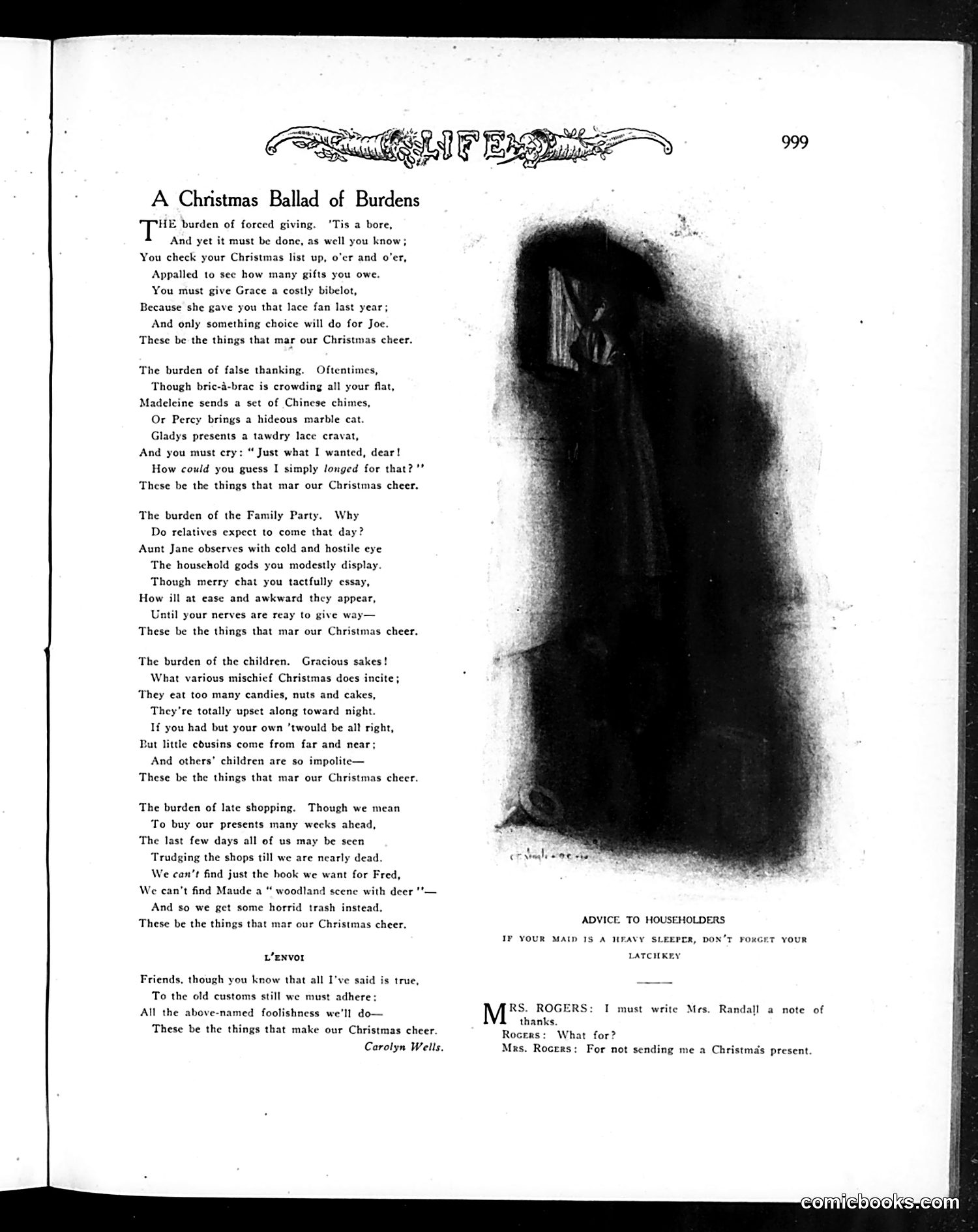
OBER EES A Christmas Ballad of Burdens HE burden of forced giving. 'Tis a bore, And yet it must be done, as well you know; You check your Christmas list up, o'er and o'er, Appalled to sec how many gifts you owe. You must give Grace a costly bibelot, Because she gave you that lace fan last year; And only something choice will do for Joe. These be the things that mar our Christmas cheer. The burden of false thanking. Oftentimes, Though bric-d-brac is crowding all your flat, Madeleine sends a set of Chinese chimes, Or Percy brings a hideous marble cat. Gladys presents a tawdry lace cravat, And you must cry: “Just what I wanted, dear! How could you guess I simply longed for that? ”? ‘These be the things that mar our Christmas cheer. The burden of the Family Party. Why Do relatives expect to come that day? Aunt Jane observes with cold and hostile eye The houschold gods you modestly display. Though merry chat you tactfully essay, How ill at ease and awkward they appear, Until your nerves are reay to give way— These be the things that mar our Christmas cheer. The burden of the children. Gracious sakes! What various mischief Christmas does incite; ‘They eat too many candies, nuts and cakes, They're totally upset along toward night. If you had but your own ‘twould be all right, But little cdusins come from far and near; And others’ children are so impolite— These be the things that mar our Christmas cheer. The burden of late shopping. Though we mean To buy our presents many wecks ahead, The last few days all of us may be seen Trudging the shops till we are nearly dead. We can’t find just the hook we want for Fred, We can’t find Maude a “ woodland scene with deer "— And so we get some horrid trash instead. These be the things that mar our Christmas cheer. LENvor Friends, though you know that all I've said is true, To the old customs still we must adhere; All the above-named foolishness we'll do— These be the things that make our Christmas cheer. Carolyn Wells. ADVICE TO HOUSEHOLDERS IF YOUR MAID IS A IIFAVY SLEEPER, DON’T FOKGET YOUR LATCHKRY RS. ROGERS: I must write Mes. Randall a note of thanks. Rocers: What for? Mas. Rocers: For not sending me a Christmas present.