
Life, 1910-11-17 · page 21 of 44
Life — November 17, 1910 — page 21: what you’re looking at
What you’re looking at
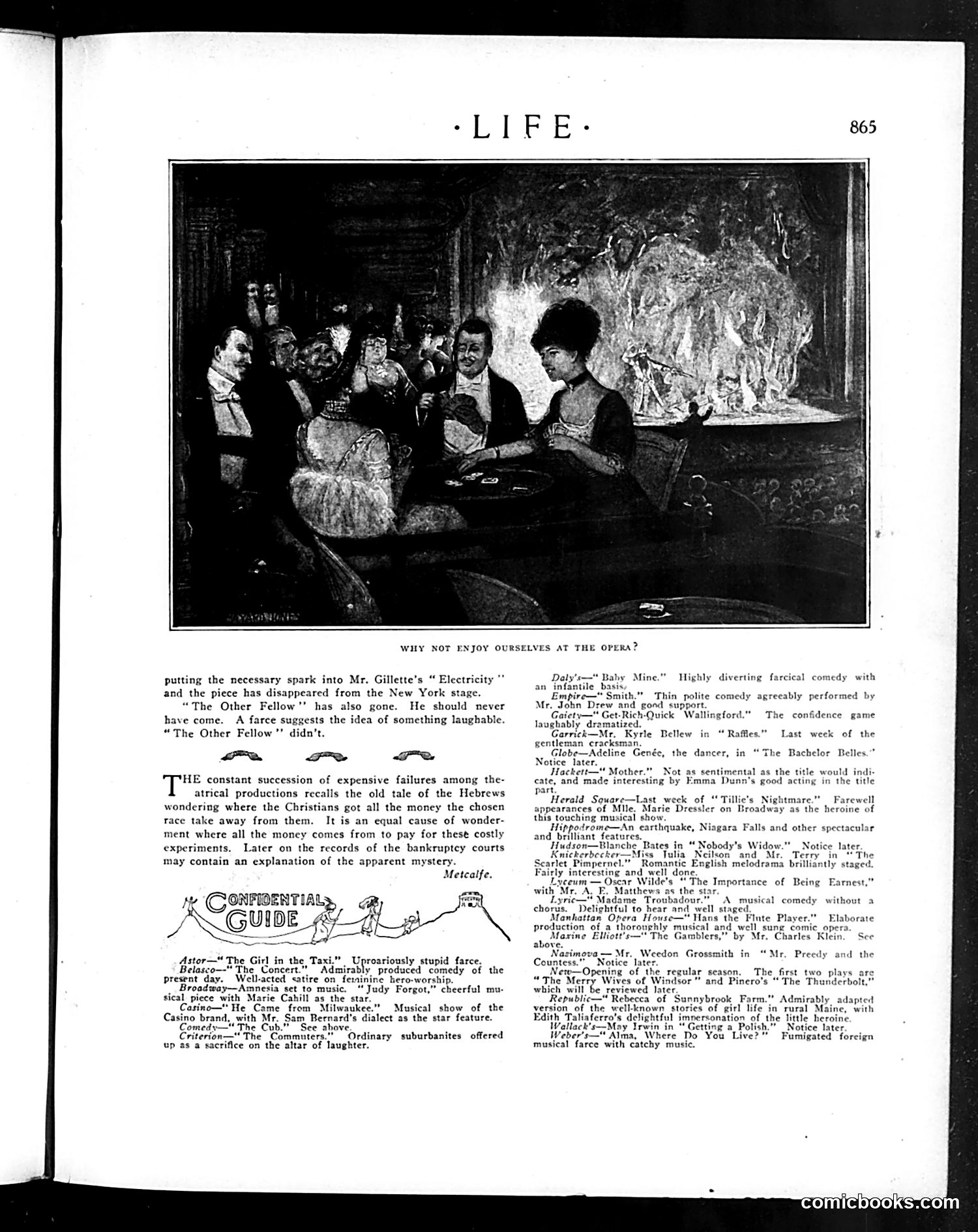
This page contains theater reviews from Life's "Confidential Guide" section, critiquing Broadway productions. The masthead illustration shows an opera scene—likely satirizing the pretension of high-society theatergoers attending fashionable performances. The main article by Metcalfe mocks the financial failures plaguing Broadway, comparing producers' mysterious funding sources to an old stereotype about Jewish and Christian wealth. The humor relies on suggesting producers throw money at failing shows without understanding why they lose money—a commentary on theatrical speculation and poor business judgment. Below are capsule reviews of current shows at major theaters (Astor, Empire, Hudson, etc.), rating performances by stars like Marie Cahill and John Drew. Reviews are brief, caustic judgments—"uproariously stupid farce," "thin polite comedy"—reflecting Life's satirical stance toward popular entertainment. The page represents early-1900s Broadway's commercial theater landscape and Life's role as cultural arbiter mocking both productions and audiences.
📄 Transcribed text from this page (OCR, searchable)
Machine-transcribed from the original scan — historical spelling and the odd misread are preserved.
WHY NOT ENJOY OURSELVES AT THE OPERA? putting the necessary spark into Mr. Gillette’s “ Electricity "’ and the piece has disappeared from the New York stage. “The Other Fellow’’ has also gone. He should never have come. A farce suggests the idea of something laughable. “The Other Fellow ’’ didn’t. ee a a HE constant succession of expensive failures among the- atrical productions recalls the old tale of the Hebrews wondering where the Christians got all the money the chosen race take away from them. It is an equal cause of wonder- ment where all the money comes from to pay for these costly experiments. Later on the records of the bankruptcy courts may contain an explanation of the apparent mystery. Metcalfe. KEE Cetine 2 y Bt va Astor—* Belasco- The Concert.” Admirab! present day. Well-acted satire on feminine hero-worship. Broadway. Amnesia set to mu: “Judy Forgot,” cheerful mu- sical piece with Marie Cahill as the star. Casino—* He Came from Milwaukee.” Musical show of the Casino brand, with Mr. Sam Bernard's dialect as the star feature. Comedy—" The Cub.” See above. Criterion— The Commuters.” Ordinary suburbanites offered up as a sacrifice on the altar of laughter. ¢, Girl in the, Taxi” Uproariously stupid farce, produced comedy of the Daly’s—" Baby Mine.” Highly diverting farcical comedy with an infantile Empire—" Smith.” Thin polite comedy agreeably performed by Mr. John Drew and gond support. ‘Quick Walling fo: ed. Kyrle Bellew in The confidence game “Raffles.” Last week of the Globe—Adeline Genée, the dancer, in “The Bachelor Belles.” Notice later. Hackett cate, and mad part Herald Souare—Last week of “Tillie’s N appearances of Mlle. Marie Dressler on Broadway this touching musical show. Hippodrome—An earthquake, Niagara Falls and other spectacular and brilliant features. Hudson—Blanche Bates in “ Nobody's W Notice later Knickerbecker—Miss Julia Neilson ar Terry in “The arlet Pimpernel.” Romantic English melodrama brilliantly staged. Fairly interesting and well done Lyceum — Osear Wilde's The Importance of Being Earnest, with "Mr. A, FE. Matthews as the star Lyric" Madame Troubadour.” A musical comedy without a chorus. Delightful to hear and well staged. Manhattan Opera House—" Hans the Finte Player.” Elaborate production of a thoroyshly musical and well sung comic ope Maxine iott's—"* The Gamblers,” by Mr. Charles Klein. See “Mr, Preedy and the Not as sentimental as the would indi- ng by Emma Dunn's good acting in the title tmare.” Farewell s the heroine of Newe—Openi: regular season. The first two plays ar: “The Merry Wi indsor ” and Pinero’s “The Thunderbolt, which will be reviewed later. Republic—* Rebecca of Sunnybrook Farm." Admirably adapted version of the well-known stories of girl life in rural Maine, with Edith Taliaferro’s delightful impersonation of the little heroine. Wallack’s—May Irwin in “Getting a Polish.” Notice later. Weber’s—" Alma, Where Do You Live?" Fumigated foreign musical farce with catchy music.