
Life, 1910-10-27 · page 9 of 44
Life — October 27, 1910 — page 9: what you’re looking at
What you’re looking at
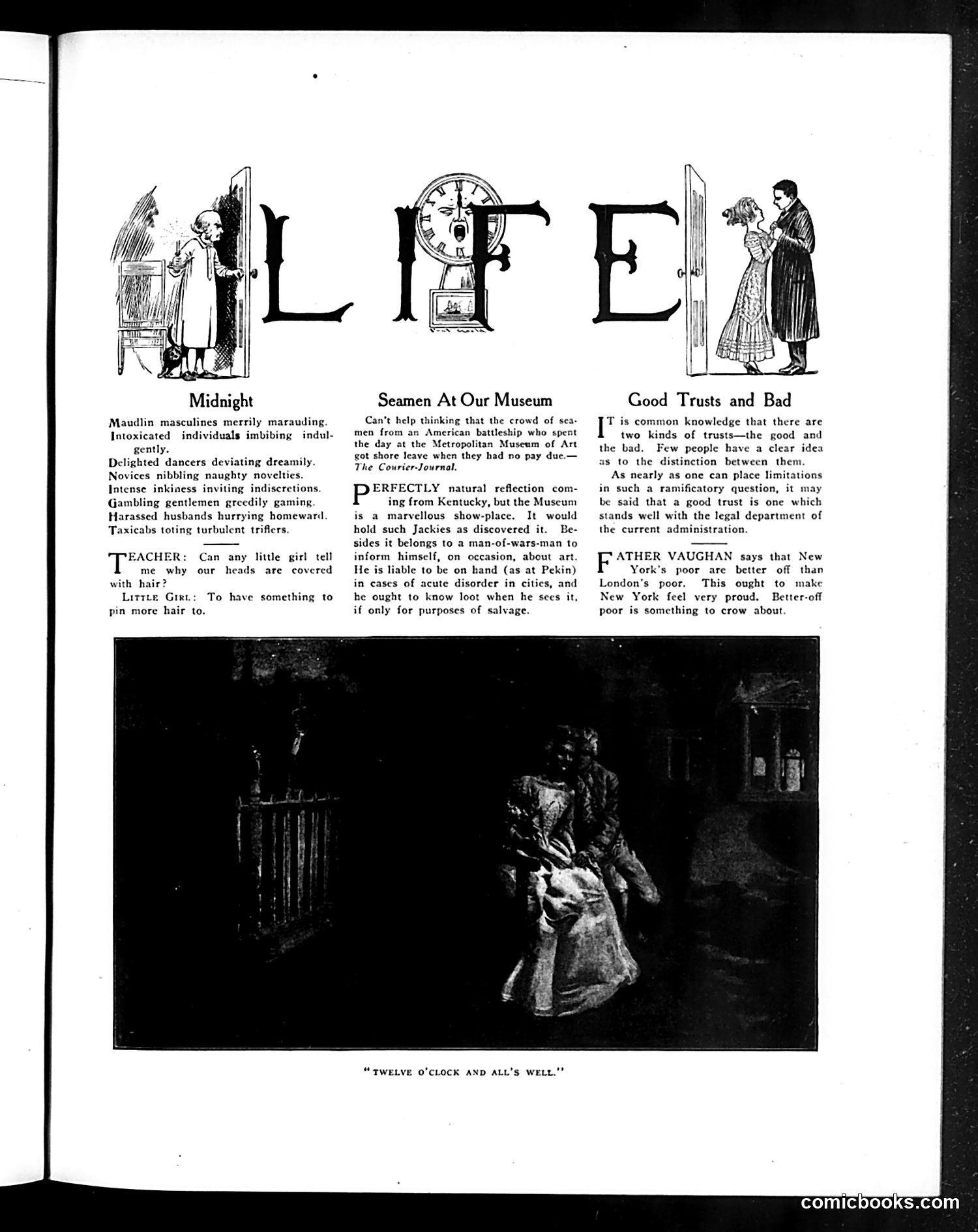
This page contains three brief satirical vignettes about social behavior: **"Midnight"** mocks masculine pretense—men's fashionable vanity despite their affected indifference to appearance. **"Seamen At Our Museum"** jokes about naval officers visiting a battleship exhibit, with the ironic observation that a man-of-war sailor might not recognize his own ship in a museum display. **"Good Trusts and Bad Trusts"** satirizes class hypocrisy: wealthy New Yorkers distinguish between "good" trusts (their own) and "bad" ones (those of rivals), while considering New York's poor preferable to London's because it enhances their self-image. The photograph below illustrates a domestic scene captioned "Twelve O'Clock and All's Well," likely depicting nighttime household security or watchfulness—a common concern of the era. The humor targets class pretension, masculine vanity, and moral double standards.
📄 Transcribed text from this page (OCR, searchable)
Machine-transcribed from the original scan — historical spelling and the odd misread are preserved.
Midnigh Maudlin masculines merrily marauding Intoxicated individuals imbibing indul- gently. Delighted dancers deviating dreamily. Novices nibbling naughty novelties. Intense inkiness inviting indiscretions. Gambling gentlemen greedily gaming Harassed husbands hurrying homeward Taxicabs toting turbulent triflers, EACHER: me why our with hair? Lirrte Get: pin more hair to. Can any little girl tell heads are covered To have something to Seamen At Our Museum Can't help thinking that the crowd of sea- men from an American battleship who spent the day at the Metropolitan Museum of Art got shore leave when they had no pay due.— The Courier-Journal. ERFECTLY natural reflection com- ing from Kentucky, but the Museum is a marvellous show-place. It would hold such Jackies as discovered it. Be- sides it belongs to a man-of-wars-man to inform himself, on occasion, about art. He is liable to be on hand (as at Pekin) in cases of acute disorder in citics, and he ought to know loot when he sees it, if only for purposes of salvage. “TWELVE O'CLOCK AND ALL'S WELL."* Good Trusts and Bad T is common knowledge that there are two kinds of trusts—the good and the bad. Few people have a clear idea as to the distinction between them As nearly as one can place limitations in such a ramificatory question, it may be said that a good trust is one which stands well with the legal department of the current administration. ATHER VAUGHAN says that New York's poor are better off than London’s poor. This ought to make New York feel very proud. Better-off poor is something to crow about comicbooks.com