
Life, 1910-08-18 · page 25 of 36
Life — August 18, 1910 — page 25: what you’re looking at
What you’re looking at
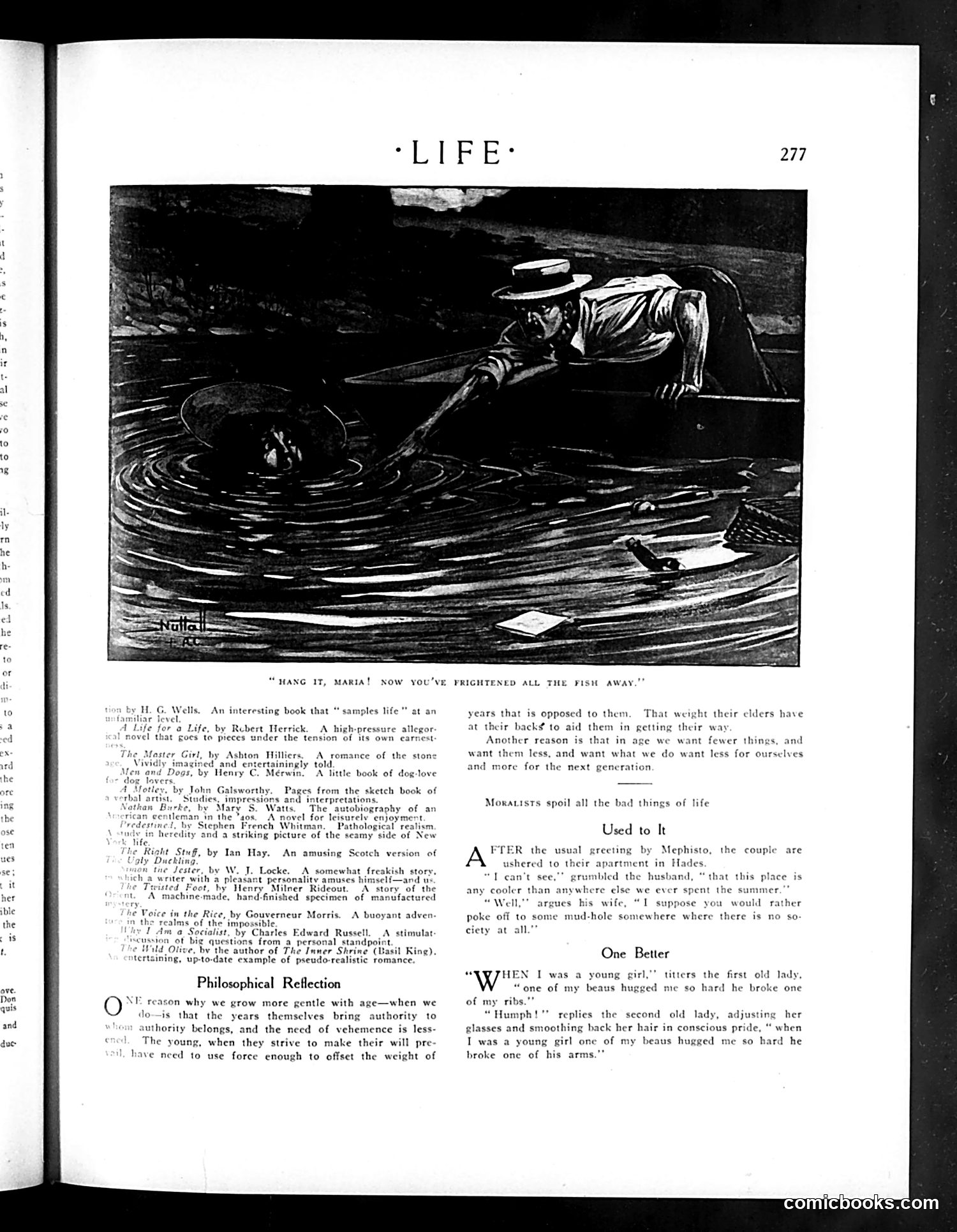
This page contains **three distinct pieces of humor content** rather than a single cartoon: 1. **"Hang It, Maria!"** - The illustrated vignette (top) shows a man fishing while his wife scolds him from shore. The caption suggests marital discord over his fishing hobby—she complains he's "frightened all the fish away," implying his presence (or her nagging) has ruined his sport. It's domestic comedy about spousal frustration. 2. **"Used to It"** - A brief dialogue joke about a couple in Hell (referenced via "Mephisto"), where the husband prefers mud-holes to their current accommodations. The satire targets both marital resignation and the banality of Hell itself—suggesting matrimonial misery rivals damnation. 3. **"One Better"** - Two elderly women trade stories at a competitive pace about suitors who injured themselves through overeager romance. It's generational humor playing on aging vanity and outdated courtship customs. The page also includes book reviews and philosophical reflection on aging's effects on temperament. All content reflects early 20th-century middle-class preoccupations with marriage, propriety, and nostalgic reminiscence.
📄 Transcribed text from this page (OCR, searchable)
Machine-transcribed from the original scan — historical spelling and the odd misread are preserved.
“WANG 17, MARIA! Now you’vE by H. G. Wells. An interesting book that “sa iar level tfe for a Life, by Rebert Herrick. A high-pressure allegor T novel that goes to pieces under the tension of its own earnest ples life” at an A. romance of the y told. A little book of dog-love ston: en and Dogs, A Motley, sworthy Pages from the sketch book of . impressions and tations. Mary S. Watts ography of an in the "son. ly enjoymer hen French Whitn gical r heredity and a striking picture of the seamy side of New n B ism. Stuf, by gly Duckling. n tne Jester, by W. J. Locke. A somewhat freakish story. a writer with a Sant personality amuses himself—and us Treisted Foot, by Henry Milner Rideout. A story of the t. A machine-made, hand-finished specimen of manufactured ¢ Voice in the Rice, by Gouverneur Morris, n the alms of the impossible. vd @ Socialist, by Charles Edward Russell. seus juestions from a personal standpoi Olive, by the author of The Inner Shrine (Basil King). tertsining, up-to-date example of pseudo-realistic romance. Philosophical Reflection I. reason why we grow more gentle with age—when we ois that the years themselves bring authority to authority belongs, and the need of vehemence is le The young, when they strive to make their will pre have need to use force enough to offset the weight of Ian Hay. An amusing Scotch version of A buoyant adven A stimulat FRIGHTENED ALL THE FISH Away.’ years that is opposed to them. That weight their elders have t their back¢ to aid them in getting their way Another reason is that in age we want fewer things, and want them less, and want what we do want less for ourselves and more for the next generation Moratists spoil all the bad things of life Used to It ER usual Mephisto, hered to the greeting by the couple A" “Tocan't ir apartment in Hades. bled the husband, “that this pls any cooler than anywhere else we “Well his poke off to some mud-hole somewhere where there is no so ty at all.” see," gru T spent the su argues wife, “I suppose you would rather One Better “ HEN I was a young girl,’ titters the first old lady, “one of my beau so hard he bre of my ribs.”” “Humph ! glasses and s I was a young girl one of my beaus hugged me so hard he broke one of his arms.” hugged me one replies the second old lady, adjx her noothing back her hair in conscious pride, “ ting when