
Life, 1910-04-14 · page 25 of 44
Life — April 14, 1910 — page 25: what you’re looking at
What you’re looking at
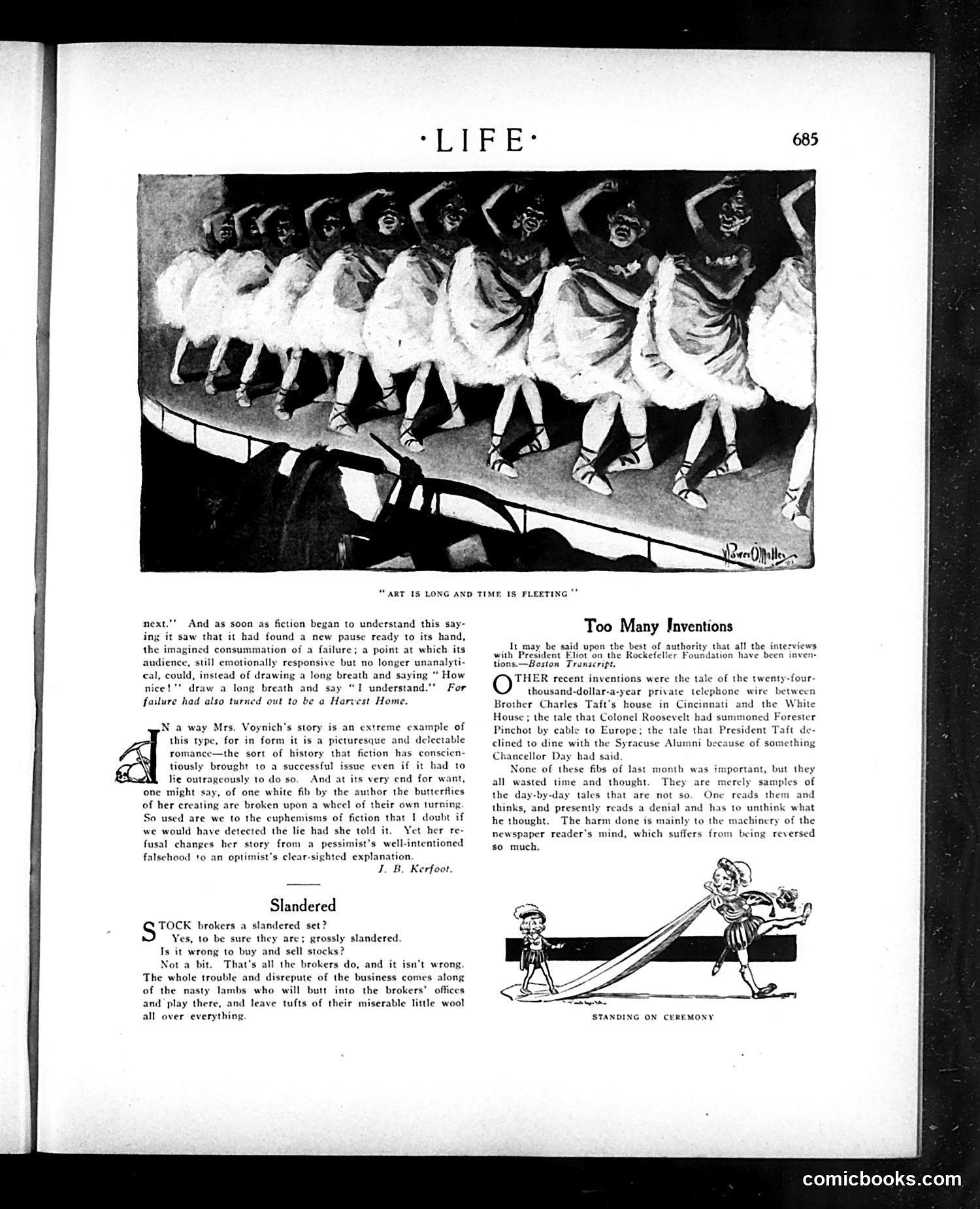
**Top Cartoon ("Art Is Long and Time Is Fleeting"):** A line of chorus girls in white tutus and dark masks performs on stage, viewed from behind an orchestra pit. The satirical point appears to critique theatrical sentimentality or artifice—the masked, synchronized performers suggest manufactured emotion rather than genuine artistry. **"Too Many Inventions" Article:** This criticizes newspapers for publishing unverified stories about prominent figures, including President Taft, Theodore Roosevelt, and Forester Pinchot. The author argues these minor fabrications waste readers' mental energy through the cycle of reading, then later reading denials. The satire targets not the brokers or politicians themselves, but journalists who create and spread false narratives. **"Slandered" Section:** A brief defense of stock brokers, arguing their profession itself isn't disreputable—rather, it's the inexperienced speculators ("nasty lambs") who enter broker offices and cause problems that damage the profession's reputation. The page reflects Progressive Era concerns about media reliability and financial market ethics.
📄 Transcribed text from this page (OCR, searchable)
Machine-transcribed from the original scan — historical spelling and the odd misread are preserved.
“ART IS LONG AND TIME IS FLEETING "* next.” And as soon as fiction began to understand this say- ing it saw that it had found a new pause ready to its hand, the imagined consummation of a failure; a point at which its audience, still emotionally responsive but no longer unanalyti- cal, could, instead of drawing a long breath and saying “ How nice!’’ draw a | breath and say “I understand.’ For failure had also turned out to be a Harvest Home. N a way Mrs. Voynich’s story is an extreme ¢ of this type, for in form it is a picturesque and delectable romance—the sort of history that fiction has conscien- tiously brought to a successful issue even if it bad to lie outrageously to do so. And at its very end for want fone might say, of one white fib by the author the butterflies of her creating are broken upon a wheel of their own turning So used are we to the cuphemisms of fiction that I doubt if we would have detected the lie had she told it. Yet her re- fusal changes her story from a pessimist’s well-intentioned falschood 10 an optimist’s clear-sighted explanation J.B. Kerfoot Slandered TOCK brokers a slandered set? Yes, to be sure they are; grossly slandered. Is it wrong to buy and sell stocks? Not a bit. That's all the brokers do, and it isn't wrong The whole trouble and disrepute of the business comes along of the nasty lambs who will butt into the brokers’ offices and play there, and leave tufts of their miserable little wool all over everything Too Many Snventions It may be said upon the best of author with President Eliot on the Rockefeller F tions.—Boston Transcript. HER recent inventions were the tale of the twenty-four- thousand-dollar-a-year private telephone wire between Brother Charles Taft's house in nd the White House ; the tale that Colonel Roosevelt had summoned Forester Pinchot by cable to Europe; the tale that President Taft d clined to dine with the Syracuse Alumni because of something Chancellor Day had said. None of these fibs of last month was important, but they all wasted time and thought. They are merely samples of the day-by-day reads them and thinks, and presently reads a denial and has to unthink what he thought. The harm done is mainly to the machinery of the newspaper reader's mind, which suffers from being reversed so much, ales that are not so. Oni STANDING ON CEREMONY comicbooks.com