
Life, 1910-04-07 · page 43 of 76
Life — April 7, 1910 — page 43: what you’re looking at
What you’re looking at
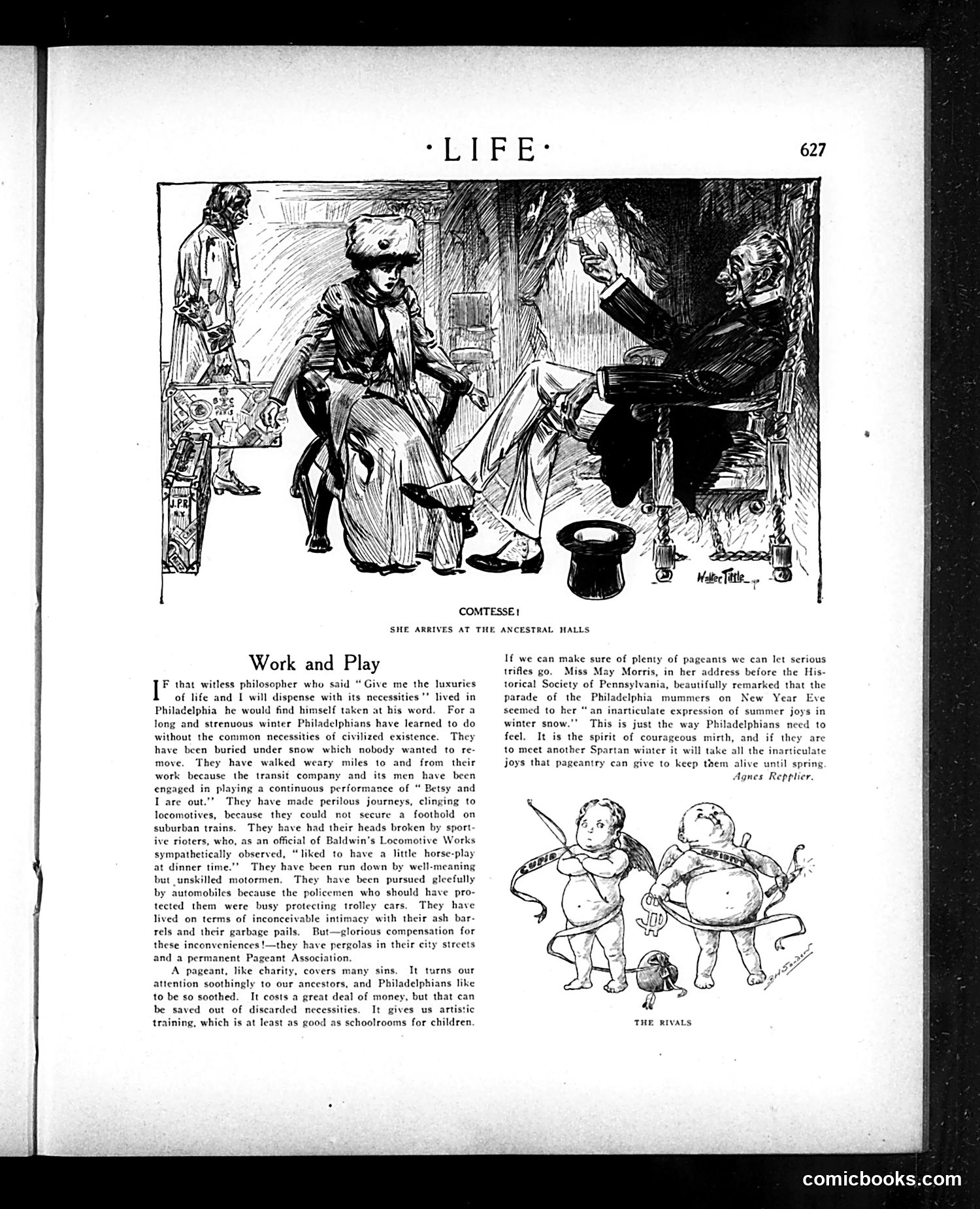
This *Life* magazine page satirizes Philadelphia's misplaced priorities during a harsh winter. The top cartoon shows a wealthy woman ("Comtesse") arriving at ancestral halls—representing the city's obsession with pageantry and historical pageants. The accompanying essay argues that Philadelphians endured genuine hardships—transit strikes, dangerous conditions, inadequate snow removal—yet celebrated this suffering by investing heavily in elaborate civic pageants and parades instead of addressing basic needs. The satire is sharp: the city sacrificed "necessities" for "luxuries" (pageants), inverting the famous quote. The author (Agnes Repplier) mocks how pageantry serves as emotional compensation, allowing citizens to romanticize winter hardship as "inarticulate expression" rather than demanding practical improvements. The small illustration "The Rivals" (bottom) appears to be unrelated filler. The point: civic vanity and spectacle distract from real problems and justify neglecting citizens' actual welfare.
📄 Transcribed text from this page (OCR, searchable)
Machine-transcribed from the original scan — historical spelling and the odd misread are preserved.
COMTESSE! SHE ARRIVES AT THE ANCESTRAL HALLS Work and Play I F that witless philosopher who said “Give me the luxuries of life and I will dispense with its necessities '’ lived in Philadelphia he would find himself taken at his word. For a long and strenuous winter Philadelphians have learned to do without the common necessities of civilized existence. They have been buried under snow which nobody wanted to re- move. They have walked weary miles to and from their work because the transit company and its men have been engaged in playing a continuous performance of “ Betsy and I are out.” They have made perilous journeys, clinging to locomotives, because they could not secure a foothold on suburban trains. They have had their heads broken by sport- ive rioters, who, as an official of Baldwin's Locomotive Works sympathetically observed, “liked to have a little horse-play at dinner time."’ They have been run down by well-meaning but unskilled motormen. They have been pursued gleefully by automobiles because the policemen who should have pro- tected them were busy protecting trolley cars, They have lived on terms of inconceivable intimacy with their ash bar- rels and their garbage pails. But—glorious compensation for these inconveniences !—they have pergolas in their city streets and a permanent Pageant Association. A pageant, like charity, covers many sins. It turns our attention soothingly to our ancestors, and Philadelphians like to be so soothed. It costs a great deal of money, but that can be saved out of discarded necessities. It gives us artistic training, which is at least as good as schoolrooms for children. If we can make sure of plenty of pageants we can let serious trifles go. Miss May Morris, in her address before the His- torical Society of Pennsylvania, beautifully remarked that the parade of the Philadelphia mummers on New Year Eve seemed to her “an inarticulate expression of summer joys in winter snow.'’ This is just the way Philadelphians need to feel. It is the spirit of courageous mirth, and if they are to meet another Spartan winter it will take all the inarticulate joys that pageantry can give to keep taem alive until spring Agnes Repplier. THE RIVALS comicbooks:com