
Life, 1910-03-10 · page 9 of 36
Life — March 10, 1910 — page 9: what you’re looking at
What you’re looking at
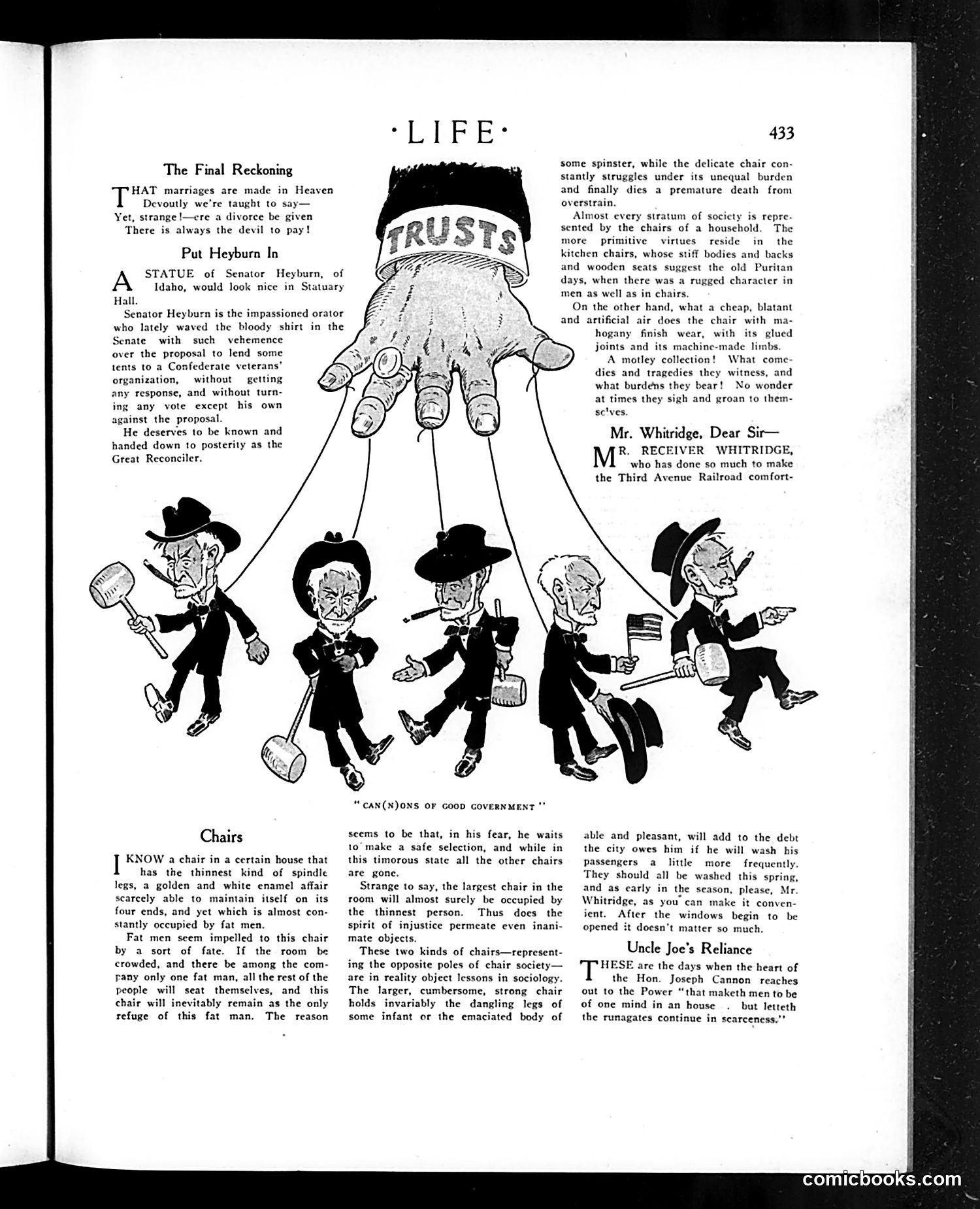
This cartoon satirizes political corruption and corporate influence, showing five caricatured figures manipulated by a giant hand labeled "TRUSTS" above them. The figures appear to be politicians or government officials literally controlled like puppets by monopolistic business interests. The satire suggests that major trusts (large corporations) control government decision-making rather than elected officials serving the public interest. This reflects early 20th-century Progressive Era concerns about unchecked corporate power and monopolies. The accompanying articles about Senator Heyburn and railroad receiver Whitridge reinforce this theme of political figures either opposing or benefiting from trust influence. The cartoon's central message: American government is corrupted by corporate manipulation of those supposedly serving the people.
📄 Transcribed text from this page (OCR, searchable)
Machine-transcribed from the original scan — historical spelling and the odd misread are preserved.
The Final Reckoning HAT marriages are made in Heaven Devoutly we're taught to say— Yet, strange !—cre a divorce be given There is always the devil to pay! Put Heyburn In STATUE of Senator Heyburn, of Idaho, would look nice in Statuary Hall Senator Heyburn is the impassioned orator who lately waved the bloody shirt in the Senate with such vehemence over the proposal to lend some tents to a Confederate veterans’ organization, without getting any response, and without turn- ing any vote except his own against the proposal. He deserves to be known and handed down to posterity as the Great Reconciler. Chairs KNOW a chair in a certain house that has the thinnest kind of spindle legs, a golden and white enamel affair scarcely able to maintain itself on its four ends, and yet which is almost con- stantly occupied by fat men. Fat men scem impelled to this chair by a sort of fate. If the room be crowded, and there be among the com- rany only one fat man, all the rest of the people will seat themselves, and this chair will inevitably remain as the only refuge of this fat man. The reason 433 some spinster, while the delicate chair con- stantly struggles under its unequal burden and finally dies a premature death from overstrain. Almost every stratum of society is repre sented by the chairs of a household. The more primitive virtues reside in the kitchen chairs, whose stiff bodies and backs and days, when there was st the old Puritan rugged character in wooden seats su; men as well as in chairs. On the other hand, what a cheap, blatant and “ CAN(N)ONS OF GOOD GOVERNMENT "* seems to be that, in his fear, he waits to make a safe selection, and while in this timorous state all the other chairs are gone. Strange to say, the largest chair in the room will almost surely be occupied by the thinnest person. Thus does the spirit of injustice permeate even inani- mate objects. These two kinds of chairs—represent- ing the opposite poles of chair society are in reality object lessons in sociology. The larger, cumbersome, strong chair holds invariably the dangling legs of some infant or the emaciated body of artificial air does the chair with ma- hogany finish wear, with its glued joints and its machine-made limbs. A motley collection! What come- dies and tragedies they witness, and what burdens they bear! No wonder at times they sigh and groan to them- sc'ves. Mr. Whitridge, Dear Sir— R. RECEIVER WHITRIDGE, who has done so much to make the Third Avenue Railroad comfort- able and pleasant, will add to the debt the city owes him if he will wash his passengers a little more frequently. They should all be washed this spring, and as early in the season, please, Mr. Whitridge, as you’ can make it conven- ient. After the windows begin to be opened it doesn't matter so much. Uncle Joe’s Reliance HESE are the days when the heart of the Hon. Joseph Cannon reaches out to the Power “that maketh men to be of one mind in an house but letteth the runagates continue in scarceness.’* comicbooks.com