
Life, 1910-03-10 · page 24 of 36
Life — March 10, 1910 — page 24: what you’re looking at
What you’re looking at
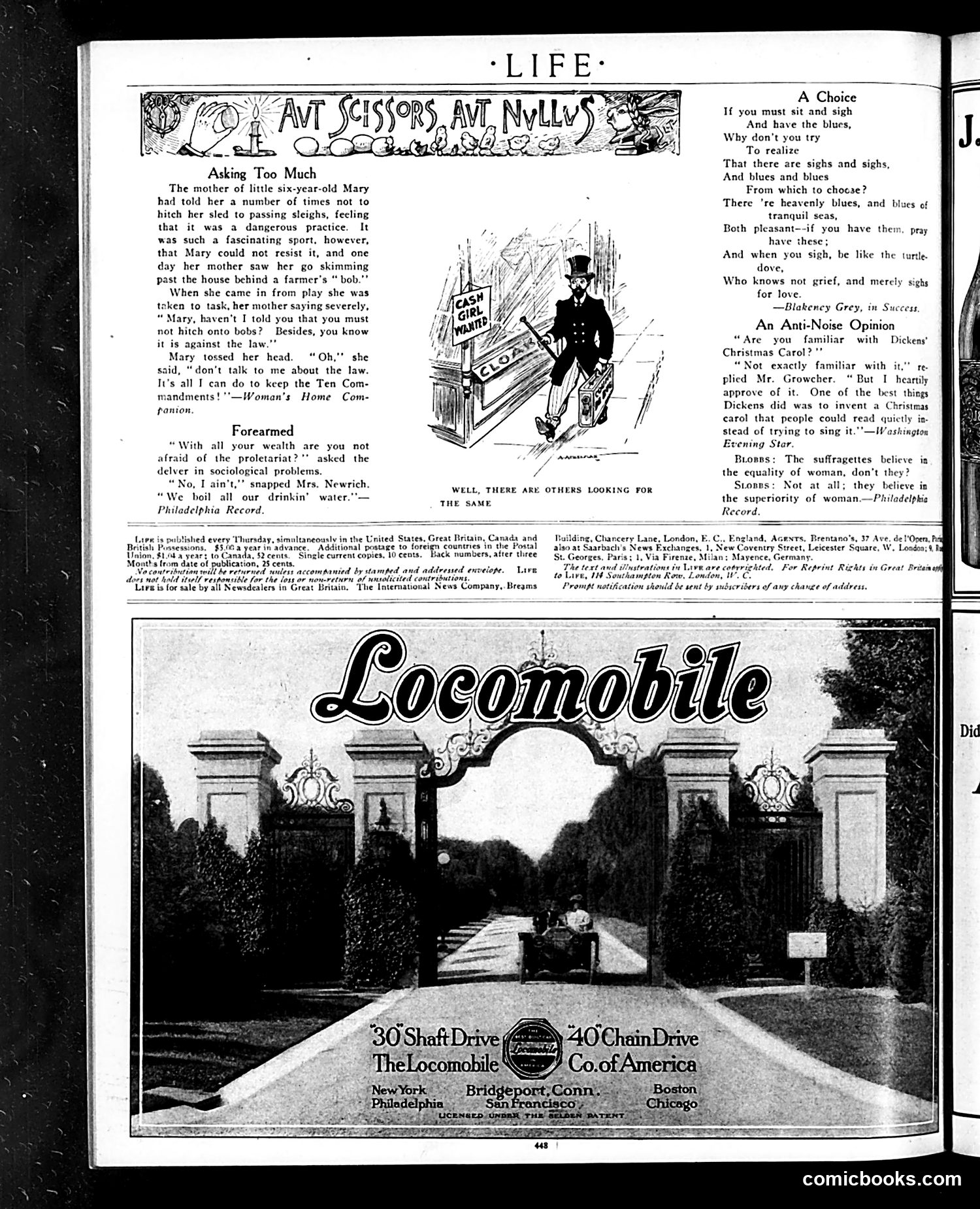
This page contains three brief humorous anecdotes typical of early 20th-century American satire: **"Asking Too Much"**: A six-year-old girl defies her mother's safety warnings about hitching her sled to passing sleighs. When scolded that it's "against the law," she dismisses rules by saying she can barely manage the Ten Commandments—satirizing children's selective obedience and the gap between moral and civil laws. **"Forearmed"**: A wealthy woman (Mrs. Newrich—a caricature name suggesting nouveau riche pretension) dismisses fears of socialist "proletariat" uprising by claiming she boils her drinking water. The joke mocks both the era's class anxieties about working-class revolution and the absurd notion that sanitation prevents political upheaval. **"An Anti-Noise Opinion"**: Mr. Growcher appreciates Dickens' *Christmas Carol* because people can *read* it quietly rather than sing carols aloud—satirizing the character's curmudgeonly preference for silence over festive noise. The page primarily advertises Locomobile automobiles below these brief comedic pieces.
📄 Transcribed text from this page (OCR, searchable)
Machine-transcribed from the original scan — historical spelling and the odd misread are preserved.
Asking Too Much The mother of little six-year-old Mary had told her a number of times not to hitch her sled to passing sleighs, fecling that it was a dangerous practice. It was such a fascinating sport, however, that Mary could not resist it, and one day her mother saw her go skimming past the house behind a farmer's “ bob.’’ When she came in from play she was taken to task, her mother saying severcly, “Mary, haven't I told you that you must not hitch onto bobs? Besides, you know it is against the law.’" Mary tossed her head. “ Oh," she said, “don’t talk to me about the law. It's all I can do to keep the Ten Com- mandments! ''—Woman's Home Com- panion, Forearmed “With all your wealth are you not afraid of the proletariat?’ asked the delver in sociological problems, Yo, I ain't,"” snapped Mrs, Newrich. “We boil all our drinkin’ water. rite sae Philadelphia Record. “a L.tem ig published every ‘Thursday, simultaneously in the tates, Great Britain, Canada and Siloa year w'advance. Additional postage to foreign countries in the Postal Mision: gtcka yearé to Canada, 52 centa. "Single curren copies 0 ee. Thumbers, atter three Monts from date of publication, 25 cents. Vo contribution wilt be returned unless accompanied by stamped and addressed envelope. Lire dors uot hold itarf responsible for the loss or noncretnrn af wnsotictted contr ntions Lars is for sale by afl Newsdealers in Great britain, ‘The International News Company, Breams WELL, THERE ARE OTHERS LOOKING FOR A Choice If you must sit and sigh And have the blues, Why don’t you try To realize That there are sighs and sighs, And blues and blues From which to chocse? There ‘re heavenly blues, and blues of tranquil seas, Both pleasant--if you have them. pray have these; And when you sigh, be like the turtle dove, Who knows not grief, and merely sighs for love. —Blakency Grey, in Success An Anti-Noise Opinion “Are you familiar with Dickens’ Christmas Carol? Not exactly familiar with it.” re plied Mr. Growcher. “But I heartily approve of it. One of the best things Dickens did was to invent a Christmas carol that people could read quictly in- stead of trying to sing it."’—IVoshington Evening Stor. Bionns: The suffragettes believe in the equality of woman, don’t they? Stonps: Not at all; they believe in the superiority of woman.—Philadelphia V Chancery Lane, London, E. C.. England, A also at Saarbach's jeorges, Par Coventry, comicbooks.com