
Life, 1910-02-03 · page 25 of 44
Life — February 3, 1910 — page 25: what you’re looking at
What you’re looking at
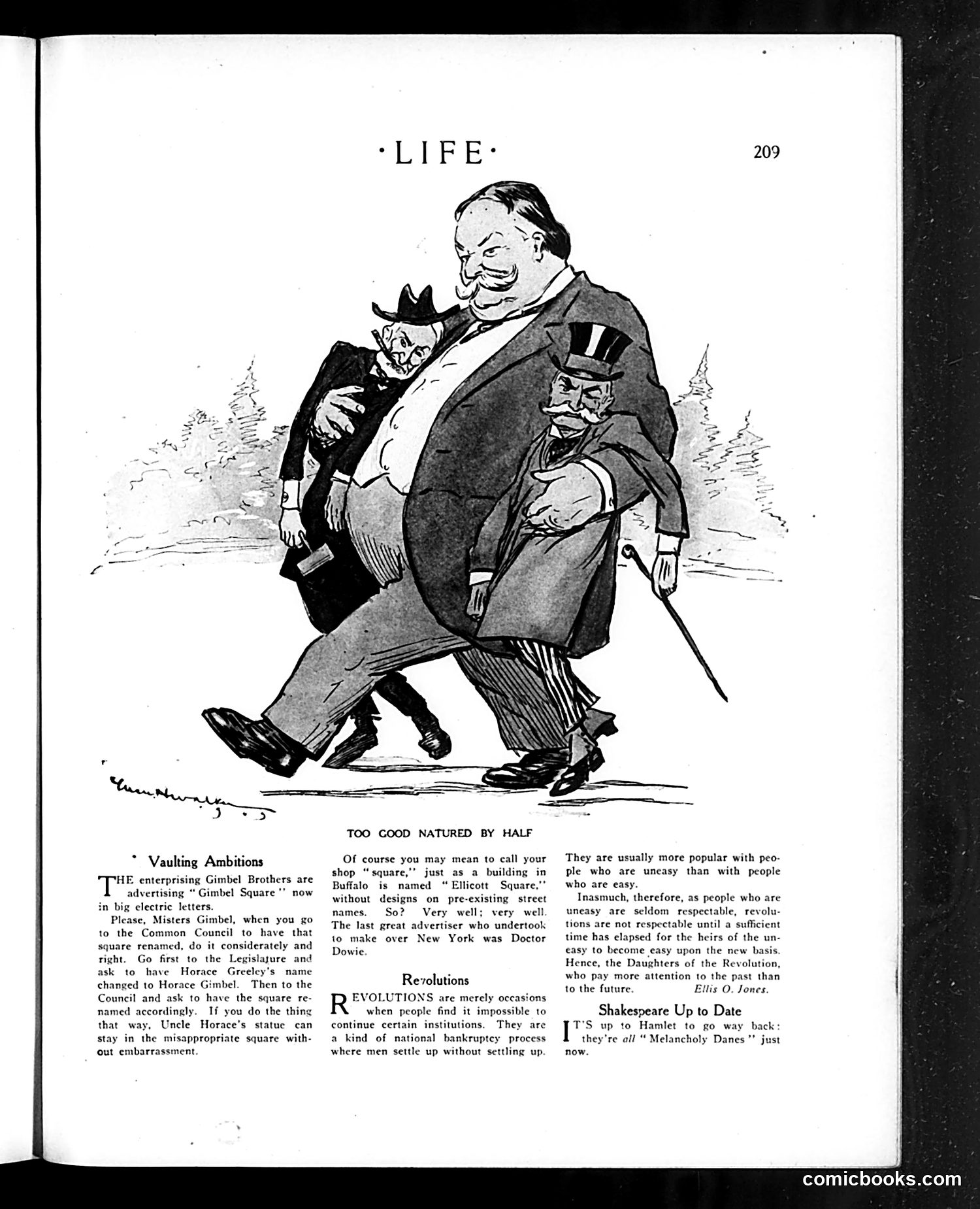
This cartoon satirizes the Gimbel Brothers department store's advertising campaign promoting "Gimbel Square." The store apparently sought to rename an existing New York City square after themselves—likely one currently named after Horace Greeley (visible statue referenced in text). The caricatured figure represents the Gimbels, depicted as corpulent and self-aggrandizing, carrying smaller figures (perhaps representing their commercial ambitions). The satire mocks their presumption: the editorial suggests they should properly petition the legislature to rename *Greeley himself* to "Horace Gimbel" before renaming the square—a sarcastic commentary on their naked commercial ego-branding. The text references Dr. Dowie as a previous "great advertiser" who attempted similar self-promotion, implying this is unseemly corporate vanity, not legitimate civic contribution.
📄 Transcribed text from this page (OCR, searchable)
Machine-transcribed from the original scan — historical spelling and the odd misread are preserved.
Vaulting Ambitions HE enterprising Gimbel Brothers are advertising “ Gimbel Square '’ now in big electric letters. Please, Misters Gimbel, when you go to the Common Council to have that square renamed, do it considerately and ght. Go first to the Legislajure and ask to have Horace Greeley’s name changed to Horace nbel. Then to the Council and ask to have the square re- named accordingly. If you do the thing that way, Uncle Horace’s statue can stay in the misappropriate square with- out embarrassment. TOO GOOD NATURED BY HALF Of course you may mean to call your shop “square,”” just as a building in Buffalo is named “Ellicott Square,” without designs on pre-existing street names. So? Very well; very well The last great advertiser who undertook to make over New York was Doctor Dowie. Revolutions EVOLUTIONS are merely occasions when people find it impossible to continue certain institutions. They are a kind of national bankruptcy process where men settle up without settling up. They are usually more popular with peo- ple who are uneasy than with pcople who are easy. Inasmuch, therefore, as people who are uneasy are seldom respectable, revolu- tions are not respectable until a sufficient time has elapsed for the heirs of the un- easy to become easy upon the new basis. Hence, the Daughters of the Revolution, who pay more attention to the past than to the future. Ellis O. Jones. Shakespeare Up to Date T'S up to Hamlet to go way back: they're all “ Melancholy Danes”? just now. comicbooks.com