
Life, 1909-09-16 · page 9 of 32
Life — September 16, 1909 — page 9: what you’re looking at
What you’re looking at
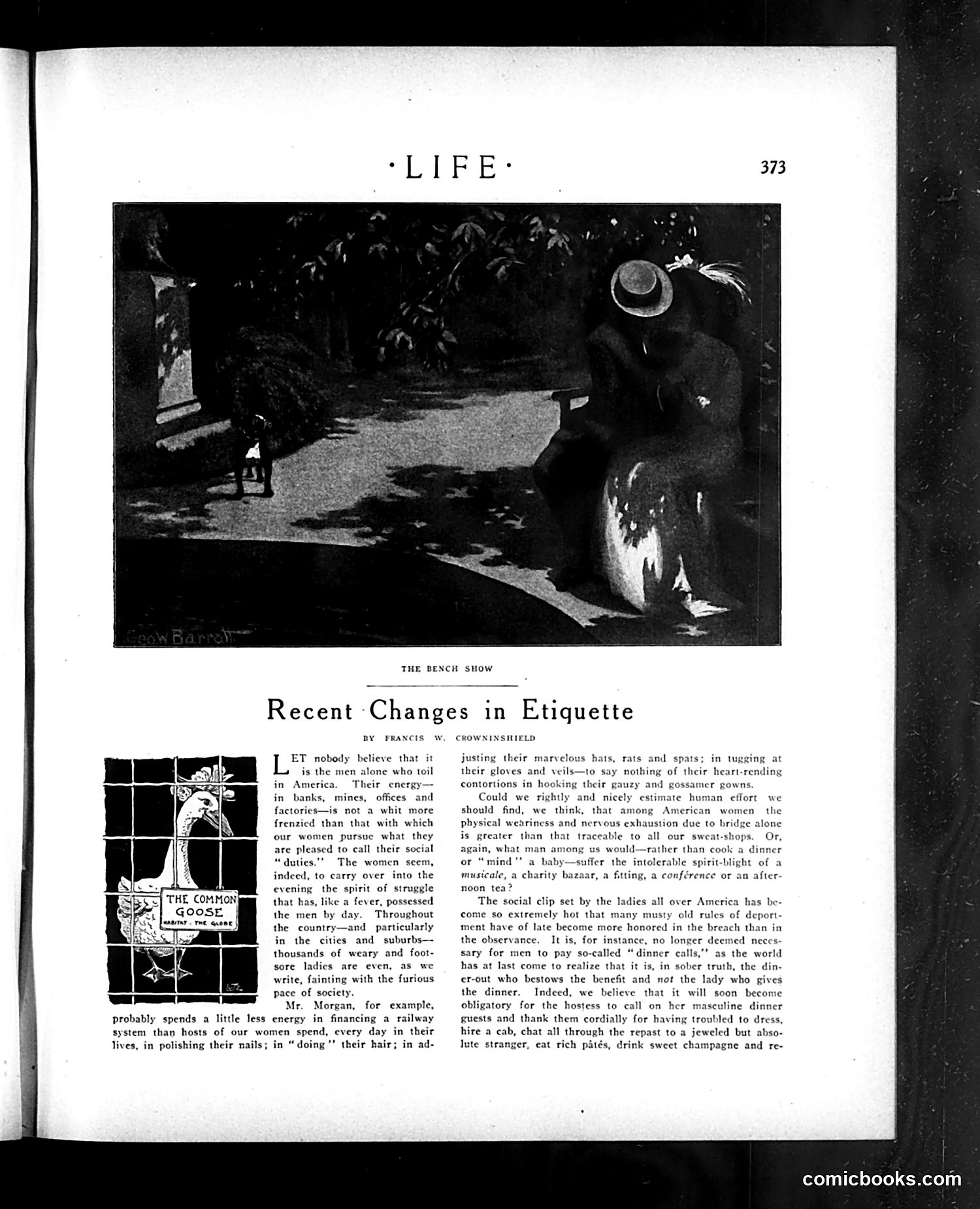
This page from *Life* magazine satirizes modern American social behavior, particularly among the wealthy and leisure classes. The photo titled "The Bench Show" depicts a woman in fashionable dress and hat sitting outdoors, likely making social commentary on public behavior. The accompanying article by Francis W. Crowninshield critiques how American women have adopted more relaxed, energetic lifestyles—engaging in activities like sports and public socializing—rather than maintaining strict Victorian propriety. The text ironically suggests that women now spend less energy on domestic duties and social formalities, instead participating in "dinner calls" and social events. The sidebar illustration labeled "The Common Goose" appears to be a humorous counterpoint to these changing social norms, though its exact meaning is unclear from the visible portion.
📄 Transcribed text from this page (OCR, searchable)
Machine-transcribed from the original scan — historical spelling and the odd misread are preserved.
THE BENCH sHow Recent Changes in Etiquette BY FRANCIS ET nobody believe that it is the men alone who toil Their energy— in banks, mines, offices and factories—is not a whit more frenzied than that with which our women pursue what they are pleased to call their social duties."". The women seem, indeed, to carry over into the evening the spirit of struggle that has, like a fever, possessed the men by day. Throughout the country—and particularly in the cities and suburbs— thousands of weary and foot- sore ladies are even, write, fainting with the furious pace of society. Mr. Morgan, for example, probably spends a little less energy in financing a railway system than hosts of our women spend, every day in their lives, in polishing their nails; in “doing ’” their hair; in ad- in America. as we w. CROWNINSITIELD justing their marvelous hats, rats and spats; in tugging at their gloves and veils—to say nothing of their heart-rending contortions in hooking their gauzy and gossamer gowns Could we rightly and nicely human effort should find, we think, that American women the physical weariness and nervous exhaustion due to bridge alone is greater than that traceable to all our sw Or, again, what man among us would—rather than cook a dinner or “mind '' a baby—suffer the intolerable spirit-blight of a musicale, a charity bazaar, a fitting, a conférence or an after- noon tea? The social clip set by the ladies all over America has be- come so extremely hot that many musty old rules of deport- ment have of late become more honored in the breach than in the observance. It is, for instance, no loni sary for men to pay so-called “dinner calls," as the world has at last come to realize that it is, in sober truth, the din- er-out who bestows the benefit and not the lady who gives the dinner. Indeed, we believe that it will soon become obligatory for the hostess to call on her masculine dinner guests and thank them cordially for having troubled to dress, hire a cab, chat all through the repast to a jeweled but abso- lute stranger, eat rich patés, drink sweet champagne and re- estimate we among at-shops. + deemed neces- comicbooks.com