
Life, 1909-05-27 · page 14 of 32
Life — May 27, 1909 — page 14: what you’re looking at
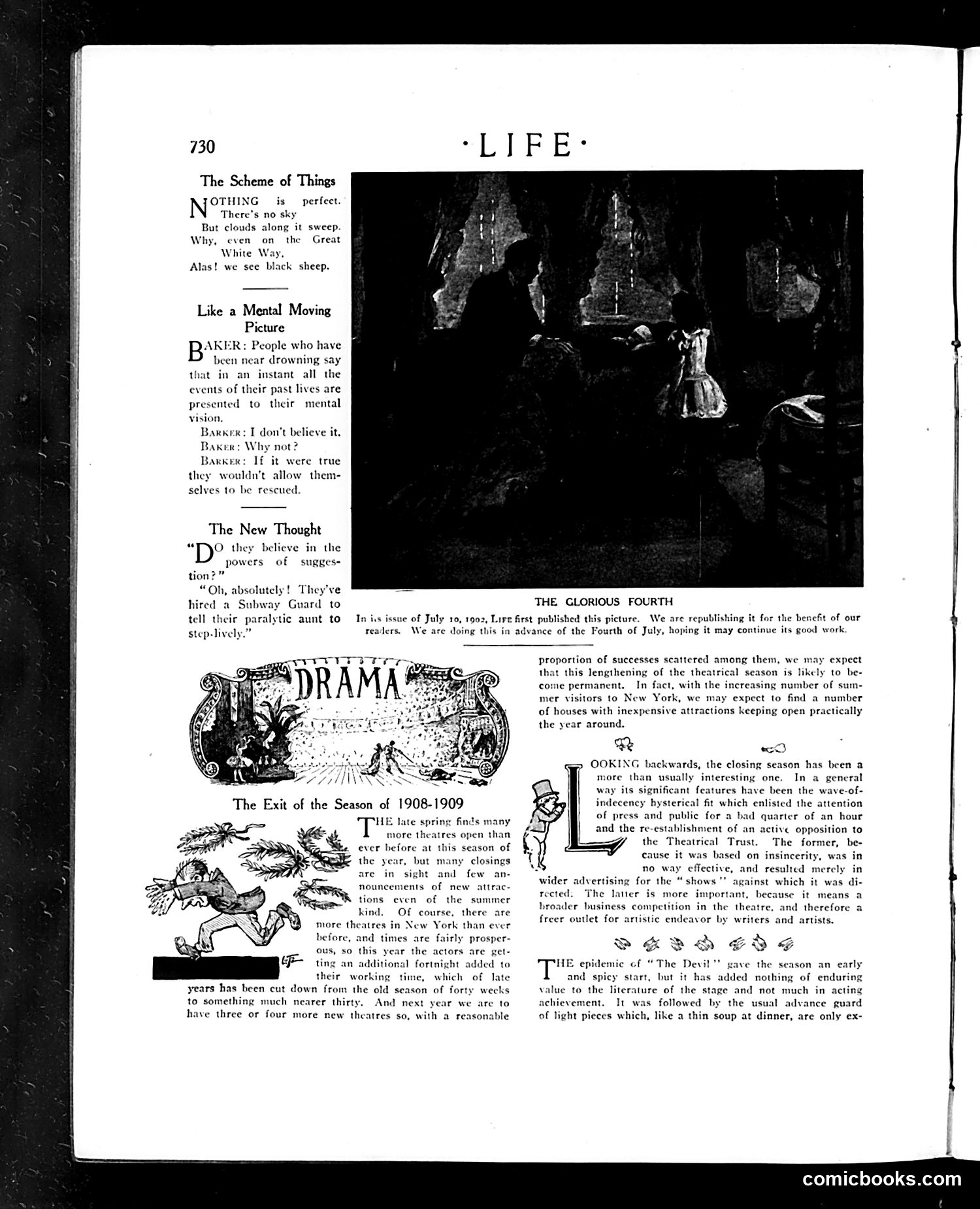
What you’re looking at
This page from *Life* magazine (circa 1902-1909) contains three separate humorous pieces: **"The Scheme of Things"**: A short poem about imperfection, using the metaphor of clouds on the sky and "black sheep" on Broadway—likely critiquing moral failings in New York's theater district. **"Like a Mental Moving Picture"**: A joke dialogue between Baker and Barker about near-death experiences. The humor relies on the contemporary belief that drowning victims see their entire lives flash before them—Barker cynically suggests no one would allow themselves to be rescued if this were true. **"The New Thought"**: A brief joke about "New Thought" philosophy (a popular early-1900s movement emphasizing mind-over-matter healing). The satire mocks its believers for hiring a subway guard to use "suggestion" to cure a paralyzed aunt—implying the philosophy's absurd overreach. The remaining text discusses Broadway's theatrical season, closings, and debates over indecency in theater and monopolistic practices by the "Theatrical Trust."
📄 Transcribed text from this page (OCR, searchable)
Machine-transcribed from the original scan — historical spelling and the odd misread are preserved.
730 The Scheme of Things OTHING is __ perfect. There's no sky But clouds along it sweep. Why, even on the Great White Way, Alas! we see black sheep. Like a Mental Moving Picture AKER: People who have been near drowning say that in an instant all the events of their past lives are presented to their mental vision, Barker: I don’t believe it. Baker: Why not? Bakke: If it were true they wouldn't allow them- selves to be rescued. The New Thought “D)O they believe in the powers of sugges tion?” “Oh, absolutely! They've hired a Subway Guard to THE GLORIOUS FOURTH tell their paralytic aunt to — In iss issue of July 10, 1902, Lire first published this picture. We are republishing it for the benefit of our step-lively.” 09 HE late spring finds many more theatres open than ever before at this season of the year, but many closings are in sight and fe’ an- nouncements of new attrac- tions even of the summer il. Of course, there are more theatres in New York than ever before, and times are fairly prospe ous, so this year the actors are get fortnight added to their working time, which of late years has been cut down from the old season of forty to something much nearer thirty. And next year we are to have three or four more new theatres so, with a reasonable realers. We are doing this in advance of the Fourth of July, hoping it may continue its good work proportion of successes scattered among them, we may expect that this lengthening of the theatrical season is likely to be- come permanent. In fact, with the increasing number of sum- mer visitors to New York, we may expect to find a number of houses with inexpensive attractions keeping open practically the year around. Be <3 OOKING backwards, the closing season has been a more than usually interesting one. In a general way its significant features have been the wave-of- indecency hysterical fit which enlisted the attention of press and public for a bad quarter of an hour and the re-establishment of an active opposition to the Theatrical Trust. The former, be- cause it was based on in: i no way effective, and resulted merely in wider advertising for the “shows” against which it was di- rected. ‘The latter is more important, because it means a broader business competition in the theatre, and therefore a freer outlet for artistic endeavor by writers and artists. HE epidemic of “The Devil’ gave the season an early and spicy start, but it has added nothing of enduring value to the literature of the stage and not much in acting achievement. It was followed by the usual advance guard of light pieces which, like a thin soup at dinner, are only ex- comicbooks.com