
Life, 1909-01-14 · page 7 of 28
Life — January 14, 1909 — page 7: what you’re looking at
What you’re looking at
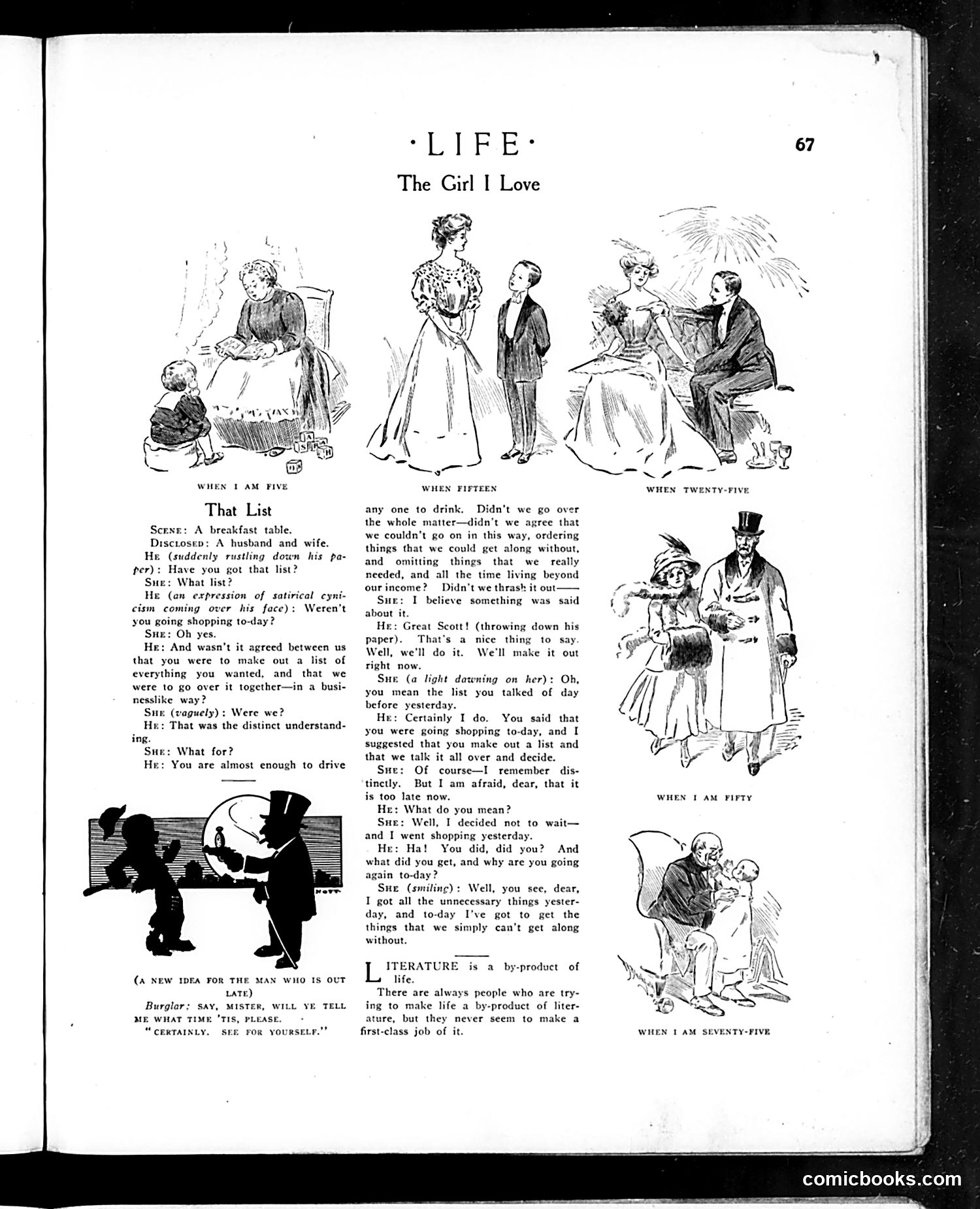
This satirical piece contrasts a woman's attitudes toward shopping and budgeting across different life stages. At age five, she's innocent; at fifteen, she's concerned about finances with a young man; at twenty-five, she's fashionably dressed and carefree with a gentleman caller. The central dialogue mocks marital dynamics: a husband and wife argue over a shopping list. She initially agrees to economize, then secretly shops anyway, justifying unnecessary purchases as essentials. His exasperated response—"You are almost enough to drive a man to drink"—suggests wives' spending habits were a common satirical target. The final note about literature being a "by-product of life" is unclear in context but appears to be editorial commentary. The humor relies on period stereotypes about women's irresponsible spending and marital conflict over finances.
📄 Transcribed text from this page (OCR, searchable)
Machine-transcribed from the original scan — historical spelling and the odd misread are preserved.
WHEN 1 AM FIVE That List Scexe: A breakfast table. Disctosep: A husband and wife. He (suddenly rustling down his pa- : Have you got that list? e: What list? He (an expression of satirical cyni- cism coming over his face): Weren't you going shopping to-day? Sue: Oh yes. He: And wasn’t it agreed between us that you were to make out a list of everything you wanted, and that we were to go over it together—in a busi- nesslike way? Sue. (vaguely): Were we? He: That was the distinct understand- What for? : You are almost enough to drive (A NEW IDFA FOR THE MAN WHO 18 OUT Late) Burglar: say, MISTER, WILL YE TELL WHAT TIME ‘TIS, PLEASE. . CERTAINLY. SEE FOR YOURSELF.’’ ay, | PB * The Girl I Love WHEN FIFTEEN any one to drink. Didn't we go over the whole matter—didn’t we agree that we couldn't go on in this way, ordering things that we could get along without, and omitting things that we really needed, and all the time living beyond our income? Didn't we thrash it out Sur: I believe something was said about it. He: Great Scott! (throwing down his paper). That's a nice thing to say. Well, we'll do it. We'll make it out right now. Sur (a light dawning on her): Oh, you mean the list you talked of day before yesterday. He: Certainly I do. You said that you were going shopping to-day, and I suggested that you make out a list and that we talk it all over and decide. Sue: Of course—I remember dis- tinetly, But I am afraid, dear, that it is too late now. He: What do you mean? Sue: Well, I decided not to wait— and I went shopping yesterday. He: Ha! You did, did you? And what did you get, and why are you going again to-day? Sue (smiling): Well, you see, dear, I got all the unnecessary things yester- day, and to-day I've got to get the things that we simply can’t get along without. ITERATURE is a life. There are always people who are try- ing to make life a by-product of liter- ature, but they never seem to make a first-class job of it. by-product of WHEN TWENTY-FIVE ce as VS SS bs WHEN 1 AM SEVENTY-PIVE comicb ooks.com