
Life, 1908-12-24 · page 9 of 20
Life — December 24, 1908 — page 9: what you’re looking at
What you’re looking at
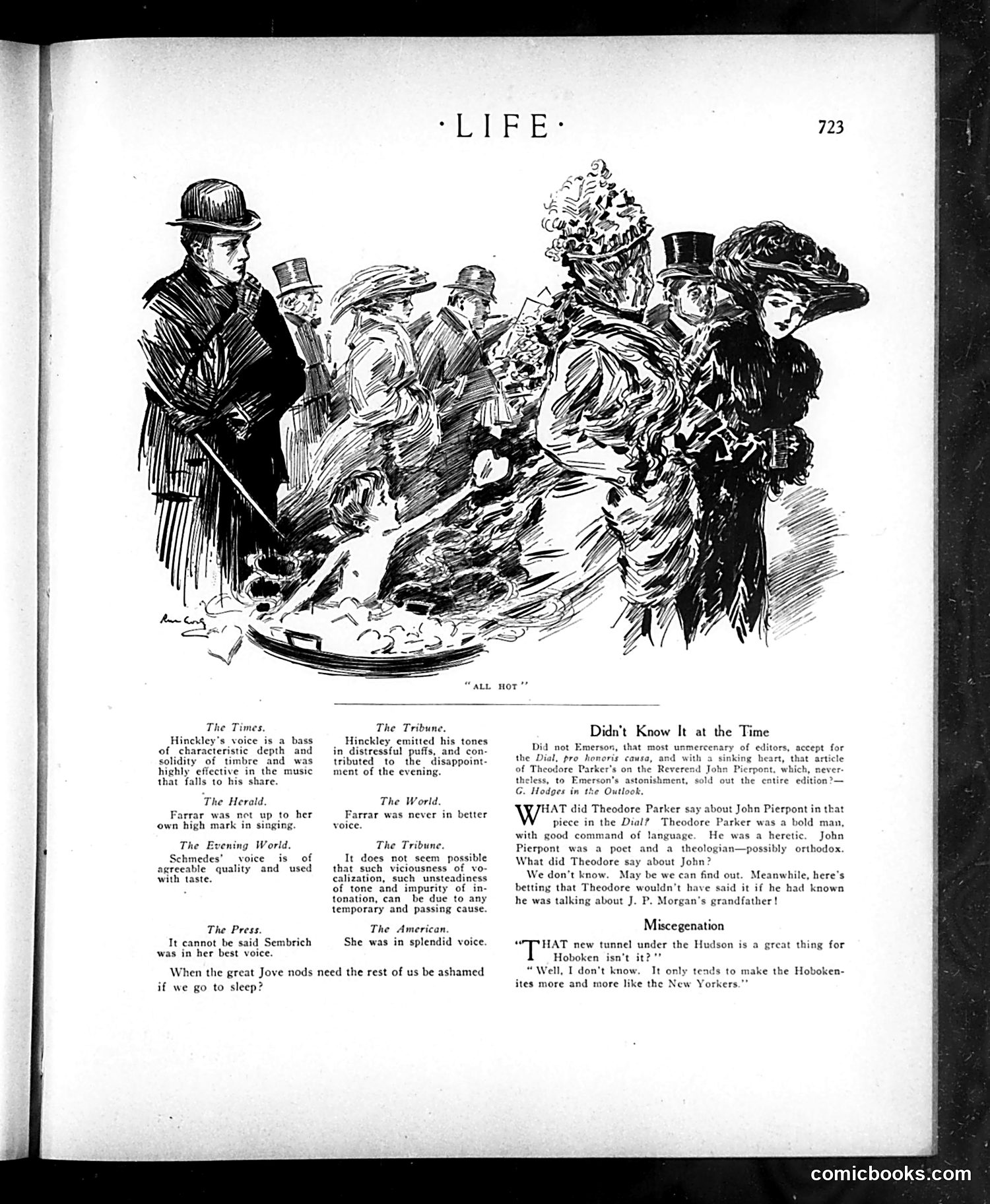
This sketch satirizes a heated public debate, likely about Theodore Parker, a 19th-century theologian and abolitionist. The cartoon's title "All Hot" suggests arguments have become overheated and emotional rather than rational. The text references competing newspaper accounts: the Times praised singer Hinckley's performance, the Tribune criticized it, and the World and American offered different takes. The "Didn't Know It at the Time" section mocks Theodore Parker's involvement in a controversy—possibly related to J.P. Morgan's grandfather, based on the text's mention. The crowded, animated figures in the sketch suggest contentious public debate. The satire appears aimed at how the same event generates wildly contradictory press coverage and public reaction, with everyone speaking passionately but nobody agreeing on facts.
📄 Transcribed text from this page (OCR, searchable)
Machine-transcribed from the original scan — historical spelling and the odd misread are preserved.
The Times. Hinckley’s voice is a bass acteristic depth and f timbre and was y effective in the music that falls to his share. The Herald. Farrar was net up to her own high mark in singing. The Evening World. Schmedes’ voice is of agreeable quality and used with taste. The Press. It cannot be said Sembrich was in her best voice. “aut nor’? The Tribune. Hinckley emitted his tones in distressful puffs, and con- tributed to the disappoint- ment of the evening. The World. Farrar was never in better voice. The Tribune. It does not seem possible that such viciousness of vo- calization, such unsteadiness of tone and impurity of in- tonation, canbe due to any temporary and passing cause. The American. She was in splendid voice. When the great Jove nods need the rest of us be ashamed if we go to sleep? Didn't Know It at the Time Did not Emerson, that most unmercenary of editors, accept the Dial, pro honoris causa, of Theodore Parker's on the Revere theless, to Emerson's astonishm G. Hodges in the Outlook, HAT did Theodore Parker say about John Pierpont in that piece in the Dial? Theodore Parker was a bold man, with good command of language. He was a heretic. John Pierpont was a poct and a theologian—possibly orthodox. What did Theodore say about John? We don’t know. May be we can find out. Meanwhile, here's betting that Theodore wouldn't have said it if he had known he was talking about J. P. Morgan's grandfather! Miscegenation “HAT new tunnel under the Hudson is a great thing for Hoboken isn’t it?” Well, I don't know. It only tends to make the Hoboken- ites more and more like the New Yorkers.”” comicbooks:com