
Life, 1908-10-01 · page 24 of 44
Life — October 1, 1908 — page 24: what you’re looking at
What you’re looking at
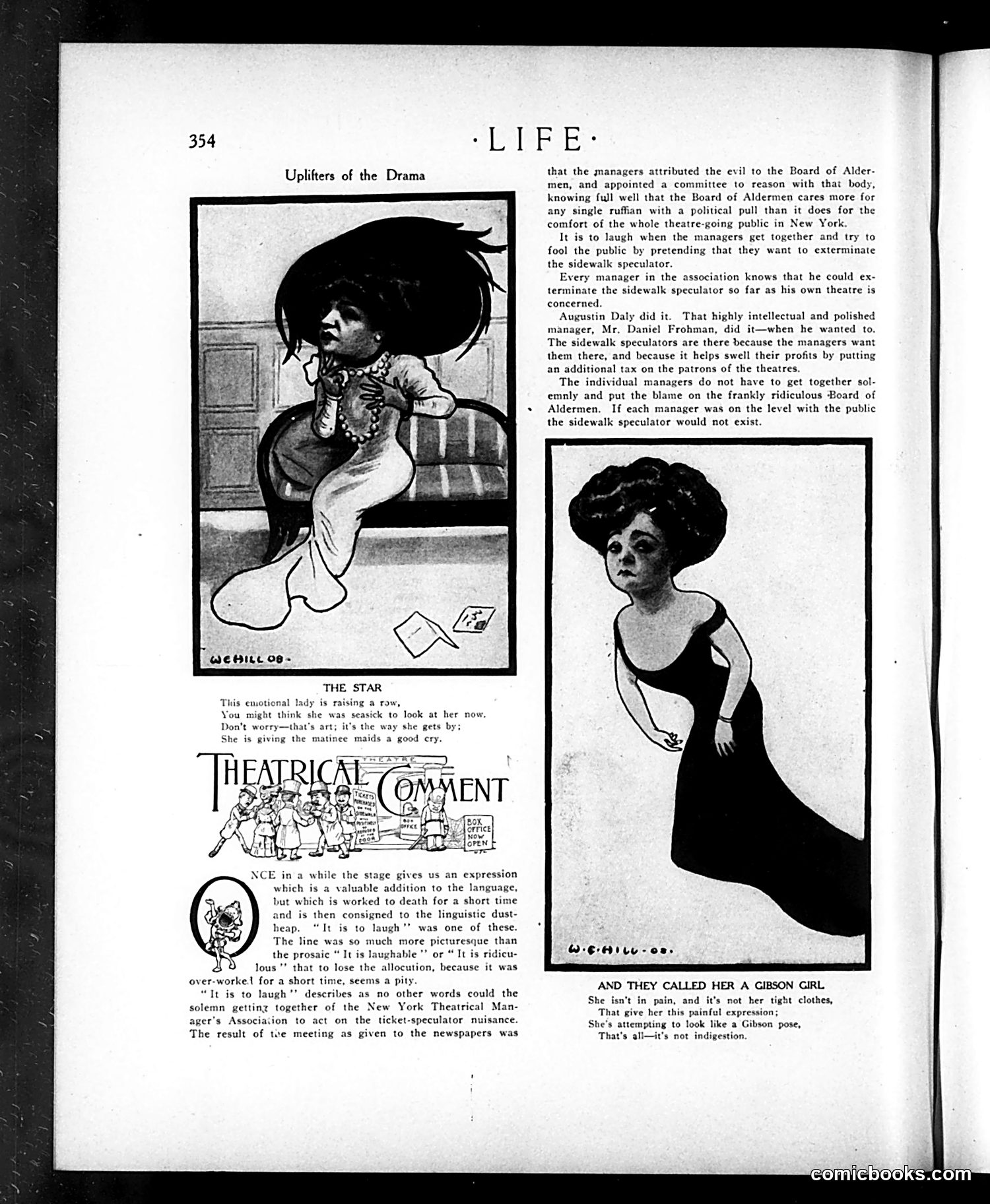
This 1900s Life magazine page satirizes theatrical hypocrisy. The main article mocks New York theater managers who publicly blamed the Board of Aldermen for ticket scalpers ("sidewalk speculators"), while the text argues managers actually *enabled* scalping to pad profits. The satire's point: the managers' elaborate committee meetings to "solve" the problem were theatrical performance themselves—dishonest PR. Notably, the text credits managers Augustin Daly and Daniel Frohman as having actually *stopped* scalping at their theaters, proving individual action was possible. The phrase "It is to laugh" (meaning "how ridiculous") anchors the mockery. The right image, "And They Called Her a Gibson Girl," satirizes the popular Gibson Girl ideal—the fashionable female silhouette of that era. It suggests women contorting themselves into the stylized pose looked absurdly pained, yet attributed this discomfort to mere fashion rather than recognizing the physical strain of the trend itself.
📄 Transcribed text from this page (OCR, searchable)
Machine-transcribed from the original scan — historical spelling and the odd misread are preserved.
> ERE Es: Uplifters of the Drama WE HILC 08- THE STAR dy is raising a row, she was seasick to look at her now. Don't worry—that's art; it's the way she gets by; She is giving the matinee maids a good cry. This emotional E in a while the stage gives us an expression which is a valuable addition to the lang but which is worked to death for a short t d is then consigned to the linguistic dust- heap. “It is to laugh’? was one of these. The line was so much more picturesque than the prosaic “It is laughable"? or “It is ridicu- lous "’ that to lose the allocution, because it was over-workel for a short time, seems a pity. “It is to laugh"? describes as no other words could the solemn getting together of the New York Theatrical Man- ager’s Associacion to act on the ticket-speculator nuisance The result of te meeting as given to the newspapers was that the managers attributed the evil to the Board of Alder- men, and appointed a committee to reason with that body, knowing {wll well that the Board of Aldermen cares more for any single ruffian with a political pull than it does for the comfort of the whole theatre-going public in New York. It is to laugh when the managers get together and try to fool the public by pretending that they want to exterminate the sidewalk speculator. Every manager in the association knows that he could ex- terminate the sidewalk speculator so far as his own theatre is concerned. Augustin Daly did it. That highly intellectual and polished manager, Mr. Daniel Frohman, did it—when he wanted to. The sidewalk speculators are there because the managers wan them there, and because it helps swell their profits by putting an additional tax on the patrons of the theatres. The individual managers do not have to get together sol- emnly and put the blame on the frankly ridiculous Board of Aldermen. If each manager was on the level with the public the sidewalk speculator would not exist. AND THEY CALLED HER A CIBSON GIRL She isn't in pain, and it’s not her tight clothes, That give her this painful expression; She's attempting to look like a Gibson pose, That's all—it's not indigestion.