
Life, 1908-09-24 · page 14 of 24
Life — September 24, 1908 — page 14: what you’re looking at
What you’re looking at
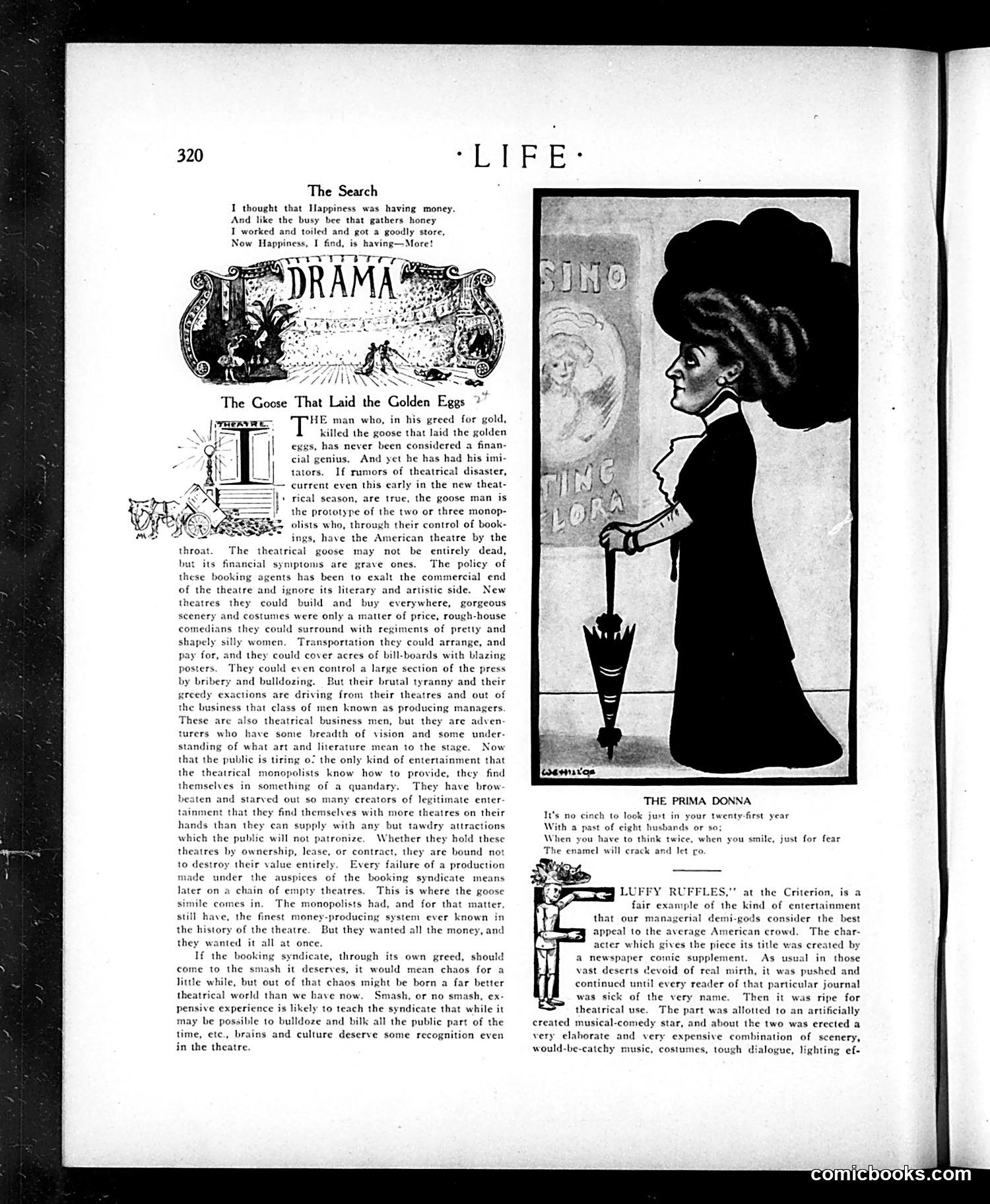
This page satirizes **theatrical monopolies** controlling American theater in the early 20th century. The main article, "The Goose That Laid the Golden Eggs," attacks **booking agents and theater syndicates** who wielded excessive power through control of theater bookings and venues. The satire's point: these monopolists, like the man in Aesop's fable, are killing their own golden goose by prioritizing short-term profit over artistic quality. They've starved out legitimate theatrical producers, filled theaters with cheap "rough-house comedians" and tawdry attractions, and resorted to bribery and intimidation. Now facing public rejection, they're left with empty theaters and no quality content to fill them. The accompanying illustration of "The Prima Donna" mocks the low-quality entertainment resulting from this system—shows recycled from newspaper comic supplements passed off as sophisticated theater. The critique advocates for cultural values in entertainment, not mere commercialism.
📄 Transcribed text from this page (OCR, searchable)
Machine-transcribed from the original scan — historical spelling and the odd misread are preserved.
The Search I thought that Happiness was having money. And like the busy bee that gathers honey I worked and toiled and got a goodly store, Now Happiness, I find, is having—More! Itt aa The Goose That Laid the Golden Eggs HE man who, in his greed for gold, killed the goose that laid the golden eggs, has never been considered a finan- cial genius. And yet he has had his imi- tators, If rumors of theatrical disaster, current even this carly in the new theat- rical season, are true, the goose man is the prototype of the two or three monop- olists who, through their control of book- ings, have the American theatre by the throat. The theatrical goose may not be entirely dead, but its financial sympto The policy of these booking agents has been to exalt the commercial end of the theatre and ignore its literary and artistic side. New theatres they could build and buy everywhere, gorgeous scenery and costumes were only a matter of price, rough-house comedians they could surround with regiments of pretty and Transportation they could arrange, and Pacts are grave ones, shapely pay for, and they could cover acres of bill-boards with blazing They could even control a large section of the press But their brutal tyranny and their ly women posters by bribery and bulldozing. their theatres and out of greedy exactions are driving fron the business that class of men known as producing managers. These are also theatrical business men, but they are adven. turers who have some breadth of vision and some under- standing of what art and literature mean to the stage. Now that the public is tiring o/ the only kind of entertainment that the theatrical monopolists know how to provide, they find They have brow beaten and starved out so many creators of legitimate enter atres on their themselves in something of a quandary. tainment that they find themselves with more hands than they can supply with any but tawdry attractions which the public will not patronize. Whether they hold these theatres by ownership, lease, or contract, they are bound not Every failure of a production made under the auspices of the booking syndicate means This is where the goose to destroy their value entire! Jater on a chain of empty theatres. simile comes in. The monopolists had, and for that matter. still have, the finest money-producing system ever known in the history of the theatre. But they wanted all the money, and they wanted it all at once If the booking syndicate, through its own greed, should come to the smash it deserves, it would mean chaos for little while, but out of that chaos might be born a far better theatrical world than we have now. Smash, or no smash, ex pensive experience is likely to teach the syndicate that while it may be possible to bulldoze and bilk all the public part of the time, ete. brains and culture deserve some recognition even in the theatre THE PRIMA DONNA It’s no cinch to look just in your twenty-first year st of eight husbands or so have to think twice, when you smile, just for fear The enamel will crack and let ro. y RUFFLES,” at the Criterion, is a fair example of the kind of entertainment that our managerial demi-gods consider the best The char- acter which gives the piece its title was created by @ newspaper comic supplement. As usual in those ast deserts devoid of real mirth, it was pushed and continued until every reader of that particular journal was sick of the very name. Then it was ripe for theatrical use. The part was allotted to an artificially created musical-comedy star, and about the two was erected a very elaborate and very expensive combination of scenery, would-be-catchy music, costumes, tough dialogue, lighting ef- appeal to the average American crowd.