
Life, 1908-06-25 · page 7 of 21
Life — June 25, 1908 — page 7: what you’re looking at
What you’re looking at
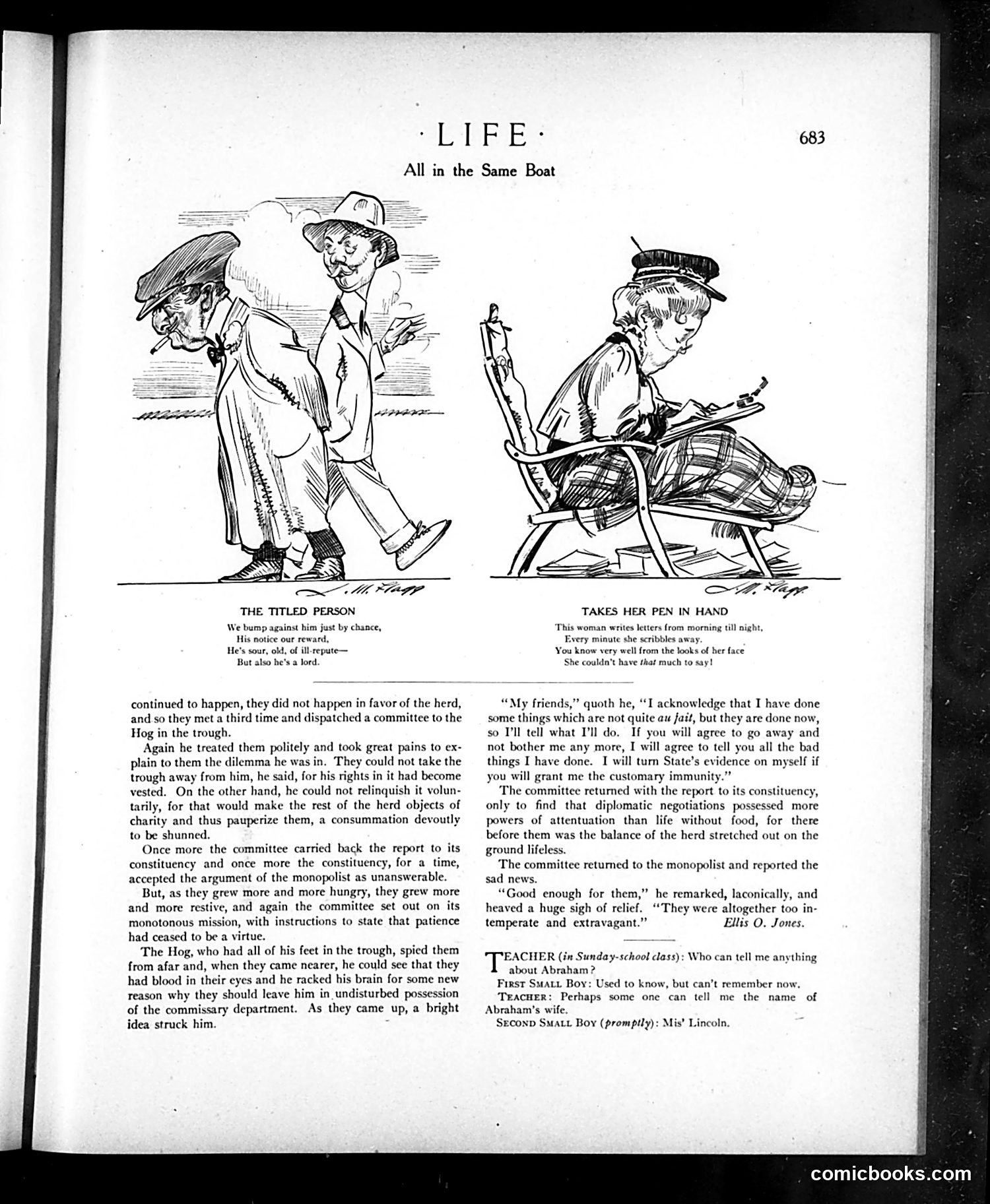
This page contains two satirical cartoon panels and accompanying commentary critiquing bureaucratic inefficiency. **Left panel** ("The Titled Person"): Shows a well-dressed, pompous man with an inflated sense of self-importance bumping into someone. The verse mocks his pretension—he considers himself superior ("old, of ill-repute") yet paradoxically also "a lord." **Right panel** ("Takes Her Pen in Hand"): Depicts a woman frantically writing letters day and night, unable to stop despite exhaustion. The accompanying text criticizes her compulsive correspondence. The overall theme, supported by the surrounding prose about a committee investigating a monopolist's treatment of livestock, suggests satire about how various self-important or obsessive figures create unnecessary problems. The title "All in the Same Boat" implies everyone—regardless of class or temperament—contributes to societal dysfunction through their flawed character traits.
📄 Transcribed text from this page (OCR, searchable)
Machine-transcribed from the original scan — historical spelling and the odd misread are preserved.
“eh REs All in the Same Boat THE TITLED PERSON We bump against him just by chance, His notice our reward, He's sour, old, of ill-repute— But also he's a lord. continued to happen, they did not happen in favor of the herd, and so they met a third time and dispatched a committee to the Hog in the trough. Again he treated them politely and took great pains to ex- plain to them the dilemma he was in, They could not take the trough away from him, he said, for his rights in it had become vested. On the other hand, he could not relinquish it volun- tarily, for that would make the rest of the herd objects of charity and thus pauperize them, a consummation devoutly to be shunned. Once more the committee carried back the report to its constituency and once more the constituency, for a time, accepted the argument of the monopolist as unanswerable. But, as they grew more and more hungry, they grew more and more restive, and again the committee set out on its monotonous mission, with instructions to state that patience had ceased to be a virtue. ‘The Hog, who had all of his feet in the trough, spied them from afar and, when they came nearer, he could see that they had blood in their eyes and he racked his brain for some new reason why they should leave him in, undisturbed possession of the commissary department. As they came up, a bright idea struck him. TAKES HER PEN IN HAND ‘This woman writes letters from morning till night, Every minute she scribbles away. You know very well from the looks of her face She couldn't have that much to say! “My friends,” quoth he, “I acknowledge that I have done some things which are not quite au ait, but they are done now, so T’'ll tell what I'll do. If you will agree to go away and not bother me any more, I will agree to tell you all the bad things I have done. I will turn State’s evidence on myself if you will grant me the customary immunity.” The committee returned with the report to its constituency, only to find that diplomatic negotiations possessed more powers of attentuation than life without food, for there before them was the balance of the herd stretched out on the ground lifeless. The committee returned to the monopolist and reported the sad news. “Good enough for them,” he remarked, laconically, and heaved a huge sigh of relief. “They were altogether too in- temperate and extravagant.” Ellis O. Jones. EACHER (in Sunday-school class): Who can tell me anything about Abraham ? First Sat Boy: Used to know, but can’t remember now, ‘TEACHER: Perhaps some one can tell me the name of Abraham's wife. SECOND SMALL Boy (prompily): Mis’ Lincoln. comicbooks.com