
Life, 1907-08-08 · page 7 of 20
Life — August 8, 1907 — page 7: what you’re looking at
What you’re looking at
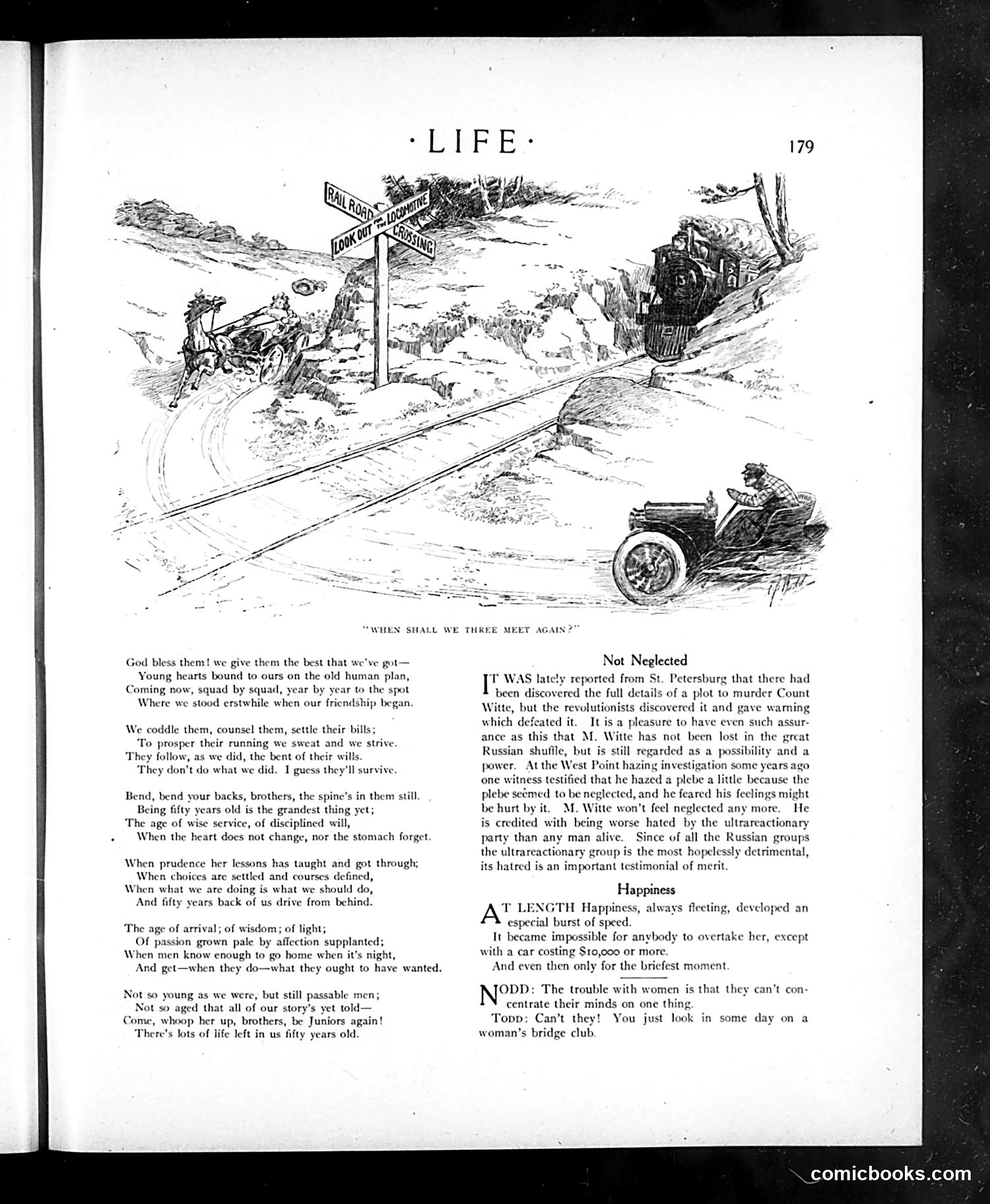
The top illustration shows a railroad crossing with a car and horse-drawn wagon meeting—captioned "When Shall We Three Meet Again?" This depicts the collision of old and new transportation methods, satirizing the coexistence of outdated horse travel with modern automobiles. The accompanying poem celebrates youth and friendship while warning against generational complacency. Below, two brief pieces mock contemporary social attitudes. "Not Neglected" references Count Witte, a Russian political figure whose reputation suffered during revolutionary upheaval. "Happiness" satirizes wealthy women's leisure pursuits, suggesting only expensive cars ($10,000+) could entertain them. The final dialogue mocks women's inability to focus, using a bridge club as the example—reflecting period sexist stereotypes about female intellect and attention spans.
📄 Transcribed text from this page (OCR, searchable)
Machine-transcribed from the original scan — historical spelling and the odd misread are preserved.
“WHEN SHALL WE God bless them! we give them the best that w Young hearts bound to ours on the old human plan, Coming now, squad by squad, year by year to the spot Where we stood erstwhile when our friendship began “ve got— We coddle them, counsel them, settle their bills; ‘To prosper their running we sweat and we strive They follow, as we did, the bent of their wills don’t do what we did. I guess they'll survive Bend, bend your backs, brothers, the spine’s in them still. Being fifty years old is the grandest thing yet; The age of wise service, of disciplined will, When the heart does not change, nor the stomach forget. When prudence her lessons has taught and got through; When choices are settled and courses defined, When what we are doing is what we should do, And fifty years back of us drive from behind. The age of arrival; of wisdom; of light; Of passion grown pale by affection supplanted; When men know enough to go home when it’s night, And get—when they do—what they ought to have wanted. Not so young as we were, but still passable men; Not so aged that all of our story’s yet told— Come, whoop her up, brothers, be Juniors again! ‘There's lots of life left in us fifty years old. THREE MEET AGAIN?” Not Neglected T WAS lately reported from St. Petersburg that there had been discovered the full details of a plot to murder Count Witte, but the revolutionists discovered it and gave waming which defeated it. It is a pleasure to have even such assur- ance as this that M. Witte has not been lost in the great Russian shufile, but is still regarded as a possibility and a power. At the West Point hazing investigation some year one witness testified that he hazed a plebe a little because the plebe seemed to be neglected, and he feared his feelings might be hurt by it. M. Witte won’t feel neglected any more. He is credited with being worse hated by the ultrareactionary party than any man alive. Since of all the Russian groups the ultrareactionary group is the most hopelessly detrimental, its hatred is an important testimonial of merit Happiness NGTH Happiness, always fleeting, developed an especial burst of speed. It became impossible for anybody to overtake her, except with a car costing $10,000 or more. And even then only for the briefest moment TL ODD: The trouble with women is that they can’t con- centrate their minds on one thing. Topp: Can’t they! You just look in some day on a woman’s bridge club. comicbooks.com