
Life, 1906-12-27 · page 18 of 33
Life — December 27, 1906 — page 18: what you’re looking at
What you’re looking at
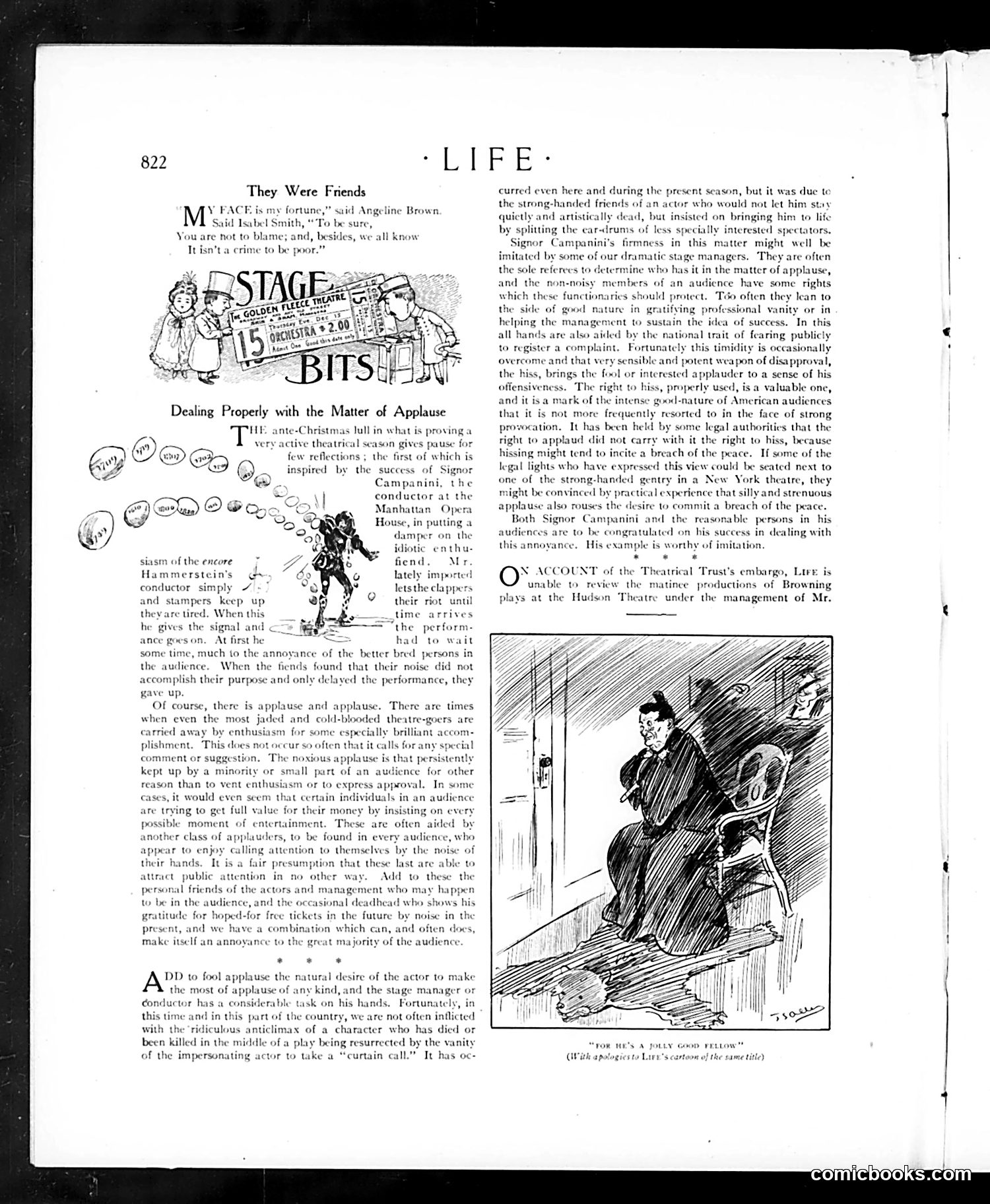
This Life magazine page discusses theatrical etiquette around applause, using Signor Campanini (conductor at Manhattan Opera House) as an exemplar of proper audience management. The article critiques excessive clapping orchestrated by actors' friends and paid "clappers" who delay performances and annoy genuinely cultured theatergoers. It describes various problematic applause types: persistent noise from small cliques seeking attention, coordinated applause from personal connections, and even actors demanding curtain calls after death scenes. The cartoon (signed Tooker) illustrates this absurdity: a supposedly dead character lies on stage while someone pulls him up for applause—the exact practice the text condemns. The satire targets both theatrical vanity and American audiences' reluctance to register disapproval publicly, suggesting that organized hissing would effectively curb such behavior. The piece advocates for stage managers to protect paying audiences' interests against manipulated enthusiasm.
📄 Transcribed text from this page (OCR, searchable)
Machine-transcribed from the original scan — historical spelling and the odd misread are preserved.
They Were Friends Y FACE is my fortune,” said Angeline Brown. aid Isibel Smith, “To be sure, You are not to blame; and, besides, we all know It isn’ta crime to be 5 Dealing Properly with the Matter of Applause HE ante-Christmas lull in what is proving very active theatrical season gives pause f few reflections ; the first of whi h is nired by the success of Signor Campanini, the conductor at the Manhattan Oper House, in putting a damper on the idiotic enthu- fiend. Mr lately imported letsthe clappe their riot until time arrives Hammerstein's Qs conductor sim re tired. When this ves the si theya he perform: had to wait some time, much to the annoyance of the better bred persons in the audience. When the fiends found that their noise did not accomplish their purpose and only delayed the performance, they ance goeson. At first he ave Up. Of course, there i when even the most j carried away by enthusiasm for some especially brilliant ace This does not occur so often that it calls f comment or suggestion. kept up by a minority or s reason than to vent enth cases, it would even seem that certain i re trying to get full value for thei possible moment of entertainment. F class of applauders, to be found in every audience, who oplaus. and applause. There are times 1 cold-blooded theatn plishmen noxious applause is t all part of a asm or to exp dividuals in an audience money L insisting on every are often aided by to enjoy calling attention to themselves by the noise of to their hands. It is a fair presumption that these last are abl nin no other way Add to these tJ personal friends of the actors and mat the audience, and free tickets in attract public attent agement who r al deadhead wh: ay happen to be in «© occasiot shows his gratitude for hoped-for the future by noise in the ve a combin. to th present, and we h n which can, and often does, make itself an annoyan: majority of the audience * 8 @ DD to fool applause the natural desire of the actor to most of applause of any kind, and the stage manager or ble task on his hands. Fortunately, in rt of the country, we are not often inflicted with the ‘ridiculous anticlimax of a character who has died or been killed in the middle of a play being resurrected by the vanity of the impersonating actor to take a “curtain call.” It has oc- con this time and in this tor has a consid ‘LIFE * curred even here and during the present season, but it was duc te the strong-handed friends of an actor who would not let him stvy quictly and artistically dead, but insisted on bringing him to li by splitting the car- ly interested spectators. Signor Campanini’s firmness in this matter might well be imitated by some of our dramatic stage managers. ‘They are often the sole referees to determine who has it in the matter of applause, and the non-noisy members of an audience have some rights which these functionaries should protect. Téo often they lean to the side of good mfessional vanity or in helping the manage rums of less spe ure in gratifying ent to sustain the idea of success. In this all hands are also aided by the national trait of fearing publicly to register a complaint. Fortunately this timidity is occasional overcome and that very sensible and potent wea pon of disa pprovs the hiss, rested applauder to a sense of his offensivencss. S, properly used, is a valuable on vd-nature of American audienc that it is not more frequently resorted to in the face of strong cation. It has been held by some legal authorities that the right to applaud did not carry with it the right to hiss, because to incite a breach of the peace. If some of the expressed this view could be seated next to handed gentry in a New York theatre, they might be convinced by practical experience that silly and strenuous applause also rouses the desire to commit a breach of the peace. Both Signor Campanini and the reasonable persons in his audiences are to be congratulated on his success in dealing with ati ngs the fi hissing mple is worthy: this annoyance. His exa X ACcot f the Theatrical Trust's embargo, Lire: is unable to review the matinee productions of Browning sat the Hudson Theatre under the management of Mr.