
Life, 1906-08-09 · page 9 of 20
Life — August 9, 1906 — page 9: what you’re looking at
What you’re looking at
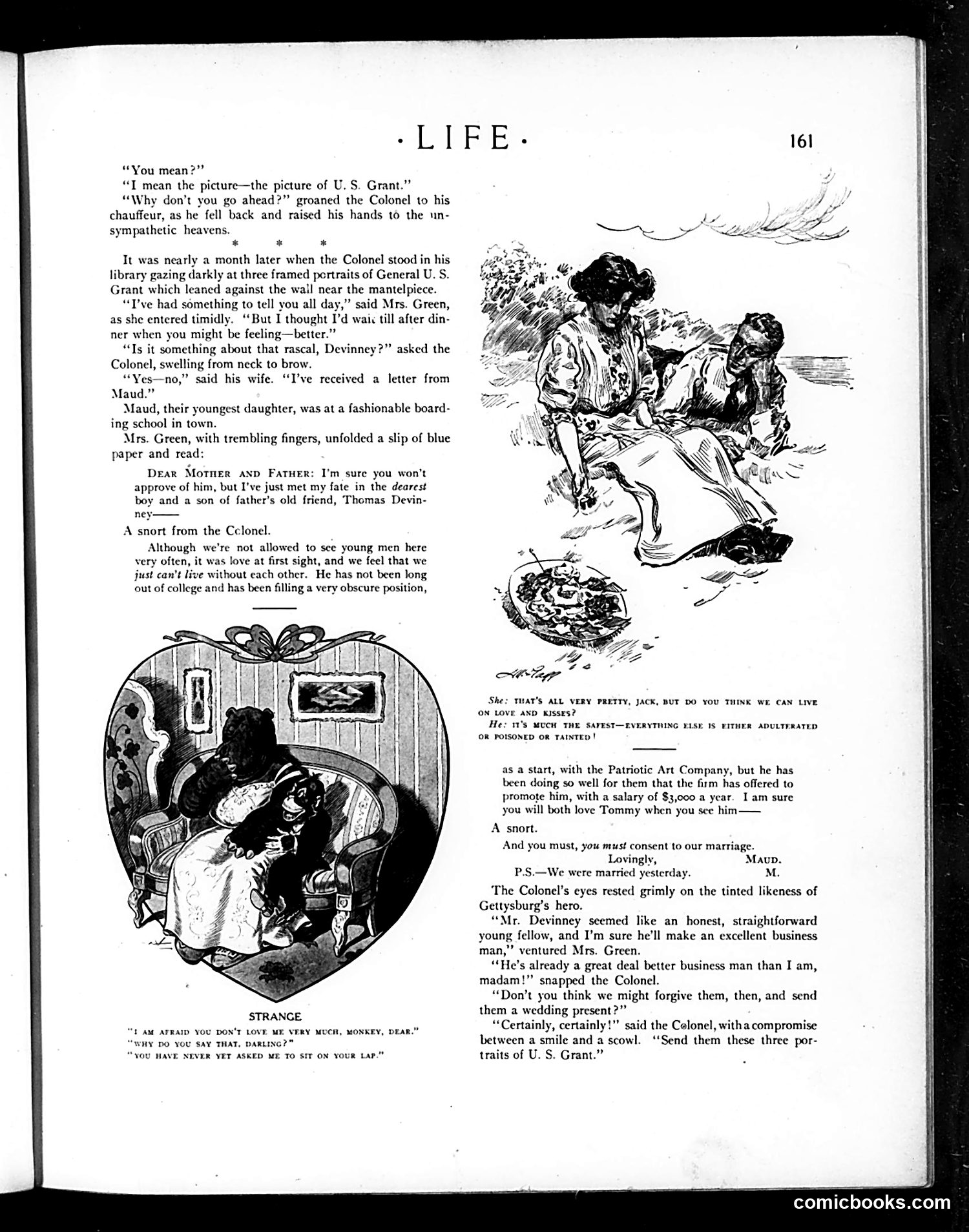
This page satirizes romantic and social pretensions. The main narrative concerns a Colonel confronted with a portrait of U.S. Grant—a figure of military authority and national prominence. The humor derives from the Colonel's discomfort with this image of Grant, suggesting social anxiety about representing oneself through association with famous figures. The accompanying illustrations depict intimate domestic scenes—a couple in bed and people in casual embrace. The text reveals a subplot about a young woman (Maud) who has married without parental approval, choosing a man of modest means over her family's expectations. The satire targets upper-class pretensions about marriage, propriety, and the gap between public respectability (Grant's heroic image) and private desires. The tone mocks both parental disapproval and the young couple's romantic idealism.
📄 Transcribed text from this page (OCR, searchable)
Machine-transcribed from the original scan — historical spelling and the odd misread are preserved.
-LIFE- “TI mean the picture—the picture of U.S. Grant.” “Why don’t you go ahead?” groaned the Colonel to his chauffeur, as he fell back and raised his hands to the un- sympathetic heavens. * * * It was nearly a month later when the Colonel stood in his library gazing darkly at three framed portraits of General U. S. Grant which leaned against the wail near the mantelpiece. “T’ve had something to tell you all day,” said Mrs. Green, as she entered timidly. ‘But I thought I’d wai till after din- ner when you might be feeling—better.” “Is it something about that rascal, Devinney?” asked the Colonel, swelling from neck to brow. “Yes—no,” said his wife. “I’ve received a letter from Maud.” Maud, their youngest daughter, was at a fashionable board- ing school in town. Mrs. Green, with trembling fingers, unfolded a slip of blue paper and read: DEAR Motner AND FATHER: I'm sure you won't approve of him, but I've just met my fate in the dearest boy and a son of father’s old friend, Thomas Devin- ney. A snort from the Cclonel. Although we’re not allowed to sce young men here very often, it was love at first sight, and we feel that we just can’t live without each other. He has not been long out of college and has been filling a very obscure position, She: THAT'S ALL VERY PRETTY, JACK, BUT DO YOU THINK WE CAN LIVE ON LOVE AND Kisses? He: 11's MUCH THE SATEST—EVERYTHING FISE 1S FITHER ADULTERATED OR POISONED OR TAINTED! as a start, with the Patriotic Art Company, but he has been doing so well for them that the firm has offered to promote him, with a salary of $3,000 a year. Iam sure you will both love Tommy when you see him — A snort. And you must, you must consent to our marriage. Lovingly, Mavp. P.S.—We were married yesterday. M. The Colonel's eyes rested grimly on the tinted likeness of Gettysburg’s hero. “Mr. Devinney seemed like an honest, straightforward young fellow, and I’m sure he'll make an excellent business man,” ventured Mrs. Green. “He's already a great deal better business man than I am, madam!”’ snapped the Colonel. “Don’t you think we might forgive them, then, and send STRANGE them a wedding present?” . . . “1 Aa: reise: Yoo: now Lorn un ven uveni womrzy,ioean “Certainly, certainly!” said the Colonel, witha compromise WHY Bo 400 4A THAT, DARLING?” between a smile and a scowl. ‘Send them these three por- “YOU HAVE NEVER YET ASKED ME TO SIT ON YOUR LAP.” traits of U. S. Grant.” comicbooks.com