
Life, 1906-05-17 · page 7 of 28
Life — May 17, 1906 — page 7: what you’re looking at
What you’re looking at
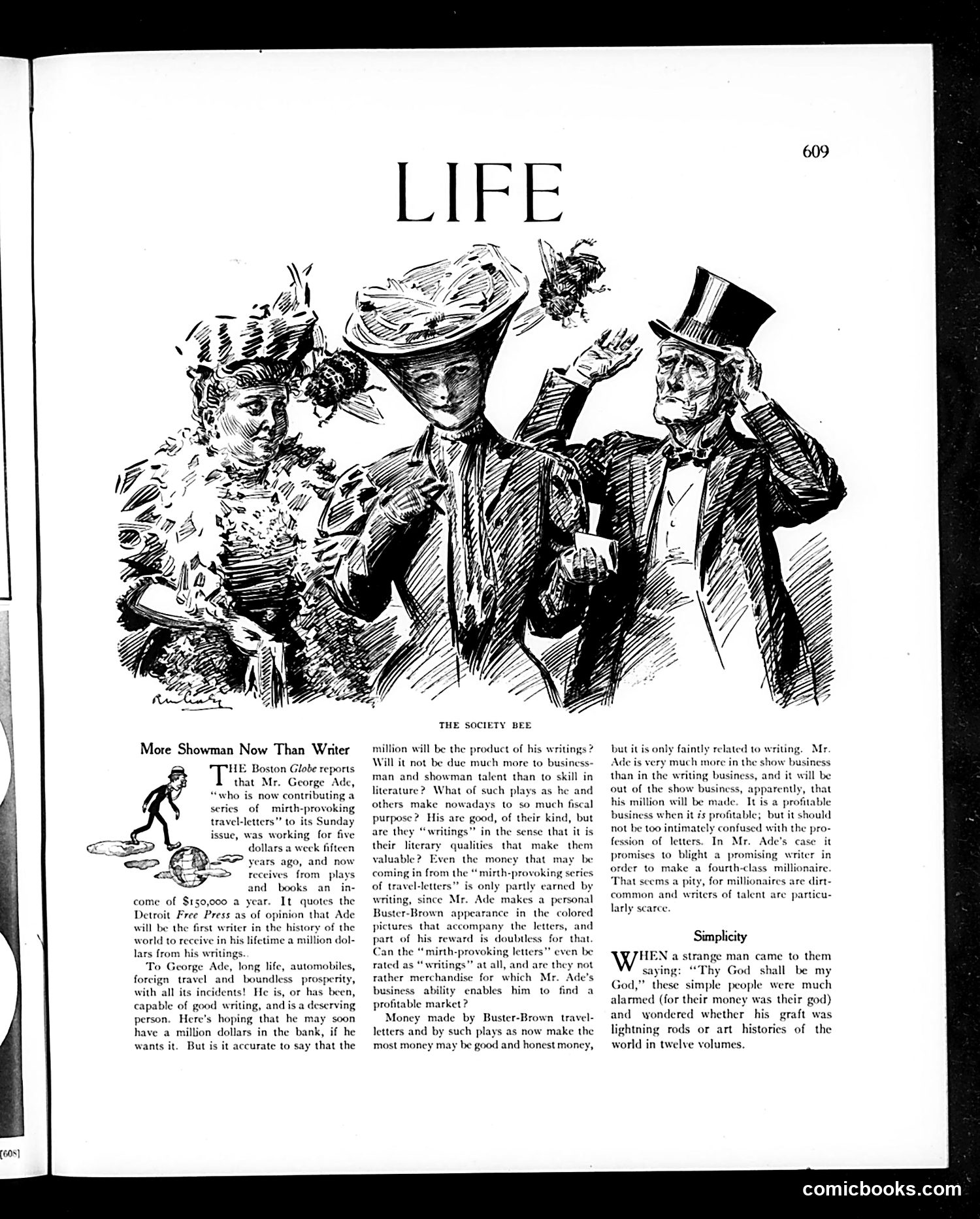
This page from *Life* magazine features two satirical pieces about writing and popular culture. **"More Showman Now Than Writer"** criticizes Charles Dana Gibson (the illustrator shown running with a globe), focusing on his transformation from serious artist to commercial entertainer. The text questions whether his travel-letters constitute genuine "writing" or mere showmanship, and notes his substantial earnings ($150,000 annually) come more from theatrical performances and illustrations than literary merit. The satire suggests he's prioritized financial success and public spectacle over artistic integrity. **"Simplicity"** is a brief anecdote (details unclear from visible text) about a stranger presenting himself as "God" to unsuspecting people, apparently satirizing credulous acceptance of grandiose claims—possibly commentary on public gullibility or fraudulent self-promotion.
📄 Transcribed text from this page (OCR, searchable)
Machine-transcribed from the original scan — historical spelling and the odd misread are preserved.
More Showman Now Than Writer K travel-letters” to its Sunday issue, was working for five a dollars a week fifteen <== years ago, and now => receives from_ plays and books an. in- come of $150,000 a year. It quotes the Detroit Free Press as of opinion that Ade will be the first writer in the history of the world to receive in his lifetime a million dol- lars from his writings. Je, long life, automobiles, foreign tr: nd boundless prosperity, with all its nts! He is, or has been, capable of good writing, and is a deserving person. Here's hoping that he may soon have a million dollars in the bank, if he wants it. But is it accurate to say that the HE, Boston Globe reports that Mr. George Ade, “who is now contributing a series of mirth-provoking To George THE SOCIETY BEE million will be the product of his writings ? Will it not be due much more to business- man and showman talent than to skill in literature? What of such plays as he and others make nowadays to so much fiscal purpose? His are good, of their kind, but are they “writings” in the sense that it is their literary qualities that make them valuable? Even the money that be coming in from the “ mirth-provoking series ” is only partly earned by nce Mr. Ade makes a personal “Brown appearance in the colored pictures that accompany the letters, and part of his reward is doubtless for that rth-provoking letters” even be writings” at all, and are they not rather merchandise for which Mr. Ade’s business ability enables him to find a profitable market ? Money made by Buster-Brown travel- letters and by such plays as now make the most money may be good and honest money, VU a WS Z but it is only faintly related to writing. Mr. Ade is very much more in show business than in the writing business, and it will be out of the show business, that his million will be made. It is a profitable business when it #s profitable; but it should not be too intimately confused with the pro- fession of letters. In Mr. Ade's case it promises to blight a promising writer in order to mal a fourth-class millionaire. 'y, for millionaires are dirt- common and writers of talent are particu- larly scarce pparently, That scems a pi Simplicity Wey a strange man came to them saying: “Thy God shall be my God,” these simple people were much alarmed (for their money was their god) and wondered whether his graft was lightning rods or art histories of the world in twelve volumes. comicbooks.com