
Life, 1905-12-07 · page 28 of 60
Life — December 7, 1905 — page 28: what you’re looking at
What you’re looking at
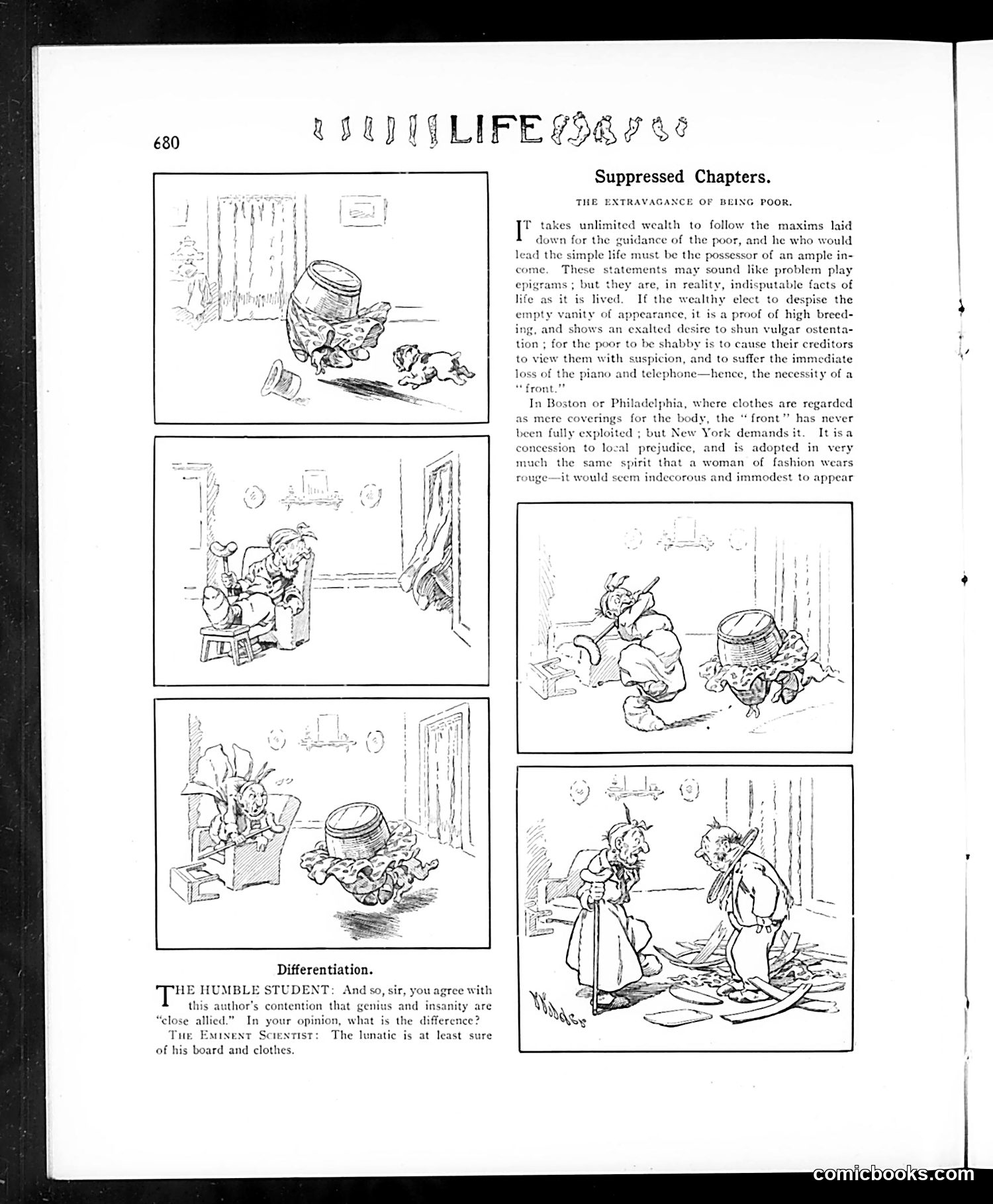
This page contains two distinct satirical pieces: **"Differentiation"** (bottom): A short joke contrasting a "humble student" with an "eminent scientist" debating genius versus insanity. The scientist's punchline—that a lunatic at least has guaranteed food and shelter—satirizes the precarious economic position of intellectuals and the poor, suggesting that even madness offers security unavailable to struggling scholars. **"Suppressed Chapters: The Extravagance of Being Poor"** (right side): A longer satirical essay mocking social hypocrisy about poverty and appearance. It argues that while the wealthy can afford shabby clothes as a sign of refined indifference to fashion, the poor *must* maintain a respectable appearance ("front") to avoid creditors' suspicion and social shame. The accompanying cartoons illustrate poor families struggling with domestic disorder and poverty. The satire critiques how society expects the poor to maintain appearances they cannot afford, while the rich enjoy the luxury of indifference. Both pieces critique class inequality through ironic inversion of conventional morality.
📄 Transcribed text from this page (OCR, searchable)
Machine-transcribed from the original scan — historical spelling and the odd misread are preserved.
680 ‘ samen! ~~ Se VA ie Reesseesrereereasoes Differentiation. HE HUMBLE STUDENT this “close allied And so, sir, you agree with hor’s contention that genius and insanii * In your opinion, what is the differe: Tue Eminent Scientist: The lunatic is at least sure of his board and clothes. are > CSUVII LIFE £58 9 %¢ Suppressed Chapters. THE EXTRAVAGANCE OF BEING POOR. [™ takes unlimited wealth to follow the n down for the lead the simple li come, These xims laid sidance of the poor, and he who would must be the possessor of an ample in- sound like problem play lity, indisputable facts of wealthy elect to despise the empty vanity of appearance, it is a proof of high breed- i and shows an exalted desire to shun vulgar ostenta- tion ; for the poor to be shabby is to cause their creditors ith s icion, and to suffer the immed 0 and telephone—hence, the necessity of a to view ther loss of the “front.” In Bost as mere coveri been fully expl Phi 1 phia, where clothes are regarded zs for the body, the “front” has never ted ; but New York demands it. It isa sion to local prejudice, and is adopted in very uch the same spirit that a woman of fashion wears it would se indecorous and immodest to appear