
Life, 1905-10-05 · page 25 of 44
Life — October 5, 1905 — page 25: what you’re looking at
What you’re looking at
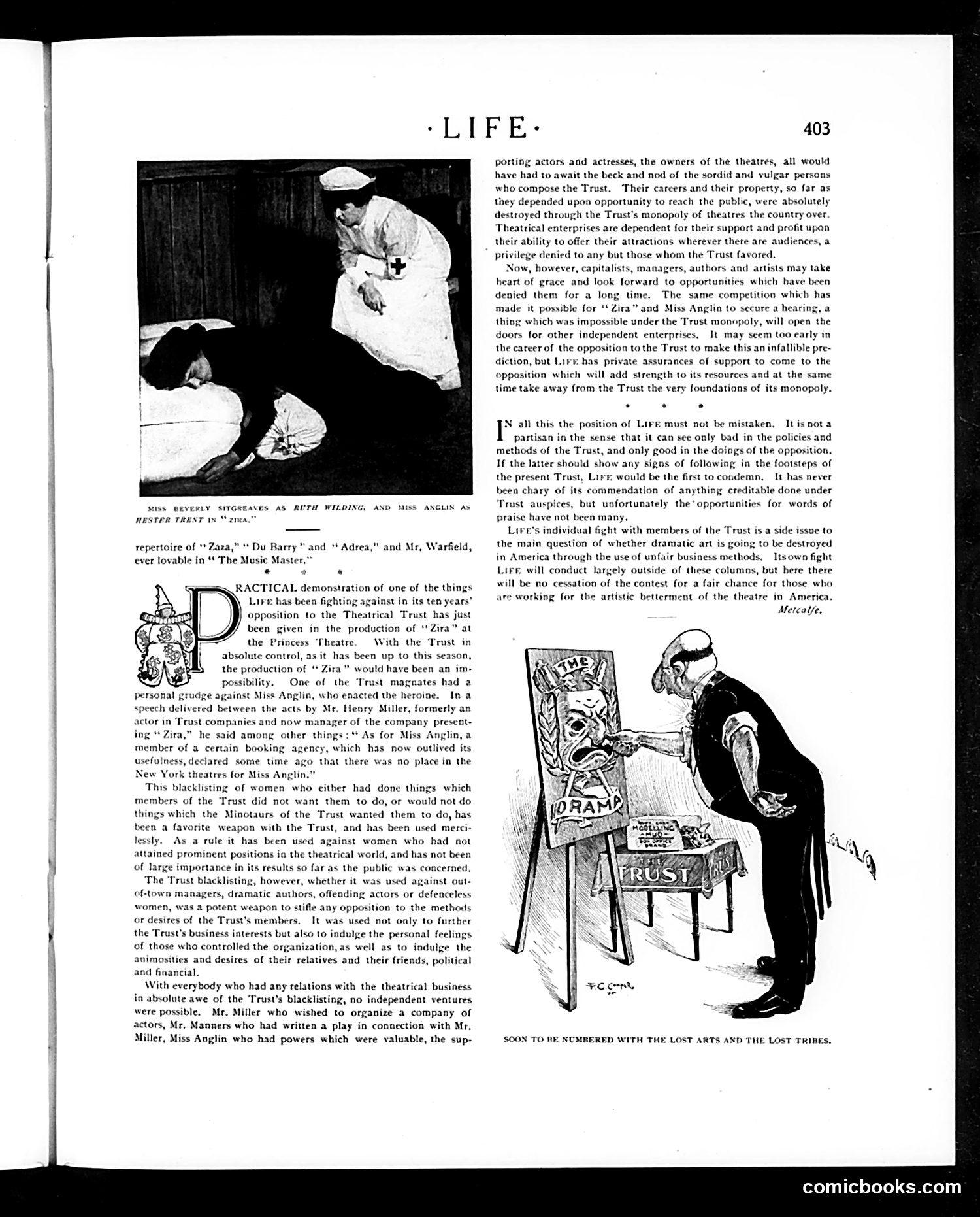
This *Life* magazine article attacks the **Theatrical Trust**—a monopoly controlling American theater distribution in the early 1900s. The piece celebrates the production of "Zira" at the Princess Theatre as a breakthrough because it succeeded *despite* Trust control. The Trust allegedly blacklisted actress **Miss Anglin** after she refused their demands. A Trust magnate had "personal grudge" against her, declaring "there was no place in the New York theatres for Miss Anglin." *Life* argues the Trust weaponized blacklisting against actors, managers, and theater owners who wouldn't comply, using it to crush competition and enforce obedience. The cartoon (right) depicts the Trust as a skeletal, oppressive figure crushing independent theater. *Life* celebrates this production as proof the Trust's monopoly is cracking, predicting future independent ventures will now flourish. The magazine positions itself as the ten-year champion of theatrical freedom against corporate tyranny.
📄 Transcribed text from this page (OCR, searchable)
Machine-transcribed from the original scan — historical spelling and the odd misread are preserved.
MISS BEVERLY SITGREAVES AS ROTH WILDING, AND MISS ANGLIN Ay HESTER TRENT 1S “21K.” repertoire of ** Zaza,” * Du Barry" and ** Adrea,” and Mr. Warfield, ever lovable in “ The Music Master. . . RACTICAL demonstration of one of the things Lire has been fighting against in its ten years’ opposition to the Theatrical Trust has just been given in the production of *Zira” at the Princess Theatre, With the Trust in absolute control, as it has been up to this season, the production of “ Zira” would have been an im- possibility. One of the Trust magnates had a personal grudge against Miss Anglin, who enacted the heroine, In a h delivered between the acts by Mr, Henry Miller, formerly an actor in Trust companies and now manager of the company present- ing **Zira,” he said among other things member of a certain booking use spet As for Miss Anglin, a gency, which has now outlived its ulness, declared some time ago that there was no place in the New York theatres for Miss Anglin.” This blacklisting of women who either had done things which members of the Trust did not want them to do, or would not do things which the Minotaurs of the Trust wanted them to do, has been a favorite weapon with the Trust, and has been used merci- jessly. As a rule it has been used had not attained prominent positions in the theatrical world, and has not been of large importance in its results so far as the public was concerned. The Trust blacklisting, however, whether it was used against out- gainst women wh of-town managers, dramatic authors, offending actors or defenceless women, was a potent weapon to stifle any opposition to the methods or desires of the Trust’s members, It was used not only to further the Trust's business interests but also to indulge the personal feelings of those who controlled the organization, as well as to indulge the animosities and desires of their relatives and their friends, political and financial, With everybody who had any relations with the theatrical business in absolute awe of the Trust’s blacklisting, no independent ventures were possible. Mr. Miller who wished to organize a company of actors, Mr. Manners who had written a play in convection with Mr. Miller, Miss Anglin who had powers which were valuable, the sup- -LIFE- 403 porting actors and actresses, the owners of the theatres, all would have had to await the beck and nod of the sordid and vulgar persons who compose the Trust. Their careers and their property, so far as they depended upon opportunity to reach the public, were absolutely destroyed through the Trust's Theatrical enterprises are dependent for their support and profit upon their ability to offer their attractions wherever there are audiences, a privilege denied to any but those whom the Trust favored. Now, however, capitalists, managers, authors and artists may take heart of grace and look forward to opportunities which have been denied them for a long time, The same competition which has made it possible for * Zira” and Miss Anglin to secure a hearing, a thing which was impossible under the Trust monopoly, will open the doors for other independent enterprises. It may seem too early in the career of the opposition to the Trust to make this an infallible pre- diction, but Lire. has private assurances of support to come to the opposition which will add strength to its resources and at the same time take away from the Trust the very foundations of its monopoly. monopoly of theatres the country over. I Yall this the position of Lire must not be mistaken, It is not a partisan in the sense that it can see only bad in the policies and methods of the Trust, and only good in the doings of the opposition, If the latter should show any signs of following in the footsteps of the present Trust, Lire would be the first to condemn. It has never been chary of its commendation of anything creditable done under Trust auspices, but unfortunately the‘ opportunities for words of praise have not been many. Lir the main question of whether dramatic art is going to be destroyed in America through the use of unfair business methods, Itsown fight Lirr, will conduct largely outside of these columns, but here there will be no cessation of the contest for a fair chance for those who are working for the artistic betterment of the theatre in America. Metcalfe, individual fight with members of the Trust is a side issue to SOON TO RE NUMBERED WITH THE LOST ARTS AND THE LOST TRIBES, comicbooks.com