
Life, 1905-09-21 · page 11 of 26
Life — September 21, 1905 — page 11: what you’re looking at
What you’re looking at
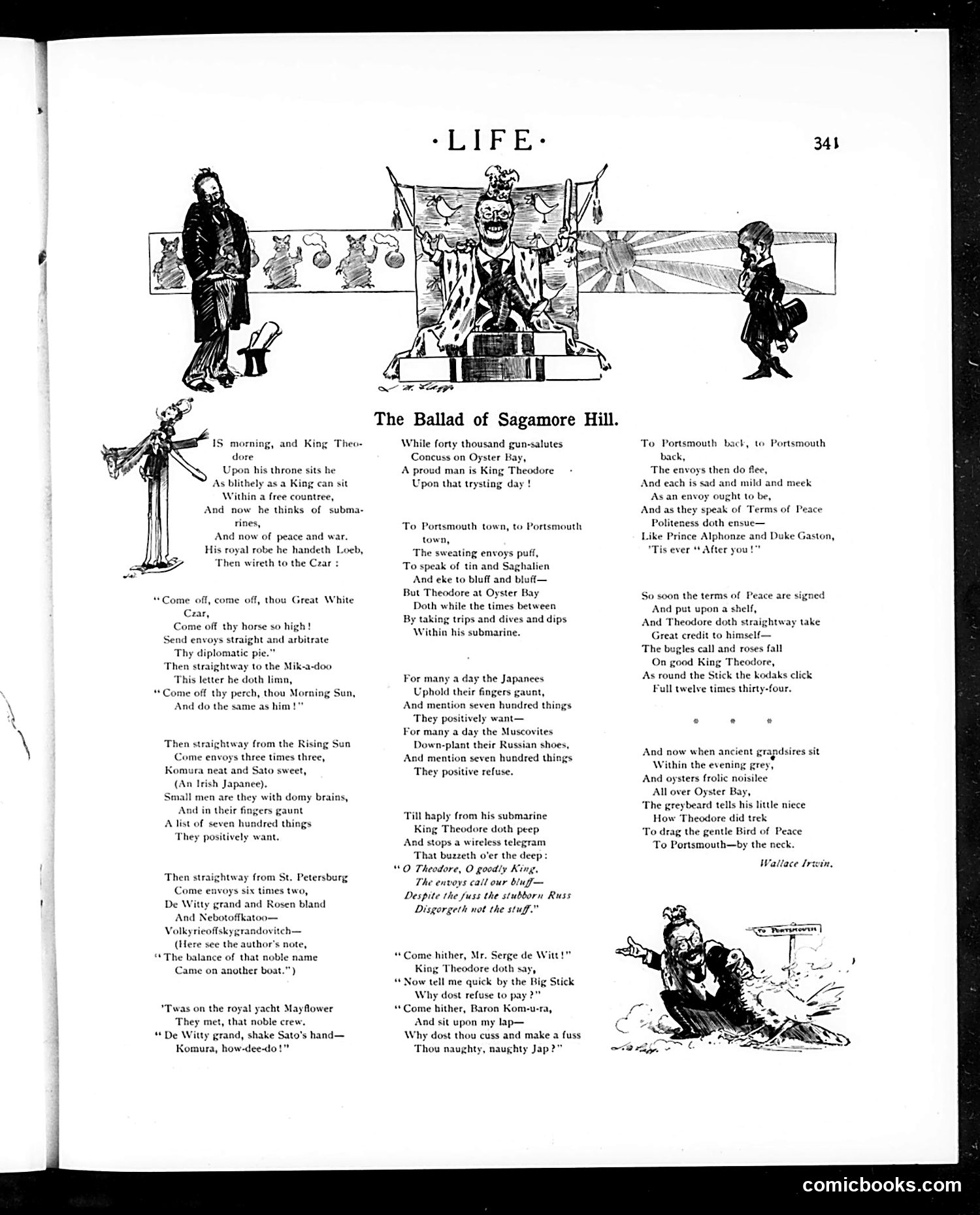
This satirical poem mocks President Theodore Roosevelt's peace negotiations ending the Russo-Japanese War (1904-1905). "Sagamore Hill" was Roosevelt's home, establishing him as the target. The ballad ridicules Roosevelt's diplomatic efforts by portraying him as boastfully orchestrating peace while various parties—Japanese, Russians, and others—resist or mock the process. References to "King Theodore" and his submarines, envoys, and grand pronouncements suggest Roosevelt was grandstanding about his role. The caricatures depict Roosevelt as an inflated, self-important figure manipulating international affairs. The satire suggests his peace brokerage was more about personal glory than genuine diplomacy, with other nations humoring or ignoring him ("'Tis ever 'After you!'").
📄 Transcribed text from this page (OCR, searchable)
Machine-transcribed from the original scan — historical spelling and the odd misread are preserved.
> As blithely as a King can sit Within a free countree, And now he thinks of subma- rines, And now of peace and war. His royal robe he handeth Loeb, Then wireth to the Czar : “Come off, come off, thou Great White Czar, Come off thy horse so high! 1 envoys straight and arbitrate Thy diplomatic pie.” Then straightway to the Mik-a-doo This letter he doth limn, “Come off thy perch, thou Mc And do the same as him!" ping Sun, TI n straightway from the Rising Sun Come envoys three times three, Komura neat and Sato sweet, (An Irish Japanee), Small men are they with domy brains, And in their fingers gaunt A list of seven hundred things ly want. They posi Then strai Come e: De Witty grand and Rosen bland And Nebotofikatoo— Volkyrieoffskygrandoy (Here see the author's note, “* The balance of that noble name ‘Came on another boat.”) htway from St. Petersburg ‘oys six times two, ‘Twas on the royal yacht Mayflower They met, that noble crew. “De Witty grand, shake Sato's hand— Komura, how-dee-do! The Ballad of Sagamore Hill. While forty thousand gun-salutes Concuss on Oyster Kay, A proud man is King Theodore Upon that trysting day ! To Portsmouth town, to Portsmouth town, The sweating envoys puff, To speak of tin and Saghalien And eke to bluff and blut— But Theodore at Oyster Bay Doth while the times between By taking trips and dives and dips Within his submarine. For many a day the Japanees Uphold their fingers gaunt, And mention seven hundred things They positively want— For many a day the Muscovites Down-plant their Russian shoes, And mention seven hundred things They positive refuse. ill haply from his submarine King Theodore doth peep And stops a wireless telegram That buzzeth o'er the deep : “0 Theodore, O goodly King, The envoys call our bluff— Despite the fuss the stubborn Russ Disgorgeth not the stuff.” “Come hither, Mr King Theodore doth say, “ Now tell me quick by the Bi Why dost refuse to pay?” “Come hither, Baron Kom-u-ra, And sit upon my lap— Why dost thou cuss and make a fuss ‘Thou naughty, naughty Jap?” To Portsmouth back, to Portsmouth back, The envoys then do flee, And each is sad and mild and meek As an envoy ought to be, And as they speak of Terms of Peace Politeness doth ensue— Like Prince Alphonze and Duke ‘Tis ever * So soon the terms of Peace are signed And put upon a shelf, And Theodore doth straightway take Great credit to himself— The bugles call and roses fall On good King Theodore, As round the Stick the kodaks click Full twelve times thirty-four. And now when ancient grapdsires sit Within the evening grey; And oysters frolic noisilee All over Oyster Bay, ‘The greybeard tells his little niece How Theodore did trek To drag the gentle Bird of Peace To Portsmouth—by the neck. Wallace Irwin, comicbooks.com