
Life, 1905-09-07 · page 22 of 42
Life — September 7, 1905 — page 22: what you’re looking at
What you’re looking at
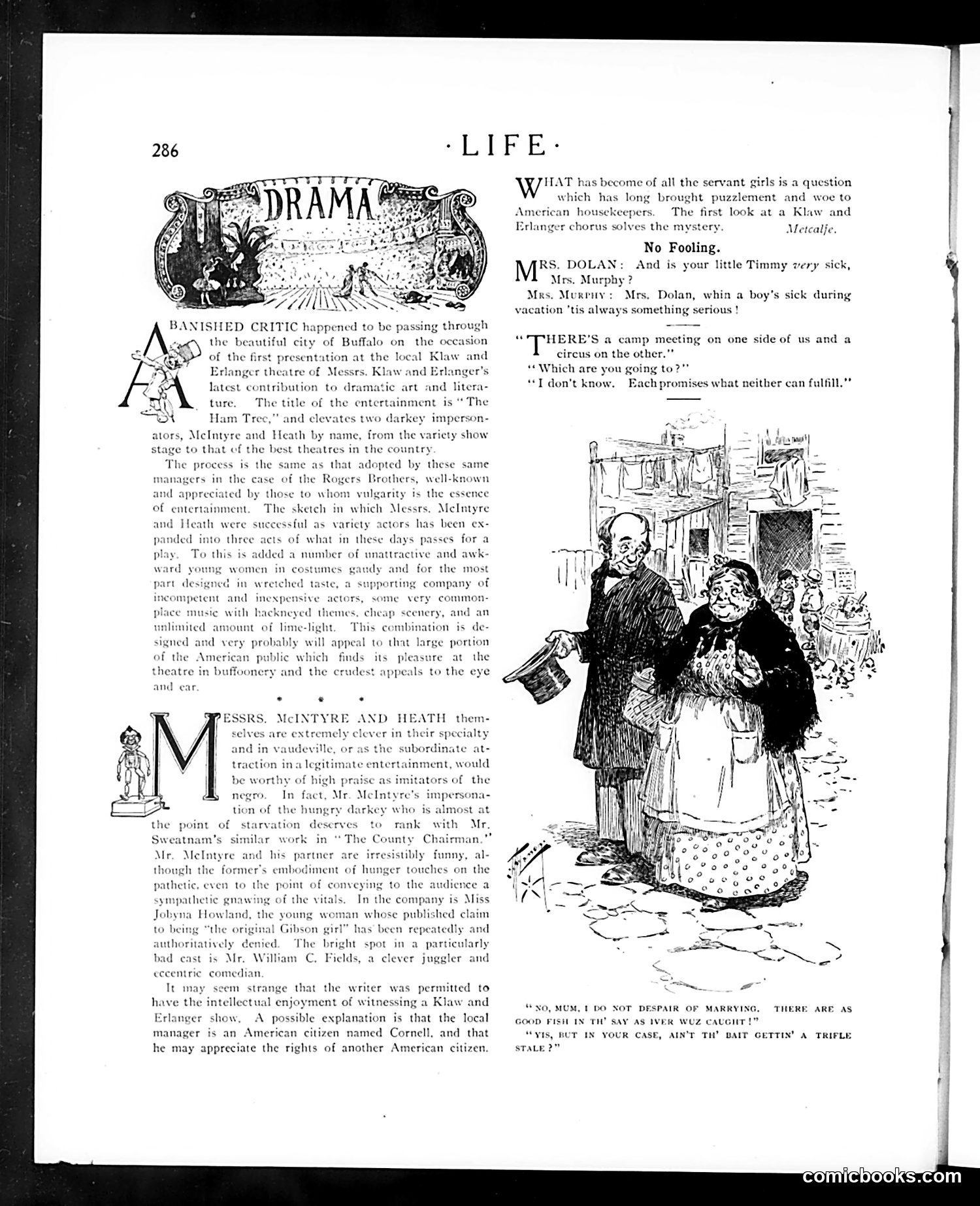
This page critiques a theatrical production called "The Ham Tree" featuring blackface performers McIntyre and Heath. The review's sarcastic tone condemns the show as vulgar entertainment designed for unsophisticated audiences—cheap scenery, "gaudy" costumes, and "crudest appeals to the eye and ear." The accompanying illustration depicts working-class Irish women (indicated by their accents in the dialogue) gossiping about marriage prospects. One woman jokes that another's "bait" (romantic appeal) is growing "stale"—a barbed comment on aging. **Key context for moderns:** This 1900s *Life* magazine was satirizing both blackface minstrelsy (then considered lowbrow entertainment) and working-class marriage anxieties. The magazine positioned itself as sophisticated and critical of popular taste, while the Irish-accented dialogue reflects period attitudes about immigrant communities. The satire assumes readers shared class-based disdain for both the theatrical production and its audiences.
📄 Transcribed text from this page (OCR, searchable)
Machine-transcribed from the original scan — historical spelling and the odd misread are preserved.
the occa the beautiful city of Buffalo on of the first presentation at the local Klaw Erlanger theatre of Messrs. Klaw and Erlanger's sic art and litera- latest contribution to dram: ture. The title of the entertainment is ‘* The Ham Trec,"” and elevates two darkey imperson- nd Heath by name, from the variety show ators, MeIntyre stage to that of t he best theatres in the country adopted by these same crs Brothers, well-known The process is the sar agers in the case of the Re and appreciated by those to whom vulgarity is the essence of entertainment. The sketch in which Messrs. McIntyre and Heath were suce nto three acts of what in these days p: ful as variety actors has been ex- panded cs for a this is added a number of unattractive and awk- women in costumes gaudy and for the most ned in wreiched taste, a s company of mpetent and inexpensive actors, some very common- cheap scenery, This combination is de- ackneyed th pe-light ace music with mited amount of | signed and very prot appeal to that of the theatre ge portion ¢ which finds its pleasure at the ind the crudest appeals to the eye and car. . « . ESSRS. McINTYRE AND HEATH them- r specialty ves are extremely clever in t and in vaudeville, or ne subordinate at- inment, would ators of the 's impersor be worthy Sse a Mr. MeInt ery darkey w of starvation deserve negro. In tion of the » is almost at ank with Mr ty Cl ¢ irresistibly funny, al- nan.’ lar work in * The do his Mr. MeIntyre igh the for ger touches on the the ca y is Miss sympathetic gnawing In the compa na Howland, to bei ie young woman whose published claim has been repeatedly and ly vd : “the original Gibson g' authoritatively denied. The bright spot in a partict tis Mr. William C. Fields, a clever juggler a bad ca eccentric comedian It may seem strange that the writer was permitted to have the intellectual enjoyment of witnessing a Klaw and Erlanger show ible explanation is that the local manager is an American citizen named Cornell, and that he may appreciate the rights of another American citizen. 1s become of all the servant girls is a question which has long brought puzzlement and woe to an housekeepers. The first look at a Klaw and y Metcalfe. No Fooling. RS. DOLAN: And is your little Timmy very sick, Mrs. Murphy ? Mrs. Muxruy: Mrs, Dolan, whin a boy's sick during vacation ‘tis alway ger chorus solves the myst something serious ! “ HERE'S a circus on the other, “Which are you going to?” “T don't know. Each promises what neither can fulfill.” np meeting on one side of us and a “NO, MUM, 1 DO NOT DESPAIR OF MARRYI GOOD FISH IN TH’ SAY AS IVER WUz CAUGHT “VIS, BUT IN YOUR CASE, AIN'T TH’ BAIT GETTIN’ A TRIFLE STALE?” THERE ARE AS