
Life, 1905-08-10 · page 19 of 26
Life — August 10, 1905 — page 19: what you’re looking at
What you’re looking at
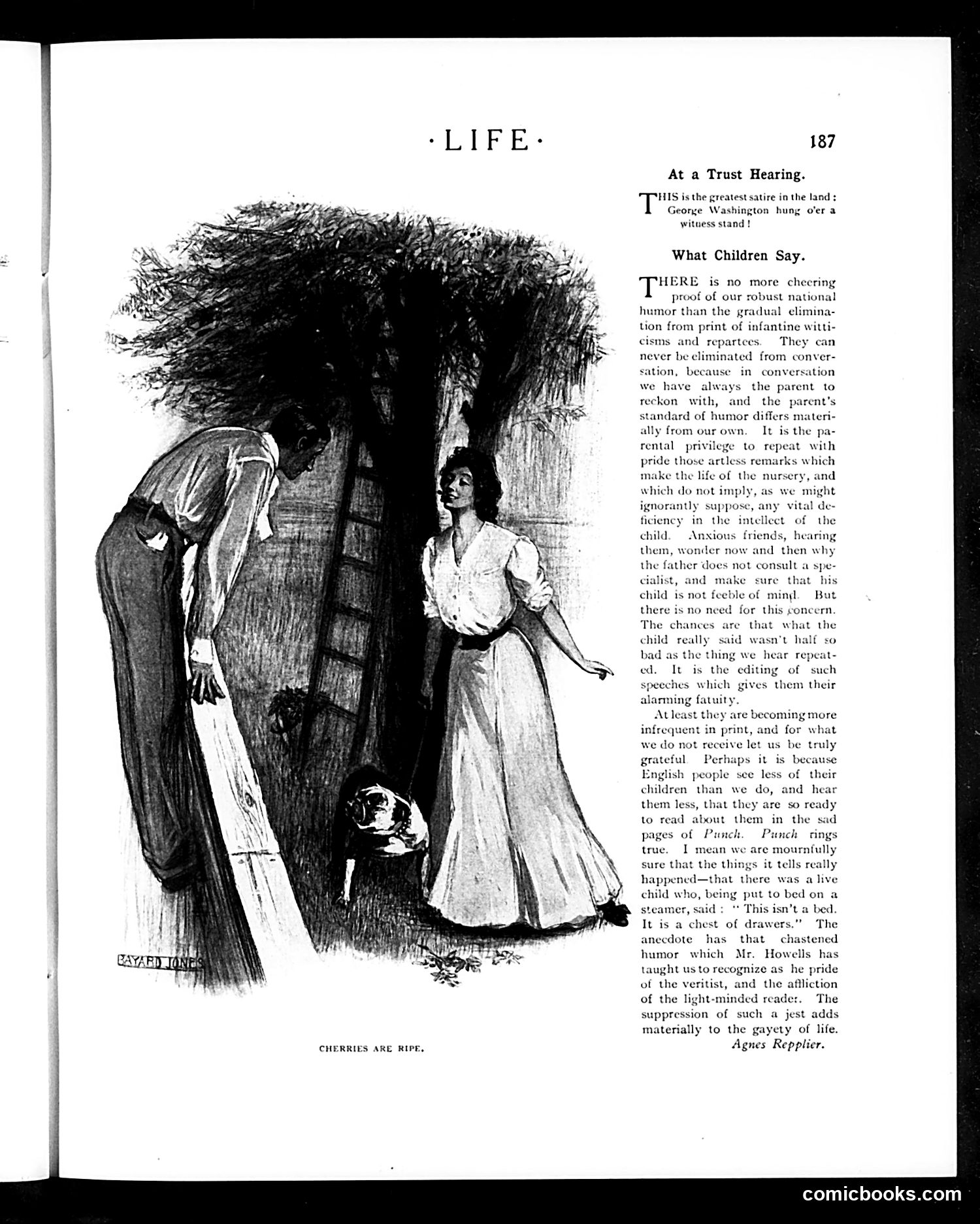
This page contains two distinct pieces from *Life* magazine (page 187): **"At a Trust Hearing"** (cartoon): The illustration shows a woman testifying in court beneath a portrait of George Washington. The caption sarcastically notes that having Washington's image presiding over a witness stand represents "the greatest satire in the land"—likely referencing the irony of corporate trust hearings (antitrust litigation was a major issue in the early 1900s) occurring under the watchful gaze of the nation's founder who stood for honest governance. **"What Children Say"** (essay by Agnes Repplier): A prose piece lamenting the disappearance of children's witticisms from printed publications. Repplier argues that while parents naturally edit and exaggerate children's remarks when repeating them, removing these stories from print (particularly from *Punch* magazine) diminishes life's humor. She suggests English parents see their children less than Americans do, explaining why fewer such anecdotes appear in British publications. The illustration titled "Cherries Are Ripe" appears unrelated to either article.
📄 Transcribed text from this page (OCR, searchable)
Machine-transcribed from the original scan — historical spelling and the odd misread are preserved.
187 At a Trust Hearing. HIS is the greatest satire in the land : George Washington hung o'er a witness stand ! What Children Say. HERE is no more cheering proof of our robust national humor than the gradual elimina- tion from print of infantine wit cisms and repartees. They can never be climinated from conver- sation, because in conversation we have always the parent to reckon with, and the parent's standard of humor differs materi- ally from our own. It is the pa- to repeat with rtless remarks which rental privil pride those make which do not imply life of the nursery, and ignorantly suppose, any vit ficiency in the intellect child. Anxious friends, hearing them, wonder now and then why the f¢ cialist, and make sure that his child is not feeble of mingl. But there is no need for this concern, ner does not consult a spe- The chances are that what the child really said wasn't half so bad as the t hing we hear repeat- ed. It is the editing of such ‘eches which gives them their alarming fatuity. Atleast they are becoming more infrequent in print, and for what we do not receive let us be truly grateful Perhaps it is because English people sce less of their children than we do, them less, that they to read about them in the sad es of Punch. Punch rings I mean we are mournfully sure that the things it tells really happened—that there was a live child who, being put to bed on a steamer, said : ‘* This isn’t a bed. It is a chest of drawer: he that chastened h Mr. Howells has taught us to recognize as _he pride of the veritist, and the affliction of the light-minded reader. The suppression of such a adds materially to the gayety of life. Agnes Repplier. acme em nd hear © so ready anecdote fh humor wh: CHERRIES ARE RIPE, comicbooks.com