
Life, 1904-11-17 · page 5 of 24
Life — November 17, 1904 — page 5: what you’re looking at
What you’re looking at
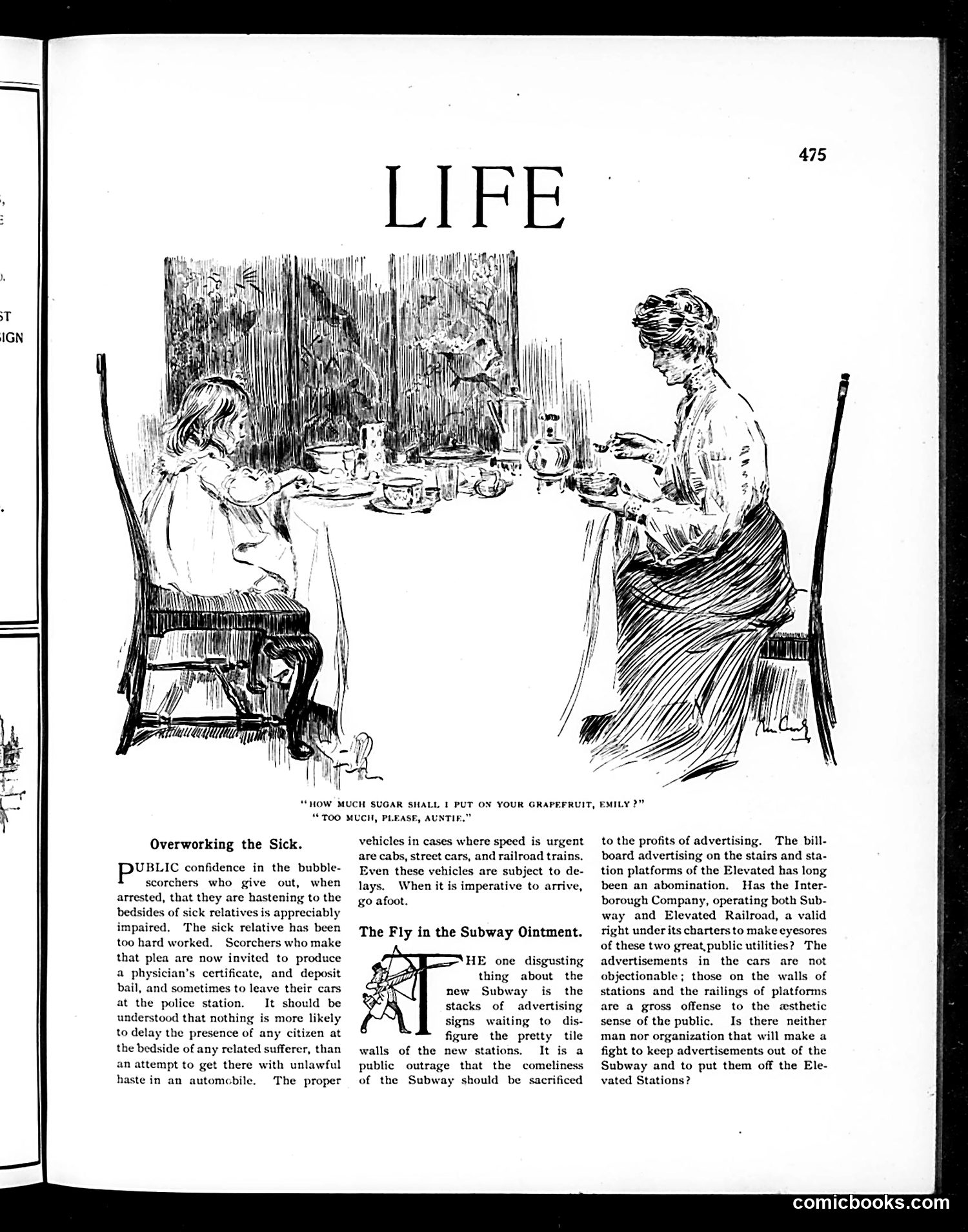
The main cartoon depicts two women at breakfast. The caption reads: "How much sugar shall I put on your grapefruit, Emily?" / "Too much, please, auntie." This is a gentle domestic humor piece about excessive sugar consumption—likely satirizing either early 20th-century dietary habits or advertising claims about sugar's benefits. The articles below address public infrastructure complaints: "Overworking the Sick" criticizes ambulance drivers rushing patients unsafely, and "The Fly in the Subway Ointment" protests excessive advertising signage in new subway stations, arguing advertisements disfigure public spaces. These pieces reflect Progressive Era concerns about public health, safety, and aesthetic preservation against commercial interests.
📄 Transcribed text from this page (OCR, searchable)
Machine-transcribed from the original scan — historical spelling and the odd misread are preserved.
FE atBetii na (repel Ni | | \ ll hy War ; ““MOW MUCH SUGAR SHALL 1 PUT ON YOUR GRAPEFRUIT, E: “TOO MUCH, PLEASE, AUNTIE.” Overworking the Sick. UBLIC confidence in the bubble- scorchers who give out, when arrested, that they are hastening to the bedsides of sick relatives is appreciably impaired. The sick relative has been too hard worked. Scorchers who make that plea are now invited to produce a physician’s certificate, and deposit bail, and sometimes to leave their cars at the police station. It should be understood that nothing is more likely to delay the presence of any citizen at the bedside of any related sufferer, than an attempt to get there with unlawful haste in an automobile. The proper vehicles in cases where speed is urgent are cabs, street cars, and railroad trains. Even these vehicles are subject to de- lays. When it is imperative to arrive, go afoot. The Fly in the Subway Ointment. HE one disgusting thing about the new Subway is the stacks of advertising signs waiting to dis- figure the pretty tile walls of the new stations. It is a public outrage that the comeliness of the Subway should be sacrificed to the profits of advertising. The bill- board advertising on the stairs and sta- tion platforms of the Elevated has long been an abomination, Has the Inter- borough Company, operating both Sub- way and Elevated Railroad, a valid right under its charters to make eyesores of these two great, public ut: ? The advertisements in the cars are not objectionable ; those on the walls of stations and the railings of platforms are a gross offense to the esthetic sense of the public. Is there neither man nor organization that will make a fight to keep advertisements out of the Subway and to put them off the Ele- vated Stations? comicbooks.com