
Life, 1903-08-20 · page 5 of 32
Life — August 20, 1903 — page 5: what you’re looking at
What you’re looking at
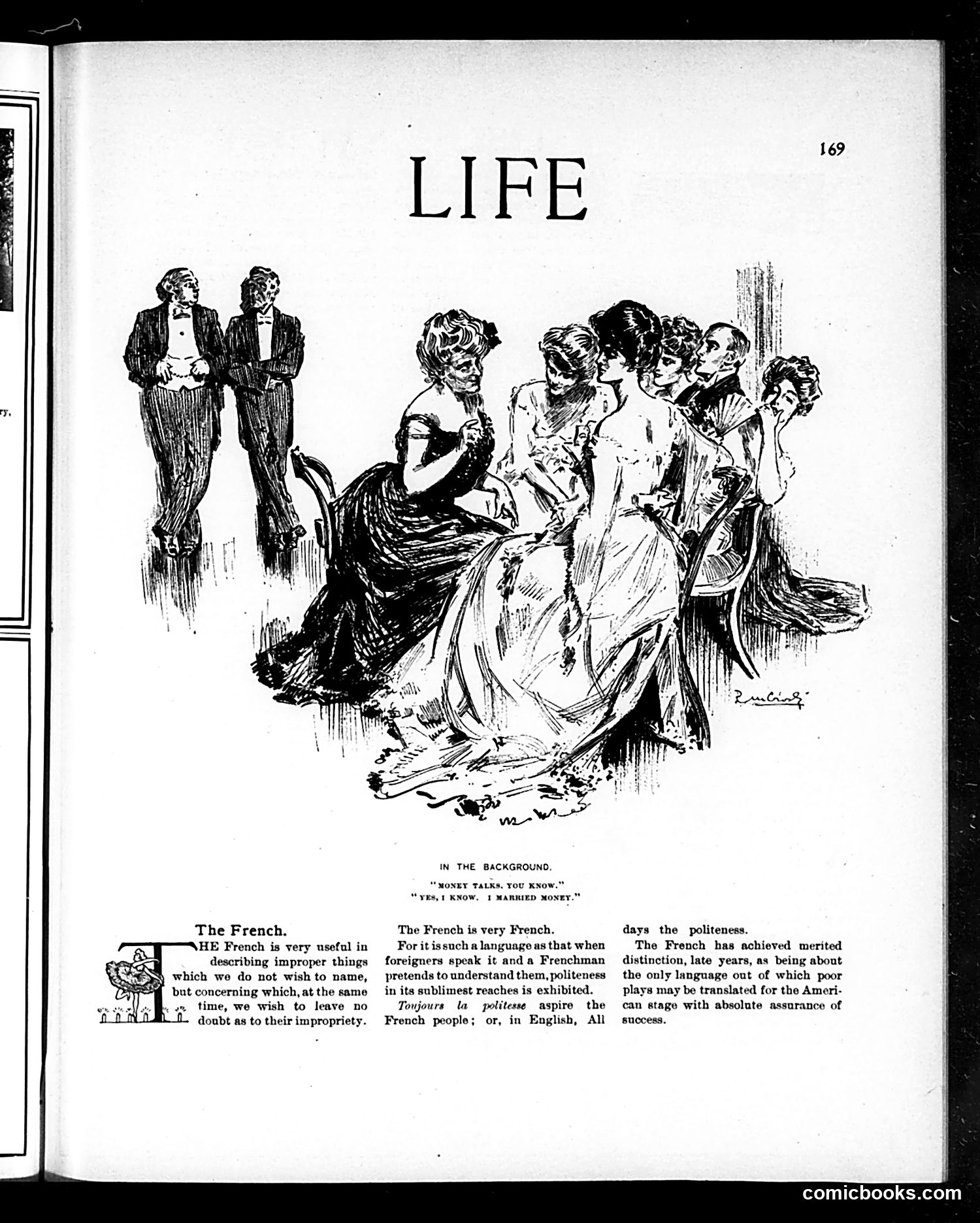
This satirical page depicts a social scene where two well-dressed men in the background observe a group of fashionably dressed women in conversation. The caption reads: "MONEY TALKS, YOU KNOW" / "YES, I KNOW. I MARRIED MONEY." The accompanying text, titled "The French," discusses French language and politeness, noting that French is "very useful in describing improper things" and that French phrases allow speakers to discuss delicate matters with propriety. The cartoon satirizes wealthy marriages and materialism—specifically, the joke that one man married a woman primarily for her wealth rather than love. The juxtaposition with commentary on French language suggests the satirist is mocking the pretense of genteel society, where euphemisms and foreign phrases mask base motivations like financial gain. The scene captures Gilded Age attitudes toward marriage and social status.
📄 Transcribed text from this page (OCR, searchable)
Machine-transcribed from the original scan — historical spelling and the odd misread are preserved.
The French. HE French is very usefal in describing improper things which we do not wish to name, but concerning which, at the same , time, we wish to leave no doubt as to their impropriety. IN THE BACKGROUND. “MONEY TALKS, TOU KNOW.” “yes, 1 KNOW, I MARRIED MONEY.” The French is very French. For it issuch a language as that when foreigners speak it and a Frenchman pretends to understand them, politeness in its sublimest reaches is exhibited. Toujours la politesse aspire the French people; or, in English, All days the politeness. The French has achieved merited distinction, late years, as being about the only language out of which poor plays may be translated for the Ameri- can stage with absolute assurance of success, | comicbooks.com