
Life, 1902-12-18 · page 15 of 26
Life — December 18, 1902 — page 15: what you’re looking at
What you’re looking at
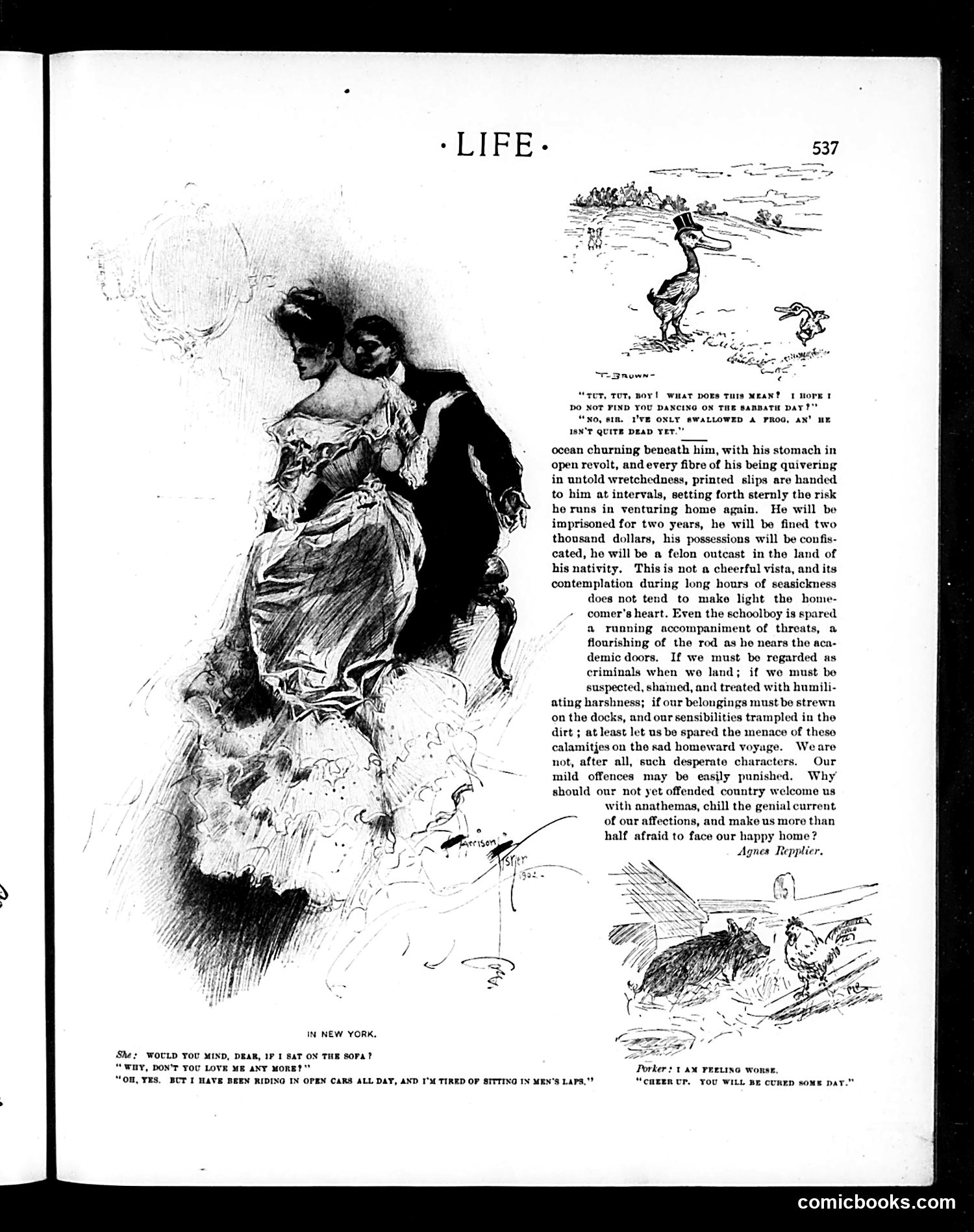
This page contains **two separate satirical pieces**: **Top section**: An essay by Agnes Repplier criticizing harsh U.S. immigration policies. The illustrated vignette shows an official interrogating a returning immigrant boy about breaking the Sabbath (dancing on Sunday). The text argues that returning Americans face cruel treatment—threats, searches, confiscation of belongings—making homecoming traumatic rather than joyful. Repplier advocates for more humane treatment of citizens re-entering the country. **Bottom section**: Two joke panels mocking modern urban life in New York. The first depicts a couple where the woman refuses to sit on the sofa because she's exhausted from "riding in open cars all day...sitting in men's laps"—likely referencing crowded public transportation. The second shows a porter consoling a weary woman, suggesting she'll eventually "be cured"—implying this exhaustion is an inevitable condition of city living. Both pieces use humor to critique contemporary American social conditions.
📄 Transcribed text from this page (OCR, searchable)
Machine-transcribed from the original scan — historical spelling and the odd misread are preserved.
“eB nown- “Ter, TOT, Bor! WHAT DoRS THIS MEAN? 1 Hore T DO NOT FIND YOU DANCING ON THE sanBaTit Day?” “No, SI. I'VE ONLY SWALLOWED A PROG, AN’ ME ISN'T QUITE DeaD YET.” ocean churning beneath him, with his stomach in open revolt, and every fibre of his being quivering in untold wretchedness, printed slips are handed to him at intervals, setting forth sternly the risk he runs in venturing home again. He will be imprisoned for two years, he will be fined two thousand dollars, his possessions will be confis- cated, ho will be a felon outcast in the land of his nativity. This is not a cheerful vista, and its contemplation during long hours of seasickness does not tend to make light the home- comer’s heart. Even the schoolboy is spared a running accompaniment of threats, a flourishing of the rod as he nears the aca- demic doors. If we must be regarded as criminals when wo land; if we must be suspected, shamed, and treated with humili- ating harshness; if our belongings must be strewn on the docks, and our sensibilities trampled in the dirt ; at least let us be spared the menace of these calamitjes on the sad homeward voyage. Weare not, after all, such desperate characters. Our mild offences may be easily punished. Why should our not yet offended country welcome us with anathemas, chill the genial current of our affections, and make us more than half afraid to face our happy home? Agnes Repplier. IN NEW YORK. She: WOULD YOU MIND, DEAR, IP 1 SAT ON THE SOFA? “WHY, DON'T YOU LOVE ME ANY MORE? Porker} 1 AM YRELING wonse, “OM, YES, BUT I HAVE BEEN RIDING IN OPEN CARS ALL DAY, AND I'M TIRED OP SITTING IN MEN'S LAPS."? “CHEER UP, YOU WILL BE CURED soME DAY.” comicbooks.com