
Life, 1900-06-28 · page 3 of 21
Life — June 28, 1900 — page 3: what you’re looking at
What you’re looking at
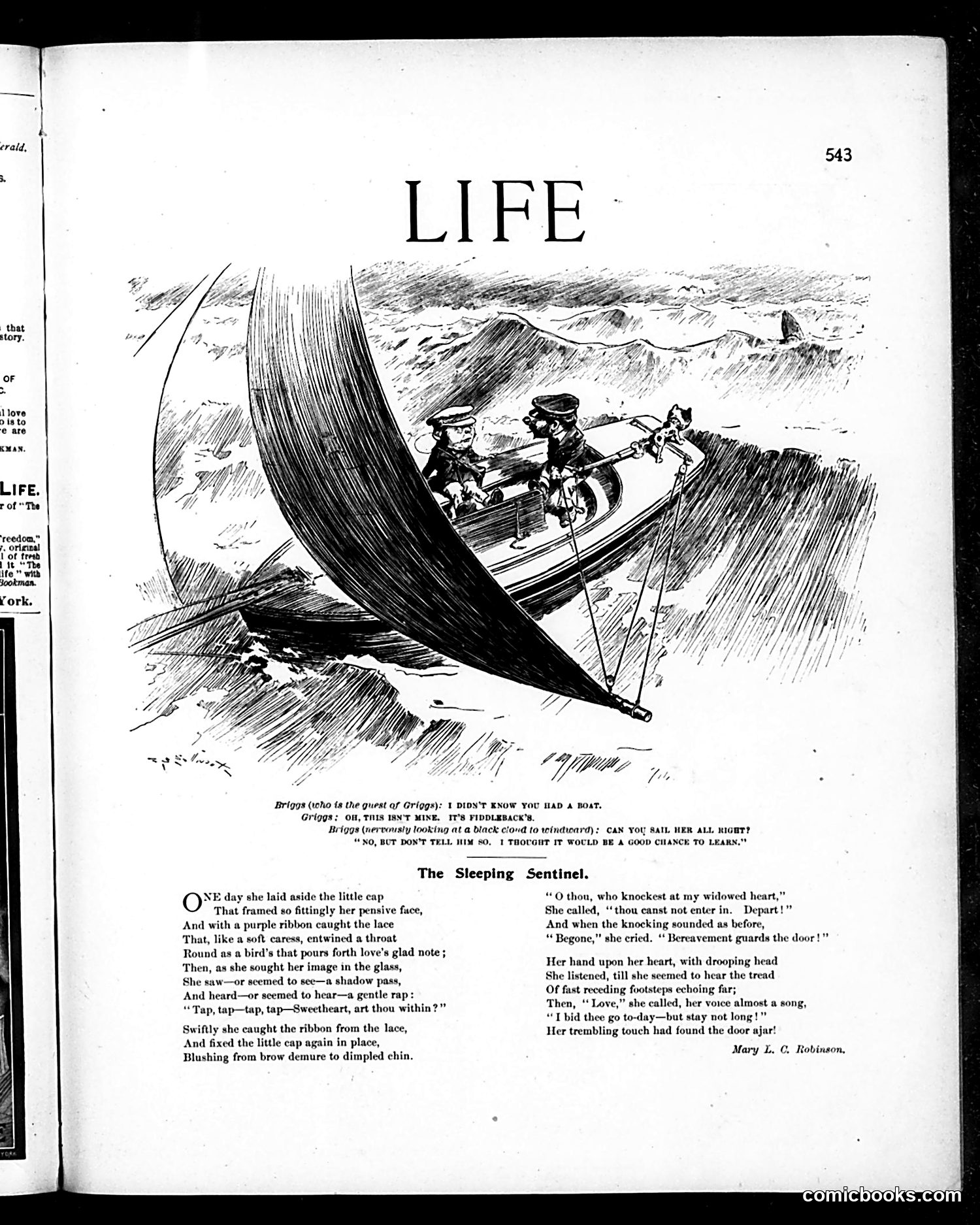
The main illustration shows two figures in a small sailboat with an oversized sail. The dialogue identifies one as "Briggs" (likely a reference to the cartoonist), who claims ignorance about owning a boat. The other figure, "Griggs," sarcastically suggests it's a "fiddleback"—implying the boat is impractical or poorly designed. The joke appears to be about incompetent boat ownership or mistaken identity regarding vessels. Below is a sentimental poem titled "The Sleeping Sentinel" by Mary L.C. Robinson, describing a woman keeping vigil while someone sleeps. This contrasts sharply with the crude sailing joke above, suggesting the page mixes humor with earnest romantic verse—typical of Life's eclectic editorial approach in this era.
📄 Transcribed text from this page (OCR, searchable)
Machine-transcribed from the original scan — historical spelling and the odd misread are preserved.
oF ove D 18 to e are CMAN, LIFE. rot" The O/Laaae ss Briggs (who ts the guest of Griggs): 1 DIDN'T KNOW YOU HAD A noaT, Griggs; OW, THIS ISN'T MINE, IT'S FIDDLEBACK’S. Briggs (nervously looking at a black cloud to windward): CAN You SAIL MER ALL. WIGHT? “NO, BUT DON'T TELL IM 80, 1 THOCGHT IF WOULD BE A GOOD CHANCE TO LEARN." The Sleeping Sentinel. NE day she laid aside the little cap That framed so fittingly her pensive face, And with a purple ribbon caught the lace That, like a soft caress, entwined a throat Round as a bird’s that pours forth love's glad note ; Then, as she sought her image in the glass, She saw—or seemed to see—a shadow pass, ‘And heard—or seemed to hear—a gentle rap: “Tap, tap—tap, tap—Sweetheart, art thou within?” Swiftly she caught the ribbon from the lace, And fixed the little cap again in place, Blushing from brow demure to dimpled chin. “O thou, who knockest at my widowed heart, She called, ‘thou canst not enter in. Depart!” And when the knocking sounded as before, “ Begone," she cried. ‘ Bereavement guards the door!” Her hand upon her heart, with drooping head She listened, till she seemed to hear the tread Of fast receding footsteps echoing far; Then, “Love,” she called, her voice almost a song, “T bid thee go to-day—but stay not long!” Her trembling touch had found the door ajar! Mary L. C, Robinson,