
Life, 1900-02-01 · page 12 of 20
Life — February 1, 1900 — page 12: what you’re looking at
What you’re looking at
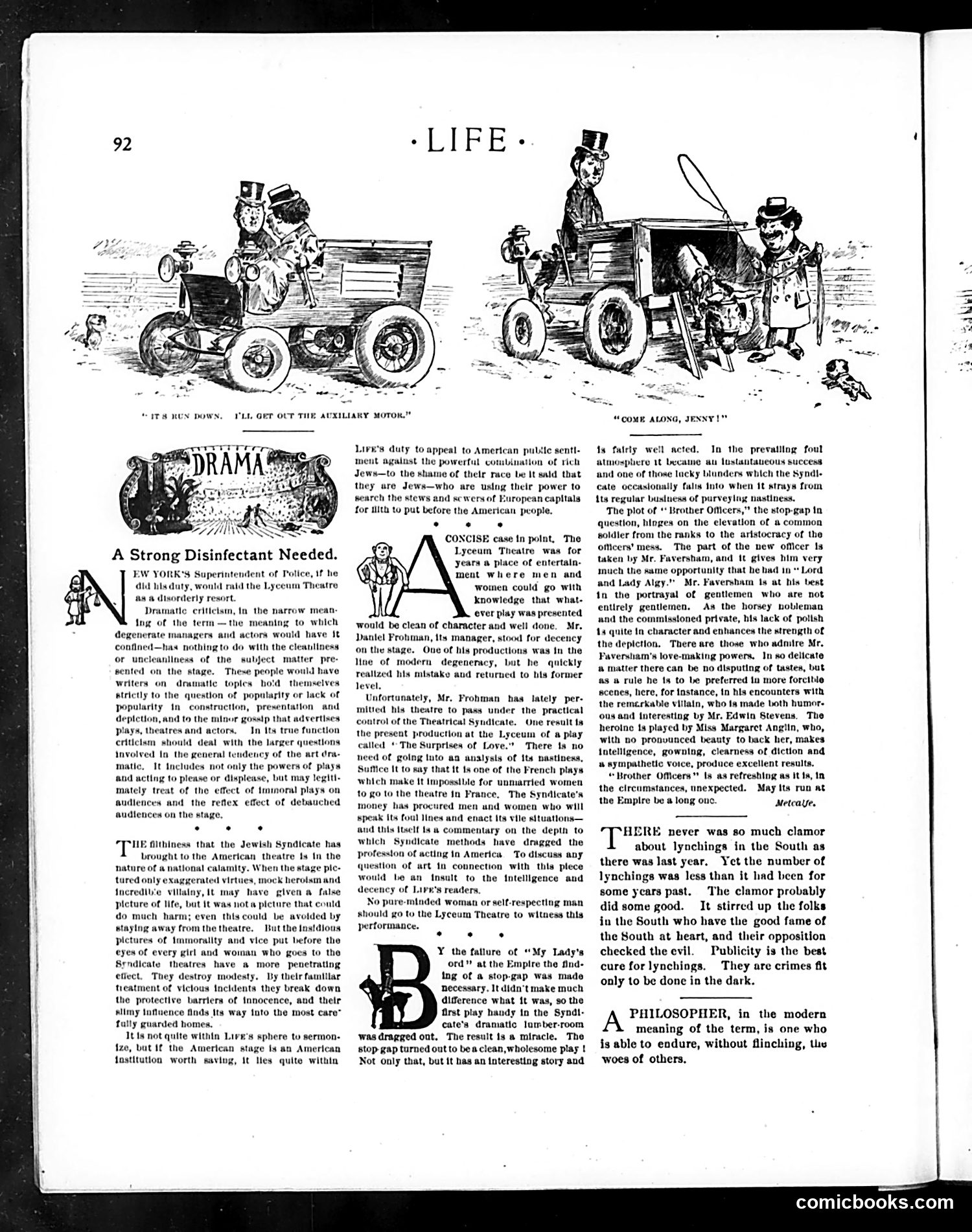
This page contains theatrical criticism and social commentary rather than political cartoons. The two illustrations at top show people with early automobiles, captioned "It's His Turn, I'll Get Out the Auxiliary Motor" and "Come Along, Jenny!" The main text critiques the Lyceum Theatre's management under David Frohman, arguing it has lost its former quality. The author advocates for stronger editorial oversight of theatrical productions, claiming current dramatic works lack substance. A secondary article discusses lynchings in the American South, arguing that publicity and public opposition—rather than darkness—provide the best deterrent to mob violence. This suggests lynching was a significant contemporary concern (appears to reference early 20th-century racial violence). The page reflects Progressive Era debates about theatrical standards and racial justice in America.
📄 Transcribed text from this page (OCR, searchable)
Machine-transcribed from the original scan — historical spelling and the odd misread are preserved.
“ITS REN DOWN. A Strong Disinfectant Needed. EW YORK'S Superintendent of Pe fhe did his duty, would rald the Lyceum Theatre ‘ay disorderly resort. Dramatic criticism, In the narrow mean: ing of the term—the meaning to which degenerate managers and actors would have I conflned—has nothing to do with the cleanliness or uncteanilness of the subject matter pre- tented on the stage. These people would have writers on dramatic toples ho!d themselves strictly to the question of popularity or lack of popularity tn truction, presentation and depiction, and to the minor gossip that advertises plays, theatres and actors, In Its true function criticism should deal with the larger questions Involved ta th cy of the art dint. matic, It tn powers of plays and acting to please or dixplease, but may legitt- mately treat of the effect of Immoral plays on audiences and the reflex emfect of debauched audiences on the stage, o 8 8 Tie slthiness that the Jewish Syndicate has brought to the American theatre ts In the nature of @ national calamity. When the stage ple- tured only exaggerated virtues, nock herotsm and fncredib‘e villainy, 1t may have given a false picture of life, but It was nota picture that eoutd do much harm; even thts could be avotded by staying away from the theatre. Hut the Insidious pie of immorality and vice put before the eyes of every girl and woman who goes to the Srndicate theatres have a more penetrating effect, They destroy modesty, By thelr fatntllar treatment of viclous tncldents they break down the protective barrters of Innocence, and thelr slimy influence finds tts way into the most care” fully guarded homes. It 1s not quite within Live's sphere to sermon- fze, but it the American stage is an American fostitutton worth saving, It Mes quite within VLE GET OUT THE AUXILIARY MOTOR.” Lirk’s duty to appeal to American pubite sentl- ment against the powerful combination of rich Jews—to the shame of thelr race be It sild that they ure Jews—who are uslng thelr power to search the stews and sewers of European capltals for ilith to put before the American people. * «6 6 CONCISE case in polnt, The Lyceum Theatre was for years a place of entertain- ment Where men and women could go with knowledge that what- ever play was presented. would be clean of character and well done. Mr. Dantel Frohman, tts manager, stood for decency on the stage. Oue of his productions was In the Mne of modern degeneracy, but he quickly realized his mistake and returned to bis former level Unfortunately, Mr. Frohman has lately per- mitted his theatre to pass under the practical control of the Theatrical Syndicate, One result 1s the present production at the Lyceum of a play called © The Surprises of Love ‘There 1s no heed of going tuto an analysis of its nastiness, SuMice It to say that tt 1s one of the French plays which make {t impossible for unmarried women. to go to the theatre in France, The Syndicate’s money has procured men und women who will speak Its foul lines and enact Its vile situations— aud this Itself tsa commentary on the depth to which Syndicate methods have drugged the Pprofesston of acting {n America To discuss any question of art tn connection with this plece uid be an insult to the fntelligence and 's readers, minded Woman or self-respecting man should go to the Lyceum Theatre to witness this performance. * 6 6 Y the fatlure of “My Lady's ord’? at the Empire the find ing of @ stop-gap was mado necessary. It didn't make much digerence what {t was, so the first play handy in the Syndl- cate’s dramatic lamber-room was dragged ont, The result is a miracle. The stop gap turned out to bea clean, wholesome pla t Not only that, but it has an tnteresting story and vi" 4s fairly well acted, In the prevatitng foul almospbere it became au lustantaueous success and one of those lacky blunders which the Syndl- cate occasionally Calis Into when it strays from its regular business of purveying nastiness. The plot of * Brother OMicers,” the stop-gap In question, hinges on the elevation of a common soldier from the ranks to the aristocracy of the omicers' mess. The part of the new officer 1s taken by Mr. Faversham, and tt gives him very much the same opportunity that he had in “Lord and Lady Algy.” Mr. Faversham 14 at his best in the portrayal of gentlemen who are not entirely gentlemen. As the horsey nobleman ‘and the commissioned private, his lack of polish 44 quite ta character and enhances the strength of the depiction, There are those who admire Mr. Faversiiam’s love-making powers, In so delicate & matter there can be no disputing of tastes, but as 4 rule he ts to be preferred in more forcihle scenes, here, for instance, in his encounters with the remerkable villain, who 1a made both humor. ous and tnteresting by Mr. Edwin Stevens, The heroine 1s plased by Miss Margaret Angitn, who, with no pronvunced beauty to back her, makes intelligence, gowning, clearness of diction and u sympathetic votce, produce excellent results, “Brother OMicers™ ts as refreshing as It ts, In the circumstances, unexpected. May {ts run at the Empire be a long onc. Metcalfe. HERE never was so much clamor about lynchings in the South as there was last year, Yct the number of lynchings was less than it had been for some ycars past. The clamor probably did some good. It stirred up the folks in the South who have the good fame of the South at heart, and their opposition checked the evil. Publicity is the best cure forlynchings. They are crimes fit only to be done in the dark. PHILOSOPHER, in the modern meaning of the term, is one who is able to endure, without flinching, the woes of others, comicbooks.com