
Life, 1899-12-02 · page 28 of 44
Life — December 2, 1899 — page 28: what you’re looking at
What you’re looking at
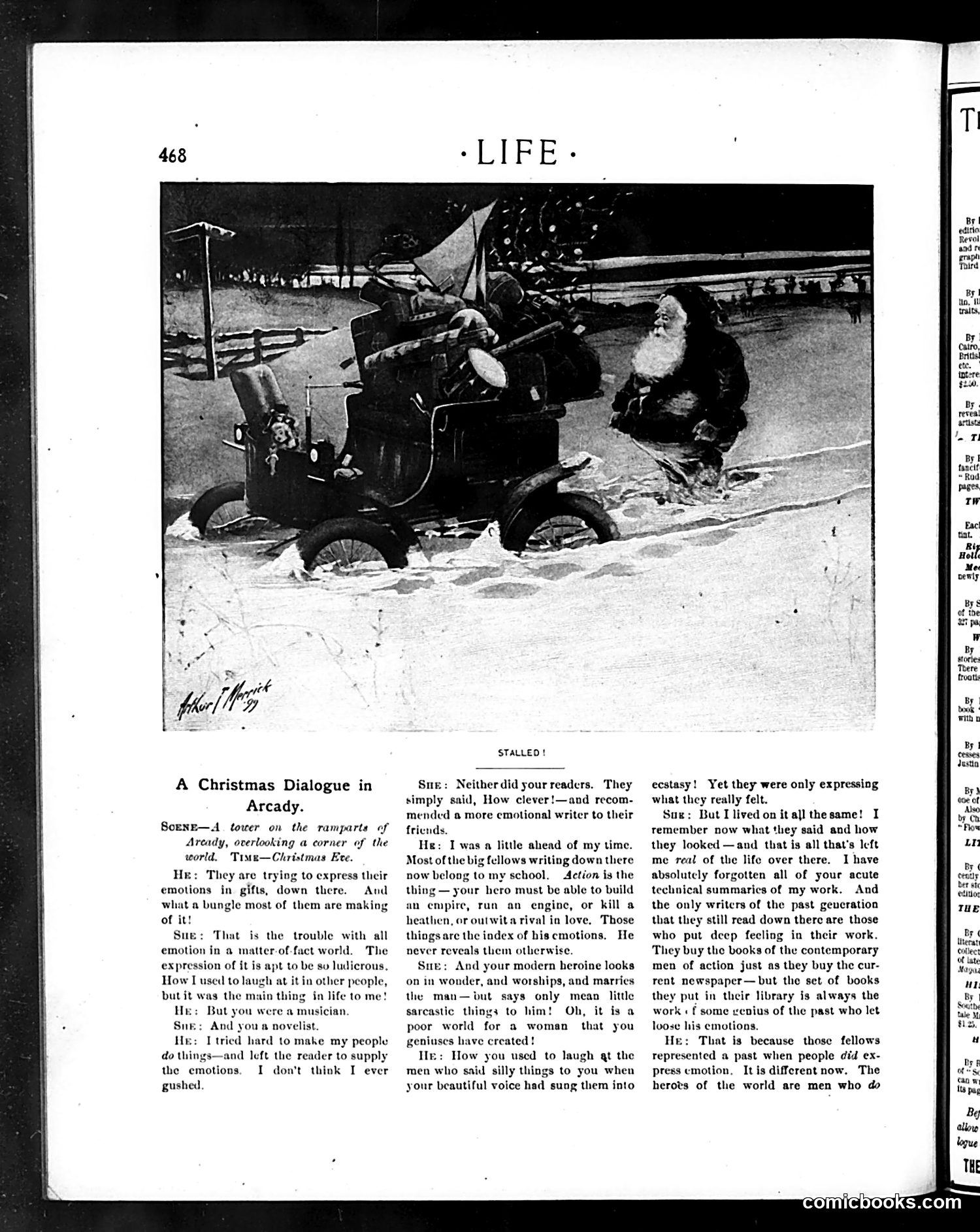
This page presents "A Christmas Dialogue in Arcady"—a satirical debate between two dead artists (a musician and a novelist) observing Christmas gift-giving below on Earth. **The satire's point**: The two characters represent an older literary/artistic tradition emphasizing emotional authenticity and expression. They lament that modern writers (their contemporaries in early 20th-century Life magazine) have abandoned emotion for "action"—depicting heroes who build empires, run engines, or win rivals through deed rather than feeling. **The critique**: Modern literature supposedly produces emotionally constipated characters. A contemporary heroine merely "worships" and speaks "sarcastic things" rather than genuinely emote. Readers praise such work as "clever" but ultimately prefer older works with "deep feeling." **The joke**: The irony that the two artists—who prided themselves on *restraint* and never "gushed"—now recognize their detachment cost them readership. Emotion, they realize too late, moves people more than technical sophistication. This reflects early-20th-century literary debates about Realism versus Romanticism, satirizing the era's emphasis on action-driven narrative over psychological depth.
📄 Transcribed text from this page (OCR, searchable)
Machine-transcribed from the original scan — historical spelling and the odd misread are preserved.
ues am sw d he A id y ed A Christmas Dialogue in Arcady. ScenE—A tower on the ramparts of Aready, overlooking a corner of the world. Time—Christmas Eve. He: They are trying to express their emotions in gifts, down there. And what a bungle most of them are making of it! Sue: That is the trouble with all emotion in a matter-of-fact world. The expression of it is apt to be sv ludicrous, How I used to laugh at it in other people, butit was the main thing in life to me! But you were a musician And you a novelist. I tried hard to make my people do things—and left the reader to supply the emotions. I don't think I ever gushed. STALLED! Sne: Neitherdid your readers. They simply said, How clever!—and recom- mended & more emotional writer to their friends. He: I was a little ahead of my time. Most of the big fellows writing down there now belong to my school. Action is the thing — your hero must be able to build an empire, run an engine, or kill a heathen, or outwita rival in love, Those things are the index of hiscmotions. He never reveals them otherwise. Sue: And your modern heroine looks on in wonder, and worships, and marries the man—but says only mean little sarcastic things to him! Oh, it is a poor world for a woman that you geniuses have created! iW How you used to laugh at the men who said silly things to you when your beautiful voice had suog them into ecstasy! Yet they were only expressing what they really felt. Sue: But I lived on it all thesame! I remember now what they said and how they looked —and that is all that’s left me real of the life over there. I have absolutcly forgotten all of your acute technical summaries of my work. And the only writers of the past geucration that they still read down there are those who put deep fecling in their work. They buy the books of the contemporary men of action just as they buy the cur- rent newspaper—but the set of books they put in thei library is always the f some eenius of the past who let his emotions. That is because those fellows esented a past when people did ex- press emotion. Itis different now. The herovs of the world are men who do