
Life, 1899-06-08 · page 15 of 20
Life — June 8, 1899 — page 15: what you’re looking at
What you’re looking at
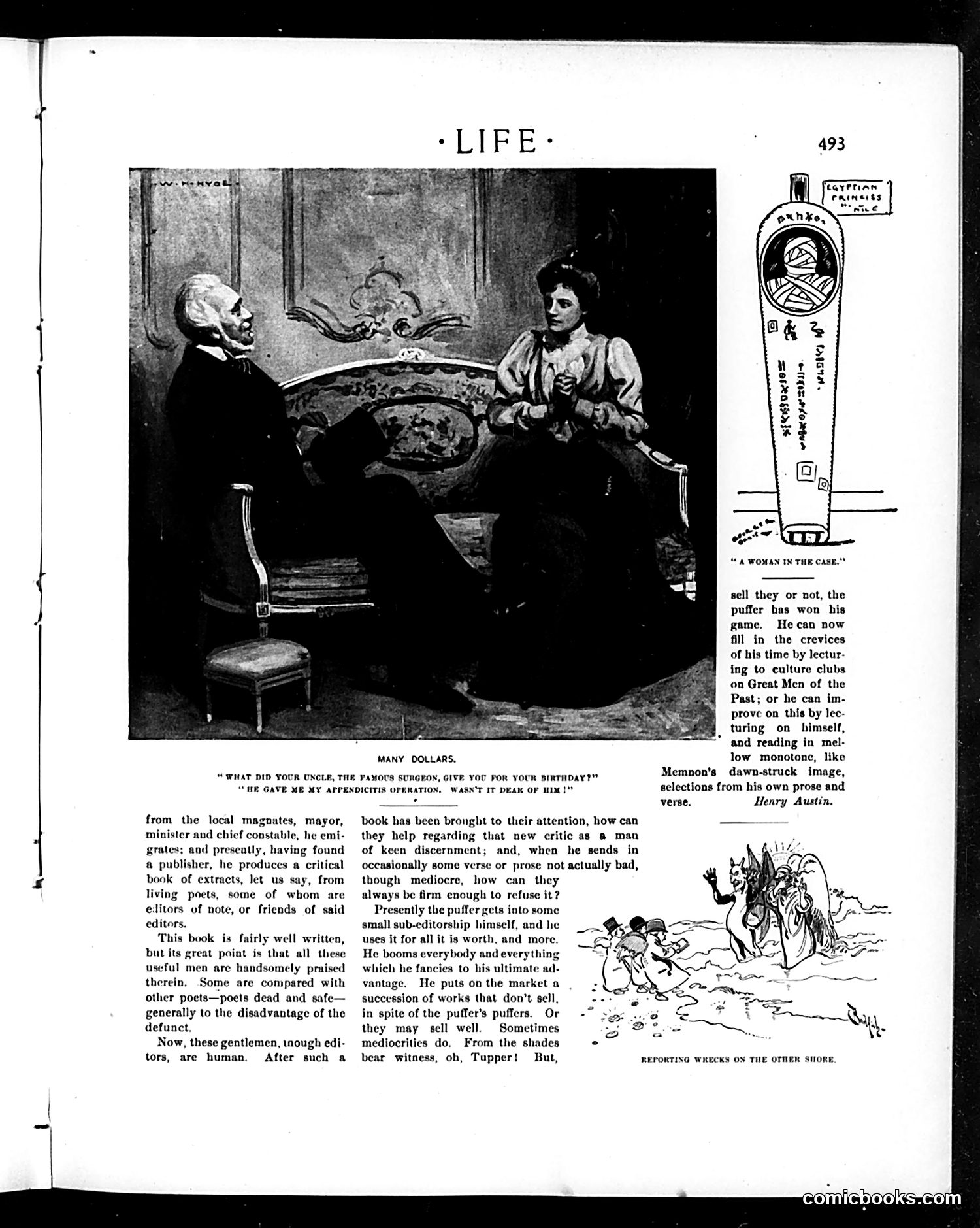
The main cartoon depicts a social satire about a famous surgeon's peculiar "birthday gift." When asked what his uncle gave him, a man replies: "An appendicitis operation"—framed as a generous present. The joke mocks wealthy doctors who perform unnecessary surgeries on family members, treating invasive medical procedures as favors rather than health needs. This reflects early-20th-century anxiety about surgeons' financial incentives and the performative generosity of the upper class. The accompanying text critiques literary "puffers"—ambitious critics who flatter established poets in published books, then leverage those connections for editorial positions, using their influence to promote mediocre work. The satire targets nepotism, reciprocal favoritism, and the corruption of literary merit through personal networks. References to the poet Tupper suggest mockery of once-celebrated but now-forgotten verse.
📄 Transcribed text from this page (OCR, searchable)
Machine-transcribed from the original scan — historical spelling and the odd misread are preserved.
ev “WHAT DID YOUR UNCLE, THE PAMOUS SURGRON, GIVE YOU FOR YOUR BIRTHDAY?" “A WOMAN IN THE CASE.” sell they or not, the puffer bas won his game. Hecan now fill in the crevices of his time by lectur- ing to culture clubs on Great Men of the Past; or he can im- prove on this by lec- turing on himself, and reading in mel- MANY DOLLARS, low monotone, like Memnon'’s dawn-struck image, “HE GAVE ME MY APPENDICITIS OPERATION. WASN'T IT DEAR OF HIM! selections from his own prose and from the local magnates, mayor, minister aud chief constable, he emi- grates; and preseotly, having found @ publisher, he produces a critical book of extracts, let us say, from living poets, some of whom are e:litors of note, or friends of said editors. This book is fairly well written, but its great point is that all these useful men are handsomely praised therein. Some are compared with other poets—poets dead and safe— generally to the disadvantage of the defunct. Now, these gentlemen, tnough edi- tors, are human. After such a 2 verse, Henry Austin, book has been brought to their attention, how can a they help regarding that new critic as @ man of keen discernment; and, when he sends in occasionally some verse or prose not actually bad, though mediocre, how can they always be firm enough to refuse it? Presently the puffer gets into some small sub-editorship himself, and he uses it for all it is worth, and more. He booms everybody and everything which he fancies to his ultimate ad- vantage. He puts on the market a succession of works that don’t sell, in spite of the puffer's puffers. Or they may sell well. Sometimes mediocrities do. From the shades bear witness, oh, Tupper! But, REPORTING WRECKS ON THE OTHER SHORE.