
Life, 1899-03-30 · page 8 of 20
Life — March 30, 1899 — page 8: what you’re looking at
What you’re looking at
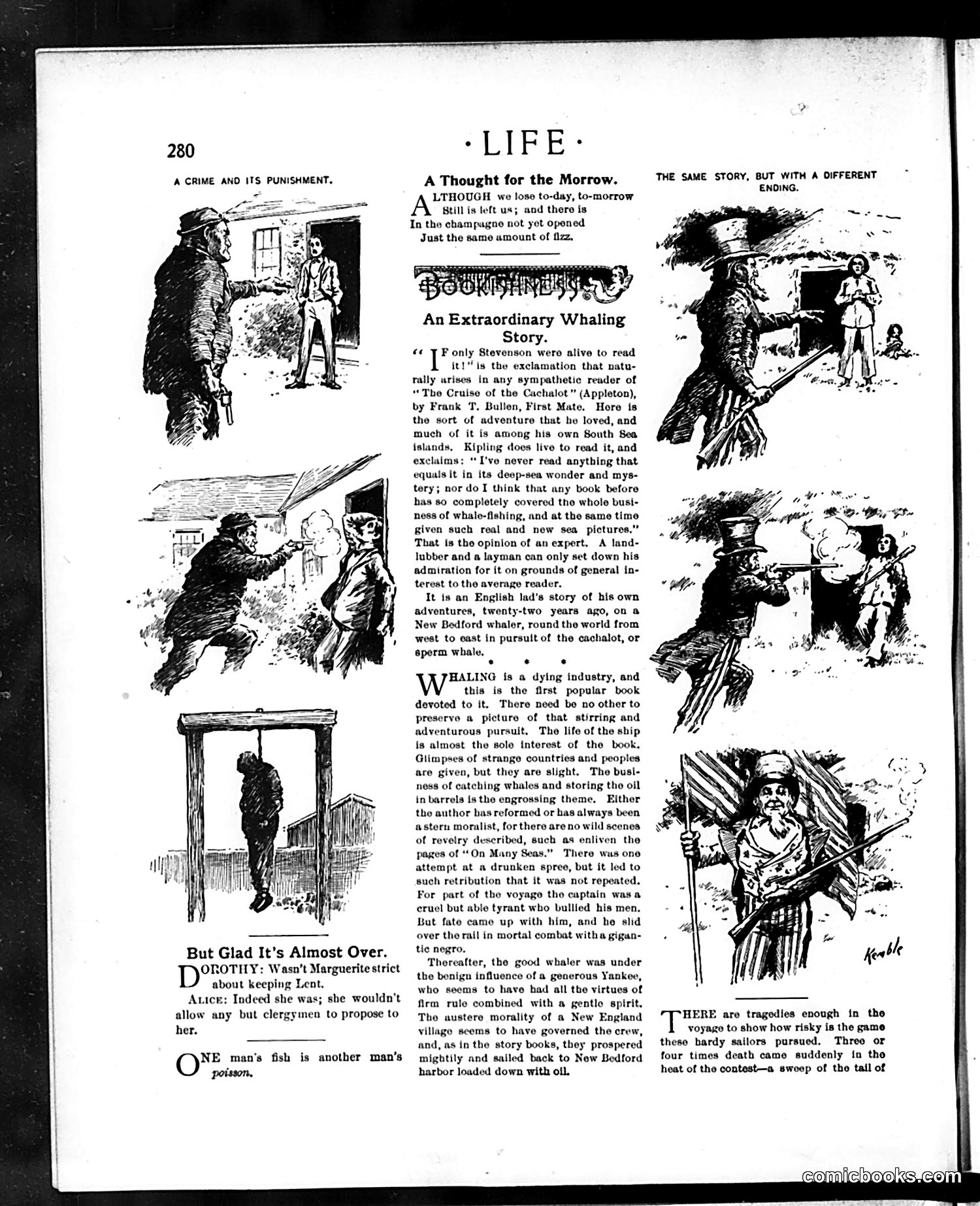
This page contains literary reviews and satirical cartoons rather than political commentary. The main content discusses "An Extraordinary Whaling Story"—a review of Frank T. Bullen's *The Cruise of the Cachalot*, praising its adventure narrative and detailed whaling descriptions. The accompanying cartoons illustrate humorous social scenarios: "A Crime and Its Punishment" (appears to show a domestic dispute), "But Glad It's Almost Over" (depicting reluctant Lent observance), and "The Same Story, But with a Different Ending" (showing contrasting outcomes to similar situations). The satirical humor targets everyday social conventions—marital dynamics, religious observance, and life's ironies—rather than specific political figures or events. The whaling book review reflects period interest in exotic adventure literature.
📄 Transcribed text from this page (OCR, searchable)
Machine-transcribed from the original scan — historical spelling and the odd misread are preserved.
280 A CRIME ANO ITS PUNISHMENT. But Glad It’s Almost Over. OROTITY: Wasn’t Marguerite strict about keeping Lent, Anice: Indeed she was; she wouldn't allow any but clergymen to propose to her. O*E man’s fish is another man’s poisson, -LEFE *« A Thought for the Morrow. LTHOUGH we lose to-day, to-morrow Btill is left us; and there is In the champagne not yet opened Just the same amount of fizz, Story. ¢¢ JF only Stevenson wero alive to read it!" is the exclamation that natu- rally urises in any sympathetic reader of “The Cruise of the Cachalot” (Appleton), by Frank T. Bullon, First Mate. Hore is the sort of adventure that he loved, and much of it is among his own South Sea islands, Kipling does live to read it, and exclaims: “I've never read anything that equals it in its deep-sea wonder and mys- tery; nor do I think that any book before has so completely covered tho whole busi- ness of whale-fishing, and at the samo timo given such real and new sea pictures." That is the opinion of an expert. A land- lubber and a layman can only set down his admiration for it on grounds of general in- terest to the average reader. It is an English lad’s story of his own adventures, twonty-two years ago, on a New Bedford whaler, round the world from west to cast in pursuit of the cachalot, or sperm whale. o 8 e« HALING {s a dying industry, and this is the first popular book devoted to it. There need be no other to preserve a picture of that stirring and adventurous pursuit, The life of the ship is almost the solo interest of the book. Glimpses of strange countries and peoples are given, but they are slight, Tho busi- ness of catching whales and storing tho oil in barrels is the engrossing theme. Either the author bas reformed or has always been astern moralist, for there are no wild scenes. of revelry described, such as enliven the pages of On Many Seas.” There wus ono attempt at a drunken spree, but it led to such retribution that it was not repeated, For part of the voyage tho cuptain was a cruel but able tyrant who bullied his men, But fate camo up with him, and he slid over the rail in mortal combat witha gigan- tic negro. Thereafter, the good whaler was under the bonign influence of a generous Yankee, who seems to have had all the virtues of firm rulo combined with a gentlo spirit. Tho austero morality of a New England villago seems to have governed the crew, and, as in the story books, they prospered mightily and sailed back to New Bedford harbor loaded down with oll. THE SAME STORY, BUT WITH A OIFFERENT ENDING. HERE are tragedies enough in tho voyage to show how risky is the game theso bardy sailors pursued. Threo or four times death came suddenly in tho heat of the contest—a swoep of tho tail of