
Life, 1899-03-16 · page 8 of 20
Life — March 16, 1899 — page 8: what you’re looking at
What you’re looking at
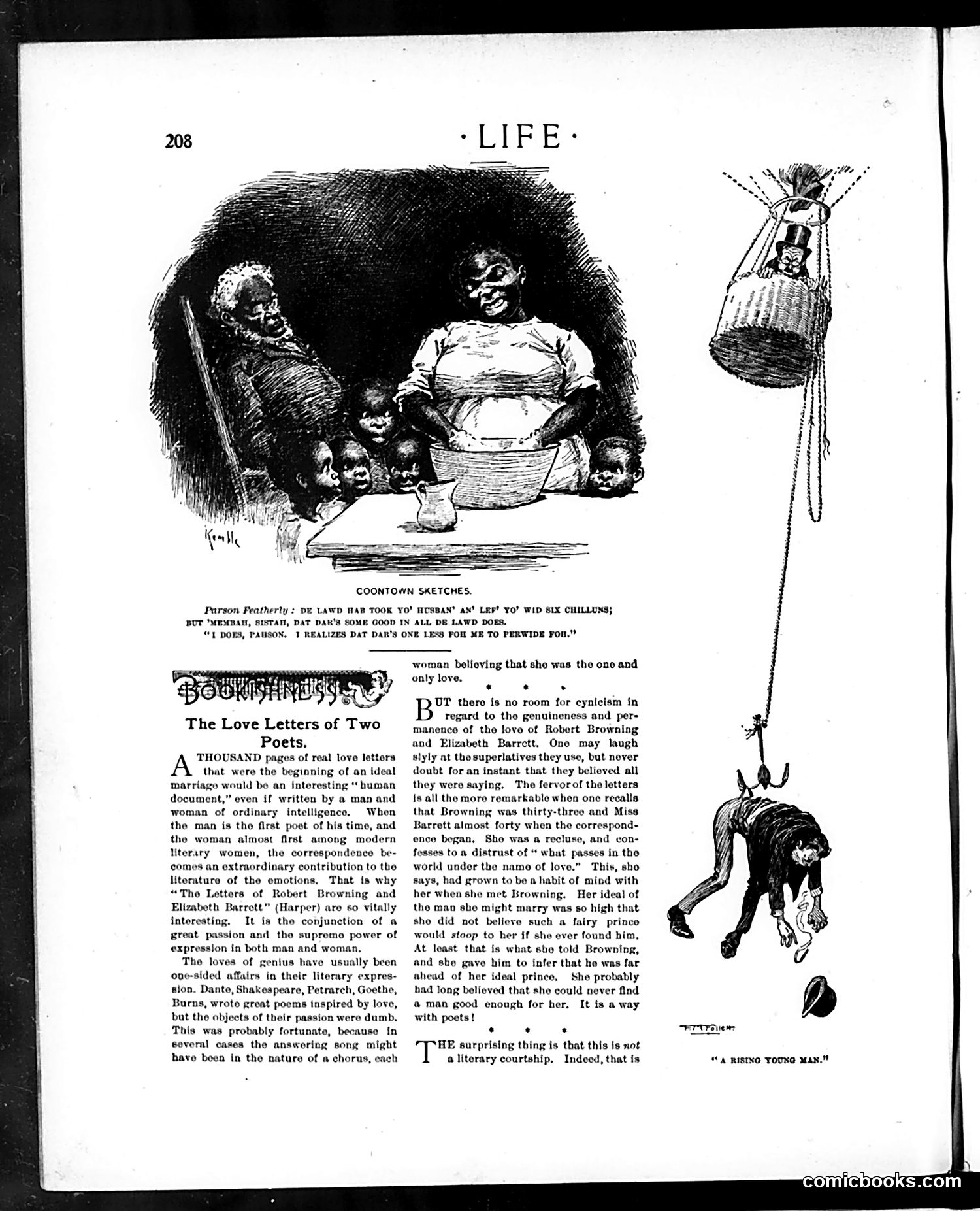
This page from *Life* magazine discusses "The Love Letters of Two Poets," comparing the romantic correspondence of Robert Browning and Elizabeth Barrett. The text argues that while their love letters display genuine passion, they lack literary merit compared to great poetry inspired by love throughout history. The "Coontown Sketches" cartoon at top depicts racial stereotypes common to the era's popular entertainment—showing Black figures in a domestic scene with dialect speech. This reflects *Life*'s occasional use of such stereotypical humor, typical of late 19th/early 20th-century American publications. The right illustration, "A Rising Young Man," shows a figure suspended by rope, likely satirizing social climbing or precarious social advancement.
📄 Transcribed text from this page (OCR, searchable)
Machine-transcribed from the original scan — historical spelling and the odd misread are preserved.
COONTOWN SKETCHES. Parson Featherly : DE LAWD MAB TOOK YO! HUSBAN’ AN LEF? YO! WID SIX CHILLUNS; BUT 'MEMBAM, SISTATT, DAT DAK’S SOME GOOD IN ALL DE LAWD DOES. “1 DOES, PAUSON. I REALIZES DAT DAR'S ONE LESS POH ME TO PERWIDE Fou." The Love Letters of Two Poets. THOUSAND pages of real love letters that were the beginning of an ideal marriage would be an interesting “human document,” even if written by a man and woman of ordinary intelligence, When the man is tho first poot of his timo, and the woman almost first among modern Uterary women, the correspondence be- comes an extraordinary contribution to tho literature of the emotions, That is why “Tho Letters of Robert Browning and Elizabeth Barrott” (Harper) are so vitally interesting, It is the conjunction of a great passion and tho supromo power of expression in both man and woman, The loves of genius have usually been ove-sided affairs in their literary expres- sion. Dante, Shakespeare, Petrarch, Goethe, Burns, wrote great pooms inspired by love, but the objects of their passion wore dumb. This was probably fortunate, because in several cases tho answering song might have been in the nature of a chorus, cach woman belloving that sho was the ono and only love, ° . UT thero is no room for cynicism in regard to tho genuineness and per- manence of the love of Robert Browning and Elizabeth Barrett. Ono may laugh slyly at thosuperlatives they use, but never doubt for an instant that they belioved all they wero saying. The fervor of the letters 1s all the more remarkable when ono recalls that Browning was thirty-three and Miss Barrott almost forty when the correspond- ence began, Sho was a recluse, and con- fosses toa distrust of “ what passes in tho world under tho namo of love.” This, sho says, had grown to be ahabit of mind with her when she met Browning. Her ideal of tho man she might marry was so high that sho did not believe such a fairy princo would stoop to her if she ever found him. At least that is what she told Browning, and she gavo him to infer that he was far ahead of her ideal prince, She probably had long believed that sho could never find @ man good enough for her. It is a way with poets! oe * HE surprising thing is that this is not a literary courtship, Indeed, that is ATT er “4 RISING YOUNG MAN."