
Life, 1898-06-16 · page 6 of 20
Life — June 16, 1898 — page 6: what you’re looking at
What you’re looking at
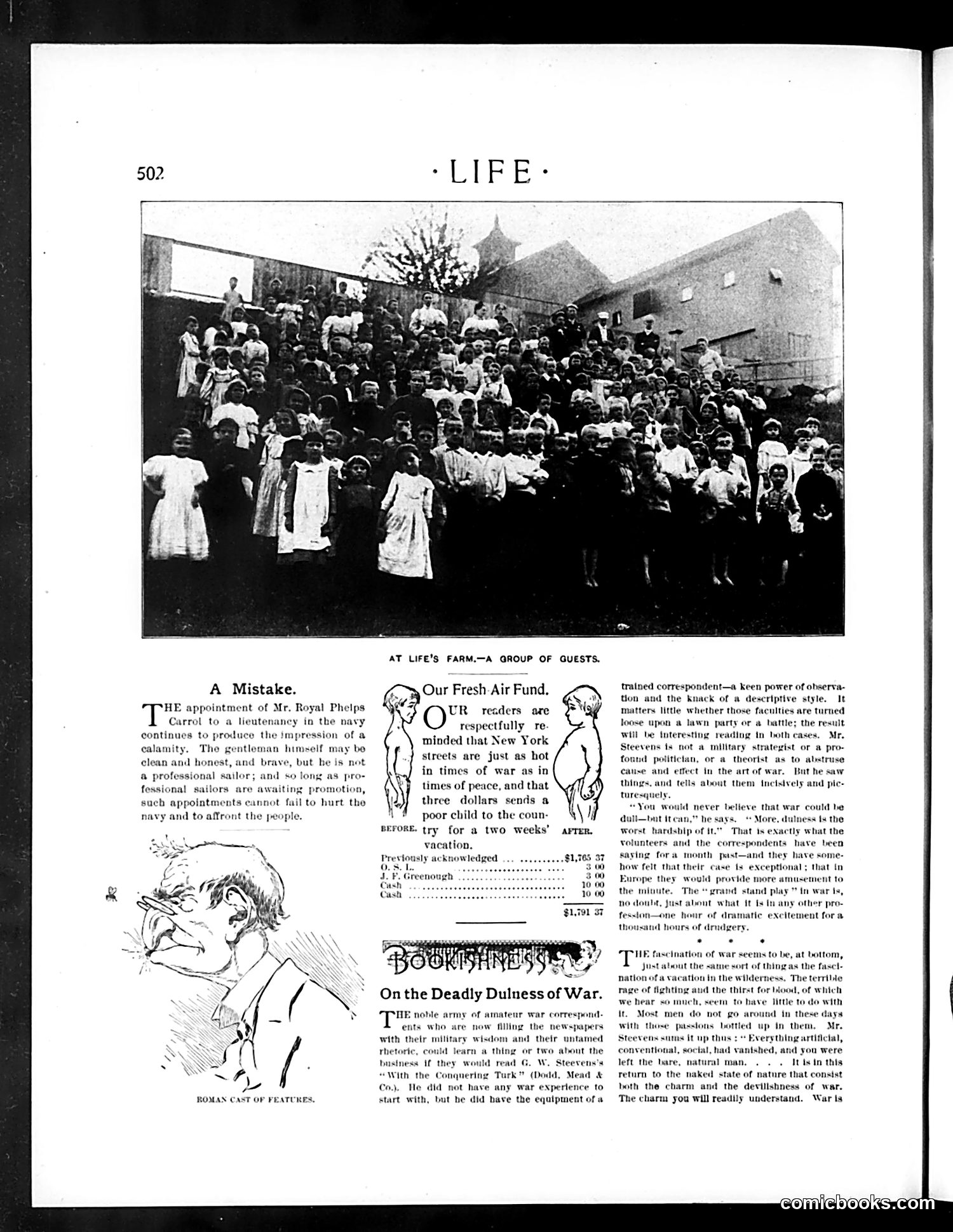
**Main Content:** This page contains three distinct pieces of social commentary: 1. **"A Mistake"** critiques Royal Phelps Carroll's appointment as a testimony witness, questioning his credibility as a "professional sailor" unsuited for public trust. 2. **"Our Fresh Air Fund"** satirizes New York's summer heat by suggesting three dollars could send a poor child to the country for two weeks—implying this modest charitable effort is inadequate response to urban poverty and dangerous conditions. 3. **"On the Deadly Dullness of War"** mocks amateur war correspondents now filing newspaper accounts with military "wisdom," suggesting they lack actual combat experience and peddle clichéd war rhetoric. The **"Roman Cast of Features"** illustration appears to be unrelated character study. The top photograph shows a large outdoor gathering, identified as "at Life's Farm—a group of guests."
📄 Transcribed text from this page (OCR, searchable)
Machine-transcribed from the original scan — historical spelling and the odd misread are preserved.
A Mistake. HE appointment of Mr. Royal Phelps arrol to a lieutenancy in the navy continues to produce the impression of a calamity. Tho gentleman himself may be clean and honest, and brave, but he is not @ professional sailor; and s« fessional sailors are such appointments ¢ navy and to affront the peo, long a8 pro- promotion, not fail to hurt the PeATCRES. “With the Con Co). Me did ny start with, but he did have AT LIFES FARM.—A GROUP OF Our Fresh-Air Fund. UR respectfully re. minded that New York streets are just as hot in times of war as in times of peace, and that readers are three dollars sends a poor child to the coun- “try for a two weeks vacation. wledged y of amatenr war correspe now filling the newspapers om and thelr unt could learn a thing or two about the Steevens's Mead & elr military w if they would read G. W. Turk” (Devt have any war expertence to the equipment of GUESTS. ed trained correspondent—a keen power of observa- tion and the knack of a descriptive style. It Inatters little whether those faculties are turned loose upon a lawn party or a battle; the result will be Interesting reading tn both cases. Mr. Steevens ts not a military strategist or a pro- found politiclan, or a theorist as to abstruse cause and effect in the art of war. But he saw things, and tells about them tnetstvely and ple- turesquely. ever belleve that war could be duti—out trean,” he says, * More, dulness {4 the Worst hardship of it.” That 1s exactly what the volunteers and the correspondents have been saying fora past—and they have some- how felt that thelr case fs exceptional ; that in Europe they would provide more amusement to the minute. Th nt stand play" in war ts, bt, Just about what tt fs ti any other pro- Ne hour of dramatic exeitement for a of drndgery. of war seems to I sate sort of thin; nation of a vacation In the wilderness, Thy rage of fighting aud the thirst for ble we hear so much, seem to have little it. Most men do not with the Steevens at bottom, as the fascl- rrible of which artifictal, conventional, social, had vantshed, and you were left the bare, natural man, Its in this return to the naked state of nature that consist Loth the charm and the devillsbness of war. The charm you will readily understand. War is