
Life, 1898-05-12 · page 14 of 20
Life — May 12, 1898 — page 14: what you’re looking at
What you’re looking at
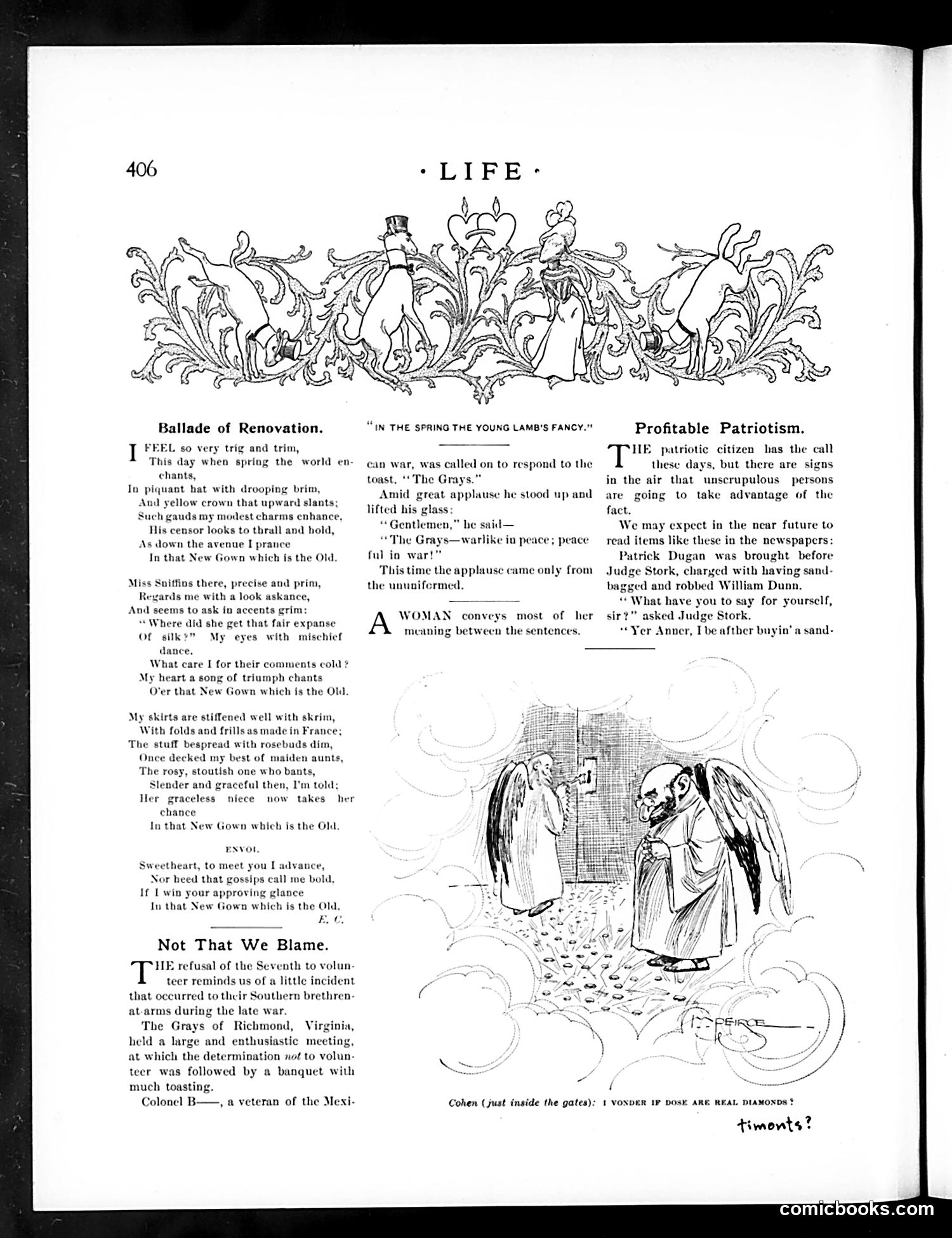
This page contains three satirical pieces reflecting early 20th-century concerns: **"Ballade of Renovation"** satirizes women's fashion and recycling. A woman proudly wears a dress made from her aunt's old fabric, passing it off as new. The satire targets both female vanity (pretending old clothes are fashionable) and social climbing—trying to impress others while hiding the garment's true origins. **"Not That We Blame"** references the Civil War era. Southern volunteers ("The Grays") held a patriotic meeting, but when a Mexican War veteran toasted them as "warlike in peace; peaceful in war," only civilians applauded—the uniformed soldiers remained silent. The joke: his backhanded compliment exposed their lack of actual martial spirit. **"Profitable Patriotism"** warns of war profiteering. An Irishman (Patrick Dugan, suggested by dialect) claims he robbed someone to fund patriotic war bonds. The cartoon satirizes how national crises create opportunities for criminals to hide behind patriotic justification. **The illustration** appears to show an angel at heaven's gates questioning whether diamonds are real—likely commenting on false appearances or fraud.
📄 Transcribed text from this page (OCR, searchable)
Machine-transcribed from the original scan — historical spelling and the odd misread are preserved.
Ballade of Renovation. FEEL so very trig and trim, This day when spring the world en- chants, In piquant hat with drooping brim, Aud yellow crown that upward slants; Such gauds my modest charms enhance, His censor looks to thrall and hold, As down the avenue I prance In that New Gown which is the Old. Miss Sniffins there, precise and prim, Regards me with a look askance, And seems to ask in accents grim: “Where did she get that fair expanse Of silk?” My eyes with mischief dance, What care I for their comments cold ? My heart a song of triumph chants O'er that New Gown which is the Old. My skirts are stiffened well with skrim, folds and frills as made in France; The stuff bespread with rosebuds dim, Once decked my best of maiden aunts, The rosy, stoutish one who bants, Slender and graceful then, I'm told; Her graceless chance In that niece now w Gown which is the Old ENVOL. Sweetheart, to meet you I advance, Nor heed that gossips call me bold, If I win your approving glance Iu that New Gown which is the Old, Not That We Blame. HE refusal of the Seventh to volun- teer reminds us of a little incident that occurred to their Southern brethren- at-arms during the late war. The Grays of Richmond, Virg' held a large and enthusiastic meeting, at which the determination ot to volun- teer was followed by a banquet with much toasting. Colonel B—, a veteran of the Mexi- “IN THE SPRING THE YOUNG LAMB'S FANCY.” can war, was called on to respond to the toast, ‘The Grays.” Amid great applause he stood up and lifted his glass “Gentlemen,” he said— — warlike in peace; peace ful io war This time the applause came only from the ununifermed. WOMAN convey her meaning between the sentences. most of Profitable Patriotism. Te patriotic citizen has the call these days, but there are signs in the air that unscrupulous persons are going to take advantage of the fact. We may expect in the near future to read items like these in the newspapers: Patrick Dugan was brought before Judge Stork, charged with having sand- bagged and robbed William Dunn. “What have you to say for yourself, sir?” asked Judge Stork. “Yer Anner, I be afther buyin’ a sand- Cohen (just inside the gates): 1 VONDER IP DOSE ARE REAL DIAMONDS ¢ timonts? comicbooks.com