
Life, 1898-03-03 · page 13 of 20
Life — March 3, 1898 — page 13: what you’re looking at
What you’re looking at
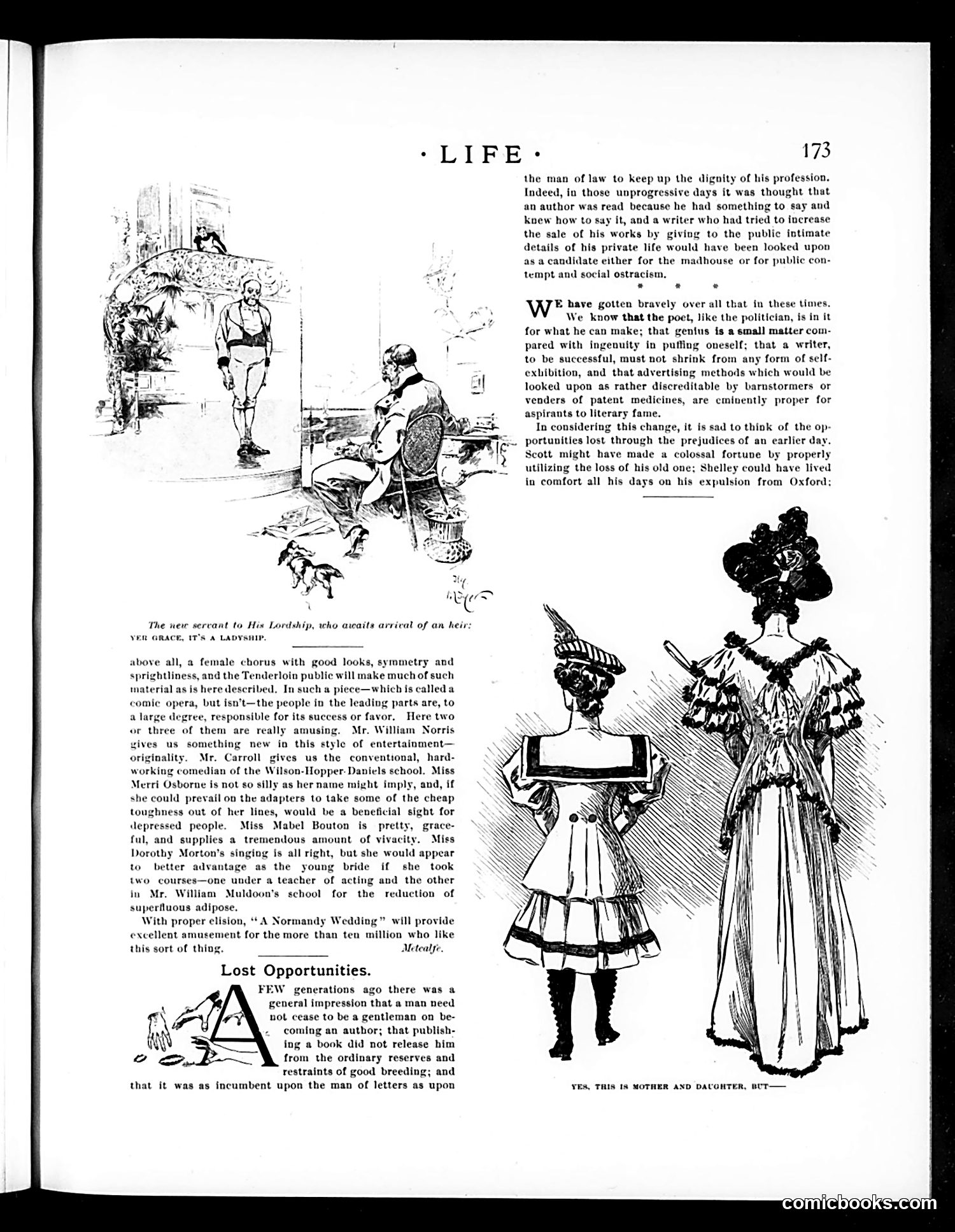
This page contains two satirical pieces about changing social standards in late 19th/early 20th-century America. **Top cartoon**: A servant announces to a nobleman that his wife has produced a "ladyship" (daughter) rather than the desired male heir. The joke mocks aristocratic obsession with male succession and inheritance. **"Lost Opportunities" essay**: This criticizes how 19th-century authors maintained professional dignity by *not* exploiting their private lives for publicity. The author sardonically regrets that earlier literary figures like Sir Walter Scott and Shelley didn't capitalize on their misfortunes through modern marketing tactics. The piece laments that contemporary writers now eagerly pursue self-promotion and sensational personal disclosure—practices once considered undignified. This reflects tension between artistic integrity and commercial ambition during an era of expanding publishing and celebrity culture. The bottom illustration showing fashionable women likely relates to theatrical content reviewed elsewhere on the page.
📄 Transcribed text from this page (OCR, searchable)
Machine-transcribed from the original scan — historical spelling and the odd misread are preserved.
> LIFE: 173 The new servant to His Lordship, who awaits arrival of an heir: YER GRACE, IT'S A LADYSHIP. above all, a female chorus with good looks, symmetry and sprightliness, and the Tenderloin public will make much of such material as is here described. In such a piece—which fs called a comic opera, but isn't—the people in the leading parts are, to a large degree, responsible for its success or favor. Here two or three of them are really amusing. Mr. William Norris gives us something new in this style of entertainment— originality. Mr. Carroll gives us the conventional, hard- working comedian of the Wilson-Hopper- Daniels school. Miss Merri Osborne is not so silly as her name might imply, and, if she could prevail on the adapters to take some of the cheap toughness out of her lines, would be a beneficial sight for depressed people. Miss Mabel Bouton is pretty, grace- ful, and supplies a tremendous amount of vivacity. Miss Dorothy Morton's singing is all right, but she would appear to better advantage as the young bride if she took two courses—one under a teacher of acting and the other in Mr. William Muldoon’s school for the reduction of superfluous adipose. With proper clision, “A Normandy Wedding” will provide excellent amusement for the more than ten million who like this sort of thing. Metcalye. not cease to be a gentleman on be- coming an author; that publish- Lost Opportunities. ing a book did not release him from the ordinary reserves and FEW generations ago there was a in fx om, restraints of good breeding; and general impression that a man need that it was as incumbent upon the man of letters as upon the man of law to keep up the dignity of his profession. Indeed, in those unprogressive days it was thought that an author was read because he had something to say and ay it, and a writer who had tried to increase the sale of his works by giving to the public intimate details of his private life would have been looked upon as a candidate either for the madhouse or for public con- tempt and social ostracism. * * . E have gotten bravely over all that in these times. We know that the poet, like the politician, is in it for what he can make; that genius {s a small matter com- pared with ingenuity in puffing oneself; that a writer, to be successful, must not shrink from any form of self- exhibition, and that advertising methods which would be looked upon as rather discreditable by barnstormers or venders of patent medicines, are cminently proper for aspirants to literary fame. In considering this change, it is sad to think of the op- portunities lost through the prejudices of an earlier day. Scott might have made a colossal fortune by properly utilizing the loss of his old one; Shelley could have lived in comfort all his days on his expulsion from Oxford: YES, THIS I8 MOTHER AND DACOMTER, BUT—