
Life, 1896-12-05 · page 2 of 34
Life — December 5, 1896 — page 2: what you’re looking at
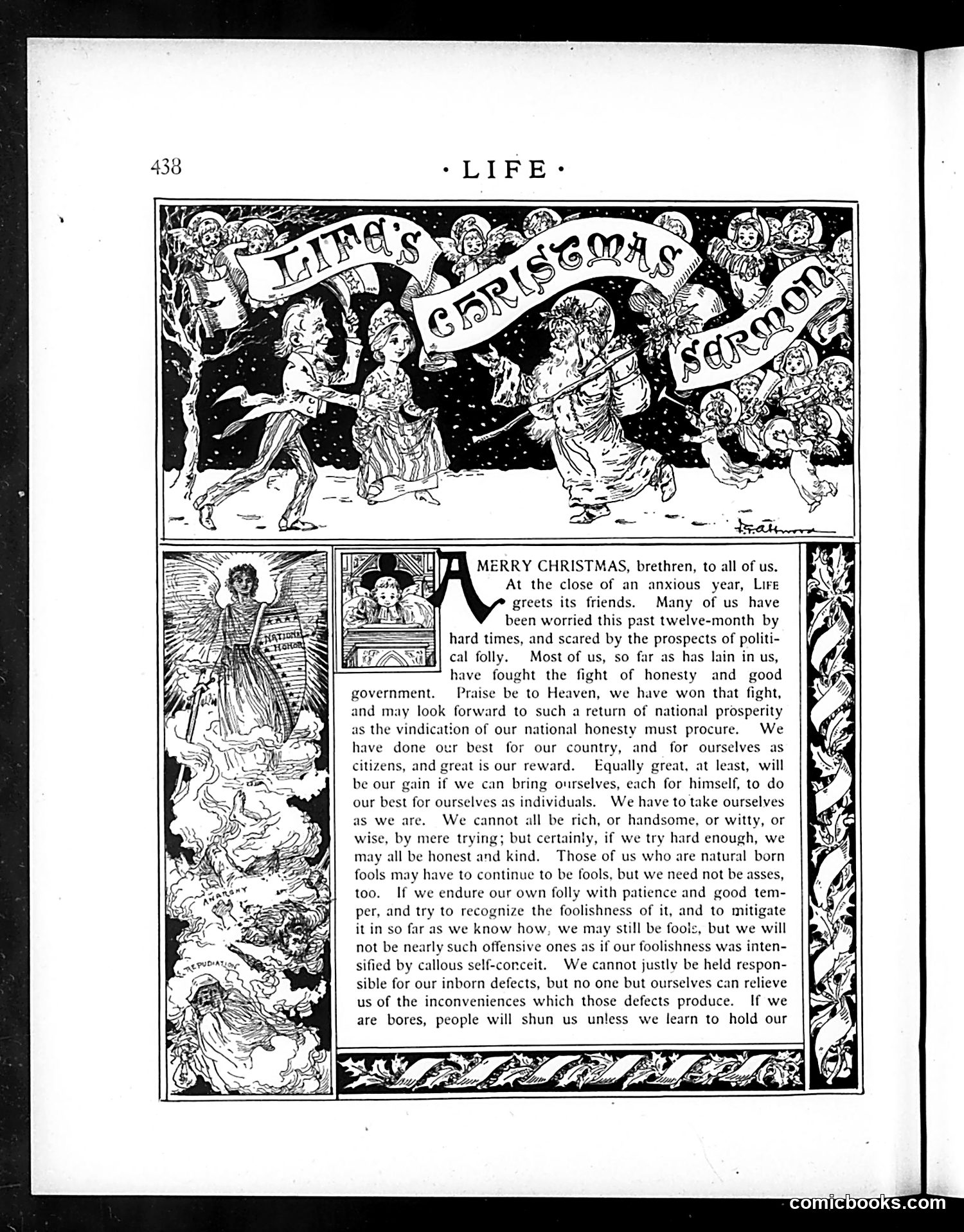
What you’re looking at
This is a Christmas editorial message, not a political cartoon. The page shows "Life's Christmas Sermon" with allegorical imagery (angels and religious figures in the left panels). The text addresses post-WWI America, referencing "an anxious year" with "worried" citizens and "scared by the prospects of political folly." It advocates for national honesty and prosperity through individual virtue rather than government action. The sermon's core message: citizens must improve themselves morally and intellectually to strengthen the nation. It warns against both natural fools and "callous self-conceit," arguing that recognizing one's own foolishness is necessary to avoid becoming insufferable to others. The piece reflects post-war anxiety and Progressive-era faith in individual self-improvement as a solution to social problems.
📄 Transcribed text from this page (OCR, searchable)
Machine-transcribed from the original scan — historical spelling and the odd misread are preserved.
At the close of an anxious year, Lire greets its friends. Many of us have been worried this past twelve-month by hard times, and scared by the prospects of politi- cal folly. Most of us, so far as has lain in us, have fought the fight of honesty and good government. Praise be to Heaven, we have won that fight, and may look forward to such a return of national prosperity as the vindication of our national honesty must procure. We have done our best for our country, and for ourselves as citizens, and great is our reward. Equally great, at least, will be our gain if we can bring ourselves, each for himself, to do our best for ourselves as individuals. We have to take ourselves as we are. We cannot all be rich, or handsome, or witty, or wise, by mere trying; but certainly, if we try hard enough, we may all be honest and kind. Those of us who are natural born fools may have to continue to be fools, but we need not be asses, too. If we endure our own folly with patience and good tem- per, and try to recognize the foolishness of it, and to mitigate it in so far as we know how, we may still be fools, but we will not be nearly such offensive ones as if our foolishness was inten- sified by callous self-conceit. We cannot justly be held respon- sible for our inborn defects, but no one but ourselves can relieve us of the inconveniences which those defects produce. If we are bores, people will shun us unless we learn to hold our