
Life, 1896-12-03 · page 8 of 26
Life — December 3, 1896 — page 8: what you’re looking at
What you’re looking at
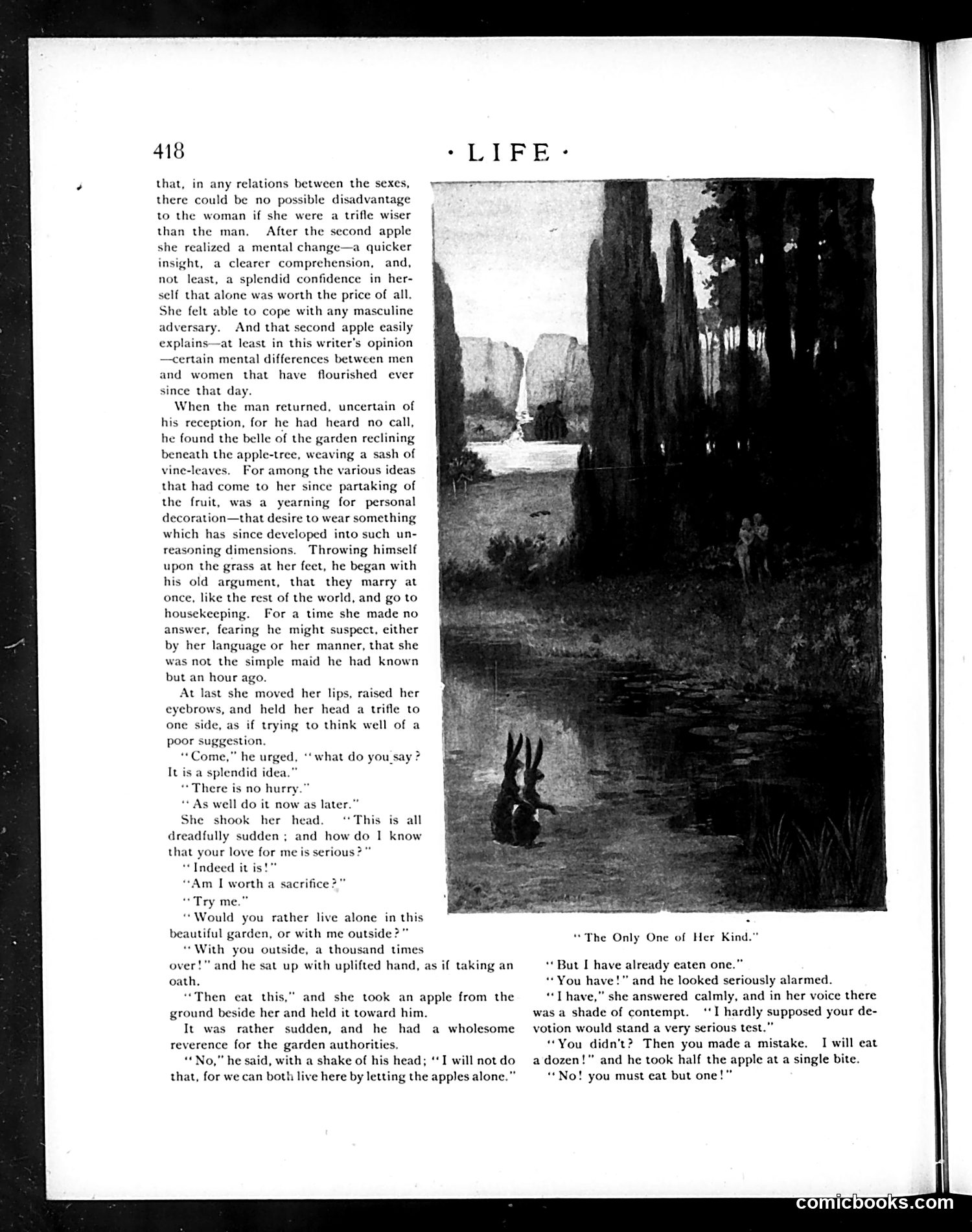
This page from *Life* magazine presents a satirical retelling of the Adam and Eve story. The narrative text (left) and accompanying illustration (right) depict a modern, ironic take on humanity's fall from paradise. The satire mocks both gender relations and human nature. The text suggests that Eve's eating the apple gave her superior mental clarity and confidence—a sardonic commentary on women's intellectual capabilities that inverts the traditional misogynistic interpretation of the Fall. The man's return and subsequent argument over eating the apple plays on domestic conflict and masculine stubbornness. The illustration shows the Garden of Eden with classical figures beside a body of water, emphasizing the idealized setting being abandoned for ordinary "housekeeping." The overall satire critiques how quickly humans abandon paradise and how petty disputes destroy relationships.
📄 Transcribed text from this page (OCR, searchable)
Machine-transcribed from the original scan — historical spelling and the odd misread are preserved.
418 *LIFE- that, in any relations between the sexes, there could be no possible disadvantage to the woman if she were a trifle wiser than the man, After the second apple she realized a mental change—a quicker insight, a clearer comprehension, and, not least, a splendid confidence in her- self that alone was worth the price of all. She felt able to cope with any masculine adversary. And that second apple easily explains—at least in this writer's opinion —certain mental differences between men and women that have flourished ever since that day. When the man returned, uncertain of his reception, for he had heard no call, he found the belle of the garden reclining beneath the apple-tree, weaving a sash of vine-leaves. For among the various ideas that had come to her since partaking of the fruit, was a yearning for personal decoration—that desire to wear something which has since developed into such un- reasoning dimensions. Throwing himself upon the grass at her feet, he began with his old argument, that they marry at once, like the rest of the world, and go to housekeeping. For a time she made no answer, fearing he might suspect, either by her language or her manner, that she was not the simple maid he had known but an hour ago. At last she moved her lips, raised her eyebrows, and held her head a trifle to one side, as if trying to think well of a poor suggestion. “Come,” he urged It is a splendid ide “‘what do you say “There is no hurry.” ** As well do it now as later.” She shook her head. ‘This is all dreadfully sudden ; and how do I know that your love for me is serious?” “Indeed it is!” “Am I worth a sacrifice ? Try me.” “Would you rather live alone in this beautiful garden, or with me outside?” “With you outside, a thousand times over!” and he sat up with uplifted hand oath, s if ta king an “Then cat this,” and she took an apple from the ground beside her and held it toward him. It was rather sudden, and he had a wholesome reverence for the garden authoritie: No,” he said, with a shake of his head; ‘'I will not do that, for we can both live here by letting the apples alone.” “The Only One of Her Kind.” “But I have already eaten one. “You have and he looked seriously alarmed. “T have,” she answered calmly, and in her voice there a shade of contempt. ‘I hardly supposed your de- votion would stand a very serious test.” “You didn't? Then you made a mistake. I will eat a dozen!" and he took half the apple at a single bite. ‘*No! you must cat but one!” wa: comicbooks.com