
Life, 1895-02-07 · page 10 of 16
Life — February 7, 1895 — page 10: what you’re looking at
What you’re looking at
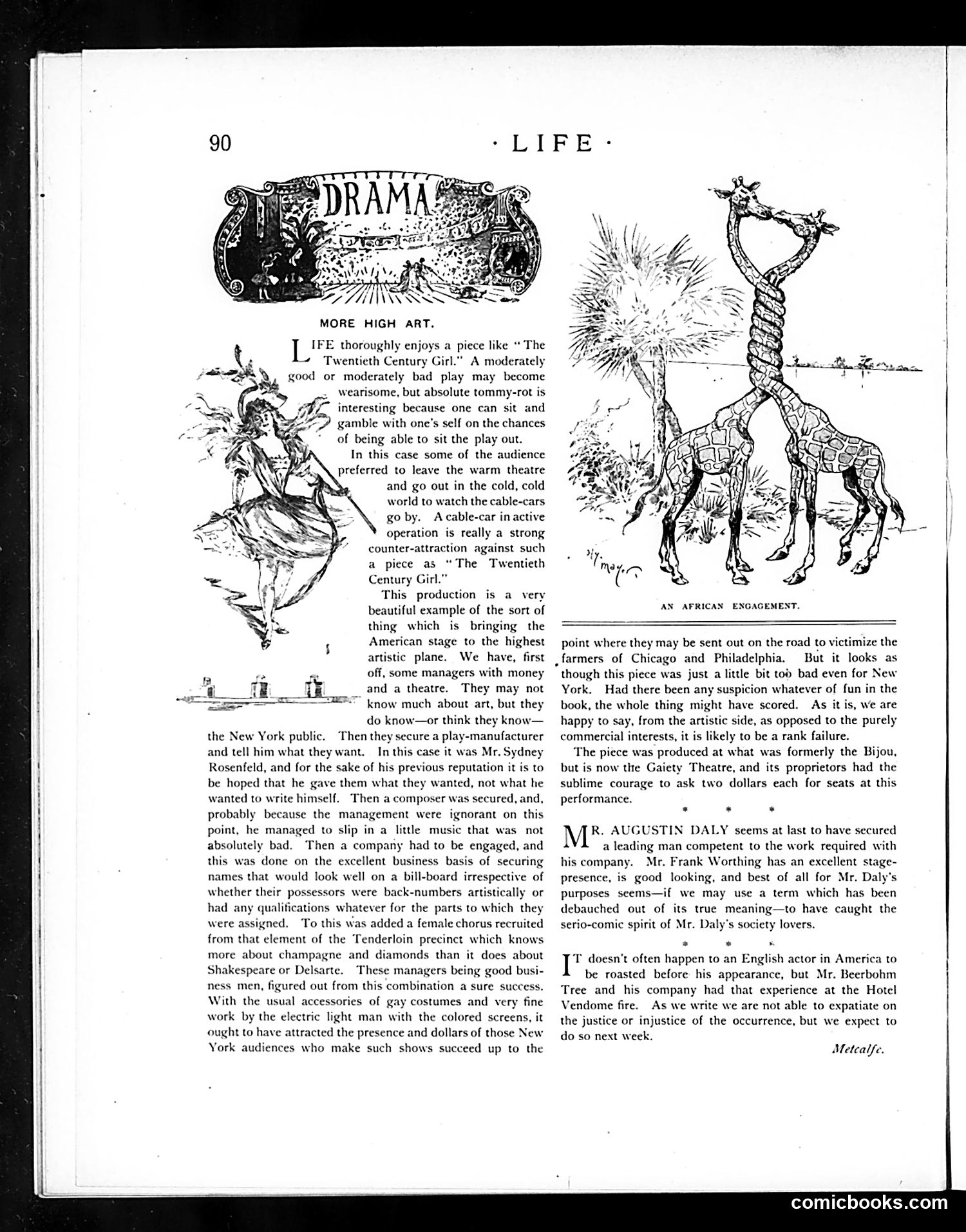
This page critiques theatrical production quality circa early 1900s. The "Drama" header and "More High Art" section discuss "The Twentieth Century Girl," a theatrical piece that attracted audiences despite mediocre quality. The article argues that theater managers prioritized commercial appeal over artistic merit—they secured famous names (specifically mentioning Sydney Rosenfeld as composer) and attractive performers rather than genuine talent. The left illustration depicts a theatrical performer. The right illustration shows "An African Engagement"—a giraffe and attendant, likely referencing exotic animal imagery popular in period entertainment spectacles. The text criticizes how American theater pursued financial success through sensationalism and star power at the Gaiety Theatre, while lamenting this approach's triumph over genuine artistry. The unsigned "Metcalfe" byline concludes with commentary on an English actor's negative experience.
📄 Transcribed text from this page (OCR, searchable)
Machine-transcribed from the original scan — historical spelling and the odd misread are preserved.
Twentieth Century Girl.” A moderately good or moderately bad play may become wearisome, but absolute tommy-rot is ng because one can sit and Loca P gamble with one's self on the chances of being able to sit the play out. In this case some of the audience preferred to leave the warm theatre and go out in the cold, cold world to watch the cable-cars go by. Acable-car inactive operation is really a strong counter-attraction against such a piece as “The Twentieth Century Girl.” This production is a very beautiful example of the sort of thing which is bringing the American stage to the highest artistic plane. We have, first off, some managers with money and a theatre. They may not know much about art, but they do know—or think they know— the New York public. Then they secure a play-manufacturer and tell him what they want. In this case it was Mr. Sydney Rosenfeld, and for the sake of his previous reputation it is to be hoped that he gave them what they wanted, not what he wanted to write himself. Then a composer was secured, and, probably because the management were ignorant on this point, he managed to slip in a little music that was not absolutely bad. Then a company had to be engaged, and this was done on the excellent business basis of securing names that would look well on a bill-board irrespective of whether their possessors were back-numbers artistically or had any qua’ ions whatever for the parts to which they were assigned, To this was added a female chorus recruited from that element of the Tenderloin precinct which knows more about champagne and diamonds than it does about Shakespeare or Delsarte. These managers being good busi- ness men, figured out from this combination a sure success With the usual accessories of gay costumes and very fine work by the electric light man with the colored screens, it ought to have attracted the presence and dollars of thos Ww York audiences who make such shows succeed up to the AN AFRICAN point where they may be sent out on the road to victimize the farmers of Chicago and Philadelphia, But it looks as though this piece was just a little bit tod bad even for New York. Had there been any suspicion whatever of fun in the book, the whole thing might have scored. As it is, we are happy to say, from the artistic side, as opposed to the purely commercial interests, it is likely to be a rank failure. The piece was produced at what was formerly the Bijou, but is now the Gaiety Theatre, and its proprietors had the sublime courage to ask two dollars each for seats at this performance. . . . R. AUGUSTIN DALY seems at last to have secured i a leading man competent to the work required with his company. Mr. Frank Worthing has an excellent stage- good looking, and best of all for Mr. Daly ns—if we may use a term which has been debauched out of its true meaning—to have caught the serio-comic spirit of Mr. Daly's society lovers. * . T doesn’t often happen to an English actor in America to be roasted before his appearance, but Mr. Beerbohm Tree and his company had that experience at the Hotel Vendome fire. As we write we are not able to expatiate on the justice or injustice of the occurrence, but we expect to do so next week. Metcalfe. comicbooks.com