
Life, 1894-12-27 · page 7 of 53
Life — December 27, 1894 — page 7: what you’re looking at
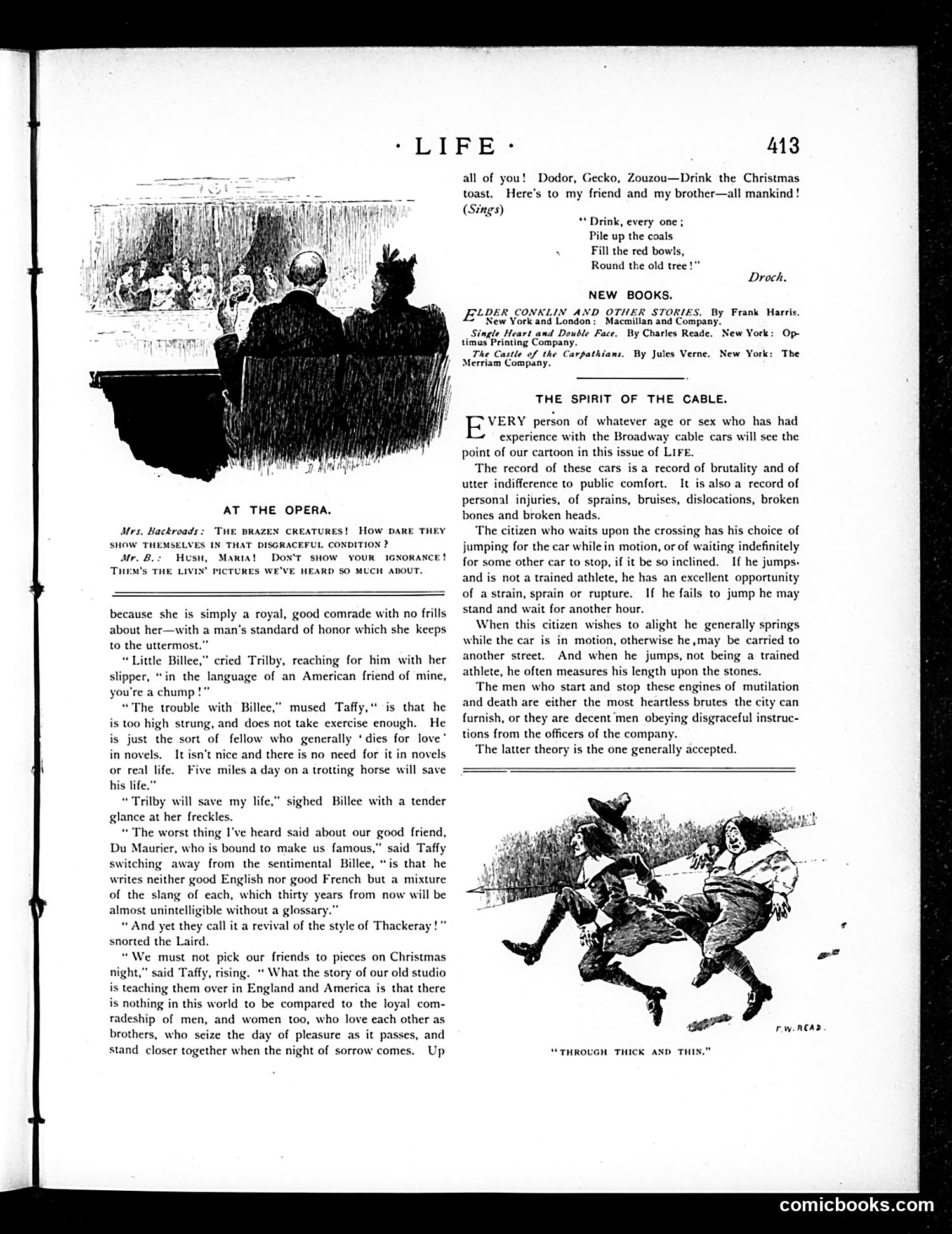
What you’re looking at
The cartoon depicts two well-dressed opera patrons viewing the performance. The dialogue satirizes theatrical pretension: Mrs. Backwoods criticizes the performers' "brazen creatures" and "disgraceful conditions," while Mr. D. responds with mock outrage about "ignorance" and "living pictures." The satire targets middle-class audience members who attend opera for social status rather than genuine appreciation—they're scandalized by the performance's content while simultaneously judging others. The joke is that such patrons' moral outrage reveals their own superficiality and snobbery. The accompanying text mocks similar theatrical affectations and includes commentary on Du Maurier (likely referencing the novelist George du Maurier) and English literary pretension, suggesting this is broader satire of Victorian/Edwardian cultural hypocrisy.
📄 Transcribed text from this page (OCR, searchable)
Machine-transcribed from the original scan — historical spelling and the odd misread are preserved.
> LIFE - AT THE OPERA. Mrs. Backroads; THE BRAZEN CREATURES! How DARE THEY SHOW THEMSELVES IN THAT DISGRACEFUL CONDITION ? Mr, B.: Hust, Marta! Don't snow YOUR IGNORANCE! THEM'S THE LIVIN’ PICTURES WE'VE HEARD SO MUCH ABOUT. because she is simply a royal, good comrade with no frills about her—with a man's standard of honor which she keeps to the uttermost.” “Little Billee,” cried Trilby, reaching for him with her slipper, “in the language of an American friend of mine, you're a chump !” he trouble with Billee,” mused Taffy,** is that he is too high strung, and does not take exercise enough. He is just the sort of fellow who generally ‘dies for love’ It isn’t nice and there is no need for it in novels Five miles a day on a trotting horse will save in novels or real life. his life.” “Trilby will save my life,” sighed Billee with a tender glance at her freckles. “ The worst thing I've heard said about our good friend, Du Maurier, who is bound to make us famous,” said Taffy switching away from the sentimental Billee, “is that he writes neither good English nor good French but a mixture of the slang of each, which thirty years from now will be almost unintelligible without a glossary.” “ And yet they call it a revival of the style of Thackeray!" snorted the Laird. “We must not pick our friends to pieces on Christmas night,” said Taffy, rising. “ What the story of our old studio is teaching them over in England and America is that there is nothing in this world to be compared to the loyal com- radeship of men, and women too, who love each other as brothers, who seize the day of pleasure as it passes, and stand closer together when the night of sorrow comes. Up A13 all of you! Dodor, Gecko, Zouzou—Drink the Christmas toast. Here's to my friend and my brother—all mankind! (Sings) “ Drink, every one; Pile up the coals Fill the red bowls, Round the old tree!" Droch. NEW BOOKS. ELRER CONKLIN AND OTHER STORIES. By Frank Harris. New York and London: Macmillan and Compan} Single Heart and Double Face. timus Printing Company, The Castle of the Carpathians, Merriam Company. By Charles Reade. New York: Op- By Jules Verne. New York: The THE SPIRIT OF THE CABLE. Fyery person of whatever age or sex who has had experience with the Broadway cable cars will see the point of our cartoon in this issue of LIFE. The record of these cars is a record of brutality and of utter indifference to public comfort. It is also a record of personal injuries, of sprains, bruises, dislocations, broken bones and broken heads. The citizen who waits upon the crossing has his choice of jumping for the car while in motion, or of waiting indefinitely for some other car to stop, if it be so inclined. If he jumps: and is not a trained athlete, he has an excellent opportunity of a strain, sprain or rupture. If he fails to jump he may stand and wait for another hour. When this citizen wishes to alight he generally springs while the car is in motion, otherwise he ,may be carried to another street. And when he jumps, not being a trained athlete, he often measures his length upon the stones. The men who start and stop these engines of mutilation and death are either the most heartless brutes the city can furnish, or they are decent’men obeying disgraceful instruc- tions from the officers of the company. The latter theory is the one generally accepted. “THROUGH THICK AND THI comicbooks.com