
Life, 1894-12-06 · page 7 of 16
Life — December 6, 1894 — page 7: what you’re looking at
What you’re looking at
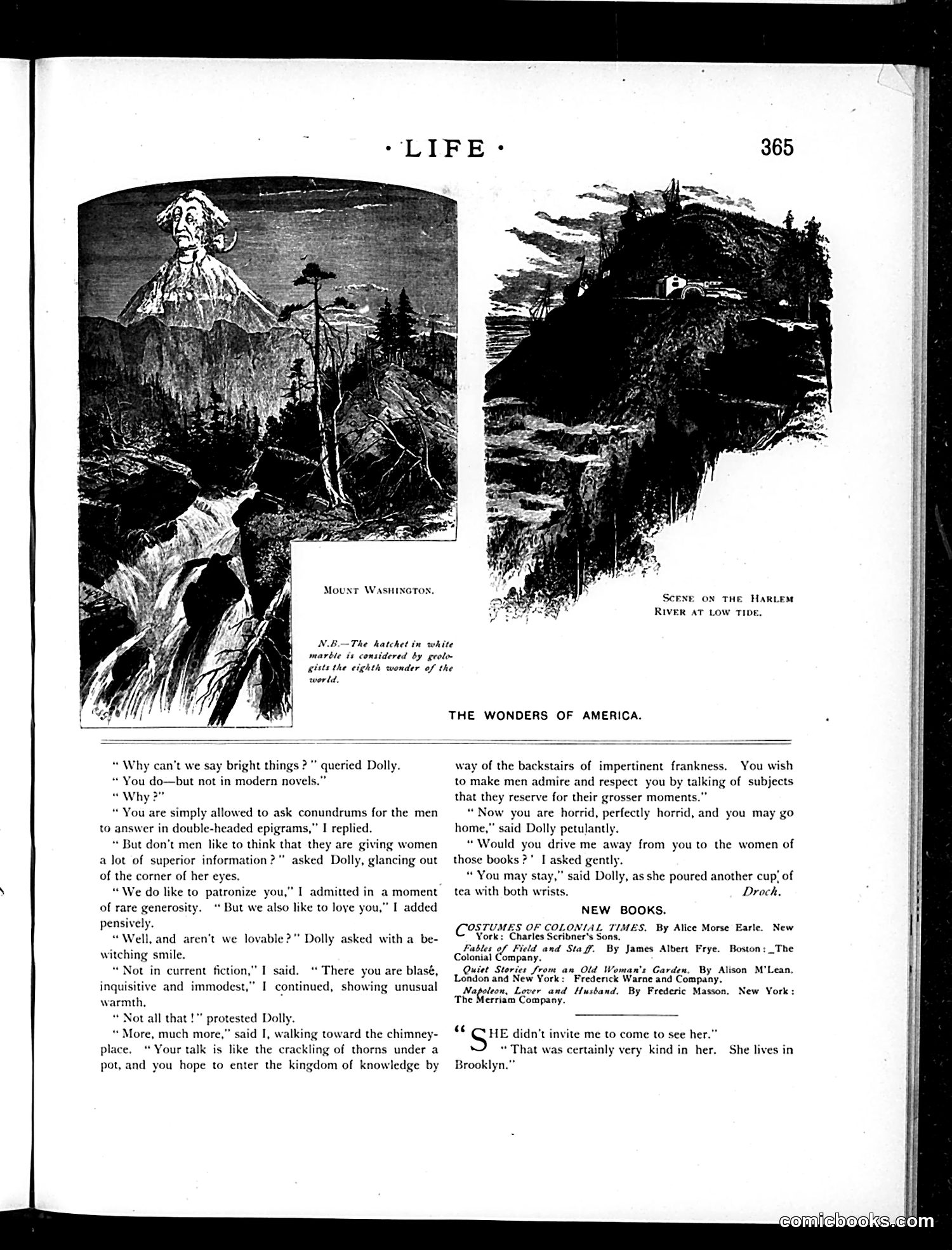
This page features two landscape illustrations labeled "Mount Washington" and "Scene on the Harlem River at Low Tide," presented under the heading "The Wonders of America." The left image depicts Mount Washington with a ghostly white face looming above the landscape, while the right shows the Harlem River. The satire appears to mock American boosterism about natural wonders. The accompanying text snippet suggests the humor lies in contrasting grandiose claims about America's scenic beauty with mundane or underwhelming reality—particularly the Harlem River reference, which likely refers to an actual New York waterway rather than a pristine natural wonder. The exaggerated face on Mount Washington reinforces this ironic tone.
📄 Transcribed text from this page (OCR, searchable)
Machine-transcribed from the original scan — historical spelling and the odd misread are preserved.
Mount Wasnixoton, NB. SCENE ON THE HARLEM RIVER AT LOW TIDE, -The hatchet in white marble is considered by grolom gists the eighth wonder of the world, THE WONDERS OF AMERICA. “ Why can’t we say bright thin; * queried Dolly. * You do—but not in modern novels.” “Why 2” “ You are simply allowed to ask conundrums for the men to answer in double-headed epigrams,” I replied. “ But don’t men like to think that they are giving women a lot of superior information?” asked Dolly, glancing out of the corner of her eyes. “We do like to patronize you,” 1 admitted in a moment of rare generosity.‘ But we also like to loye you,” I added pensively. “Well, and aren't we lovable?” Dolly asked with a be- witching smile. “Not in current fiction,” I said. inquisitive and immode: warmth, “ Not all that !"" protested Dolly. “ More, much more,” said I, walking toward the chimney- place. “ Your talk is like the crackling of thorns under a pot, and you hope to enter the kingdom of knowledge by “ There you are blasé, I continued, showing unusual way of the backstairs of impertinent frankness. You wish to make men admire and respect you by talking of subjects that they reserve for their grosser moments.” “Now you are horrid, perfectly horrid, and you may go home,” said Dolly petulantly. “Would you drive me away from you to the women of those books?" I asked gently. “You may stay,” said Dolly, as she poured another cup’ of tea with both wrists. Drock. NEW BOOKS. OSTUMES OF COLONIAL TIMES. By Alice Morse Earle. York: Charles Scribner's Sons, Fables of Field and Staff. By James Albert Frye. Colonial Company. Quiet Stories from an Old Woman's Garden. By Alison M’Lean, London and New York: Frederick Warne and Company. Napoleon, Lever and Husband, By Frederic Masson. The Merriam Company. New Boston: _The New York: §© QHE didn’t invite me to come to see her.” That was certainly very kind in her. Brooklyn. She lives in