
Life, 1894-10-25 · page 6 of 14
Life — October 25, 1894 — page 6: what you’re looking at
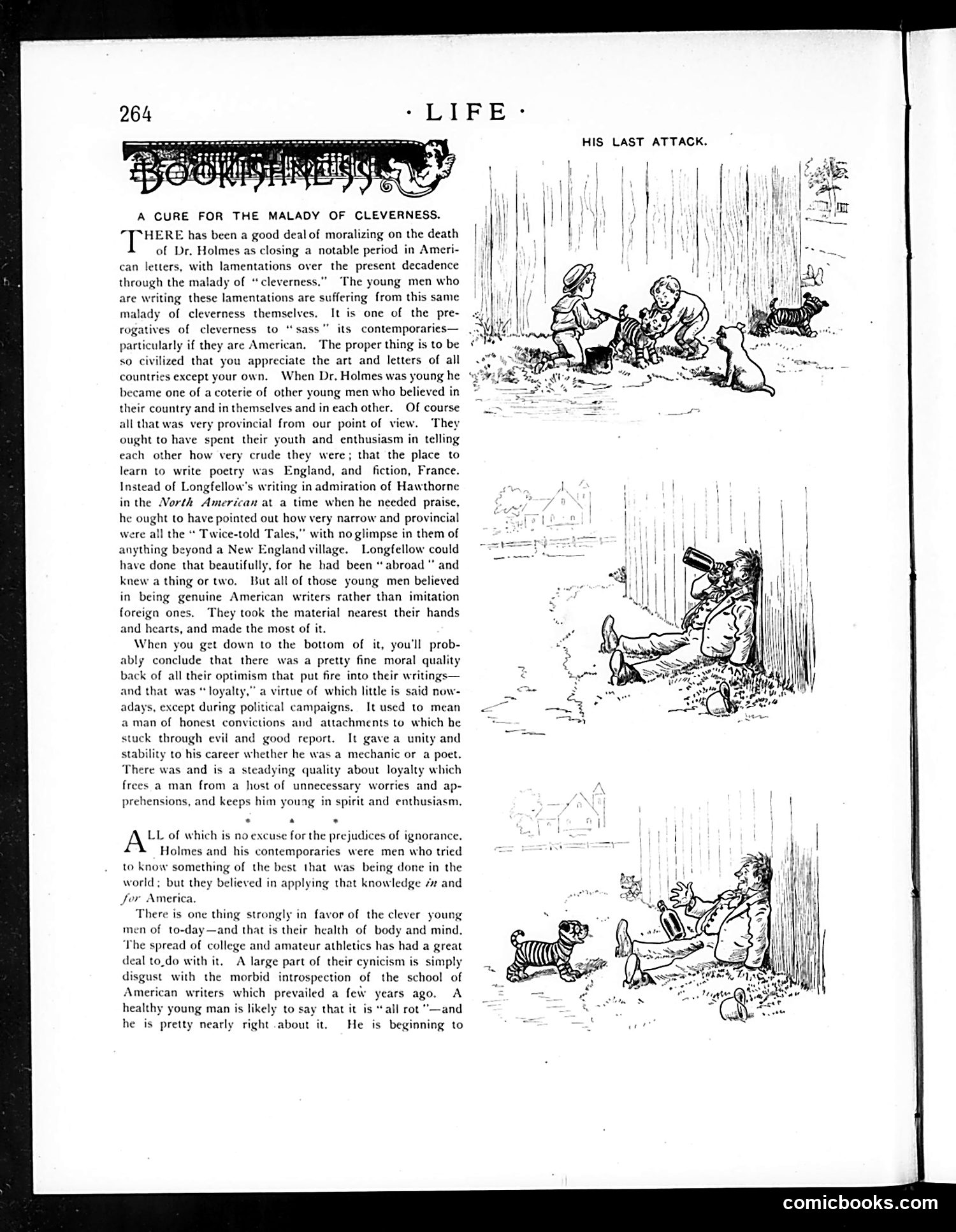
A restored page from Life, 1894-10-25. Page through the whole issue in the reader above.
📄 Transcribed text from this page (OCR, searchable)
Machine-transcribed from the original scan — historical spelling and the odd misread are preserved.
A CURE FOR THE MALADY OF CLEVERNESS. HERE has been a good deal of moralizing on the death of Dr. Holmes as closing a notable period in Ameri- can letters, with lamentations over the present decadence through the malady of “cleverness.” The young men who are writing these lamentations are suffering from this same malady of cleverness themselves. It is one of the pre- rogatives of cleverness to “sass” its contemporaries— particularly if they are American. The proper thing is to be so civilized that you appreciate the art and letters of all countries except your own. When Dr. Holmes was young he became one of a coterie of other young men who believed in their country and in themselves and in each other. Of course all that was very provincial from our point of view. ‘They ought to have spent their youth and enthusiasm in telling each other how very crude they were; that the place to learn to write poetry was England, and fiction, France. Instead of Longfellow’s writing in admiration of Hawthorne inthe North American at a time when he needed praise, he ought to have pointed out how very narrow and provincial were all the “* Twice-told Tales,” with no glimpse in them of anything beyond a New England village. Longfellow could have done that beautifully, for he had been “ abroad" and knew a thing or two. But all of those young men believed in being genuine American writers rather than imitation foreign ones. They took the material nearest their hands and hearts, and made the most of it. When you get down to the bottom of it, you'll prob- ably conclude that there was a pretty fine moral quality back of all their optimism that put fire into their writings— and that was “ loyalty,” a virtue of which little is said now- adays, except during political campaigns. It used to mean aman of honest convictions and attachments to which be stuck through evil and good report. It gave a unity and stability to his career whether he was a mechanic or a poet. There was and is a steadying quality about loyalty which frees a man from a host of unnecessary worries and ap- prehensions, and keeps him young in spirit and enthusiasm. . . . LL of which is no excuse for the prejudices of ignorance. Holmes and his contemporaries were men who tried to know something of the best that was being done in the world; but they believed in applying that knowledge ¢” and Sor America. There is one thing strongly in favor of the clever young men of to-day—and that is their health of body and mind, The spread of college and amateur athletics has had a great deal to_do with it. A large part of their cynicism is simply disgust with the morbid introspection of the school of American writers which prevailed a few years ago. A healthy young man is likely to say that it is “all rot "—and he is pretty nearly right about it. He is beginning to comicbooks.com