
Life, 1894-02-15 · page 9 of 14
Life — February 15, 1894 — page 9: what you’re looking at
What you’re looking at
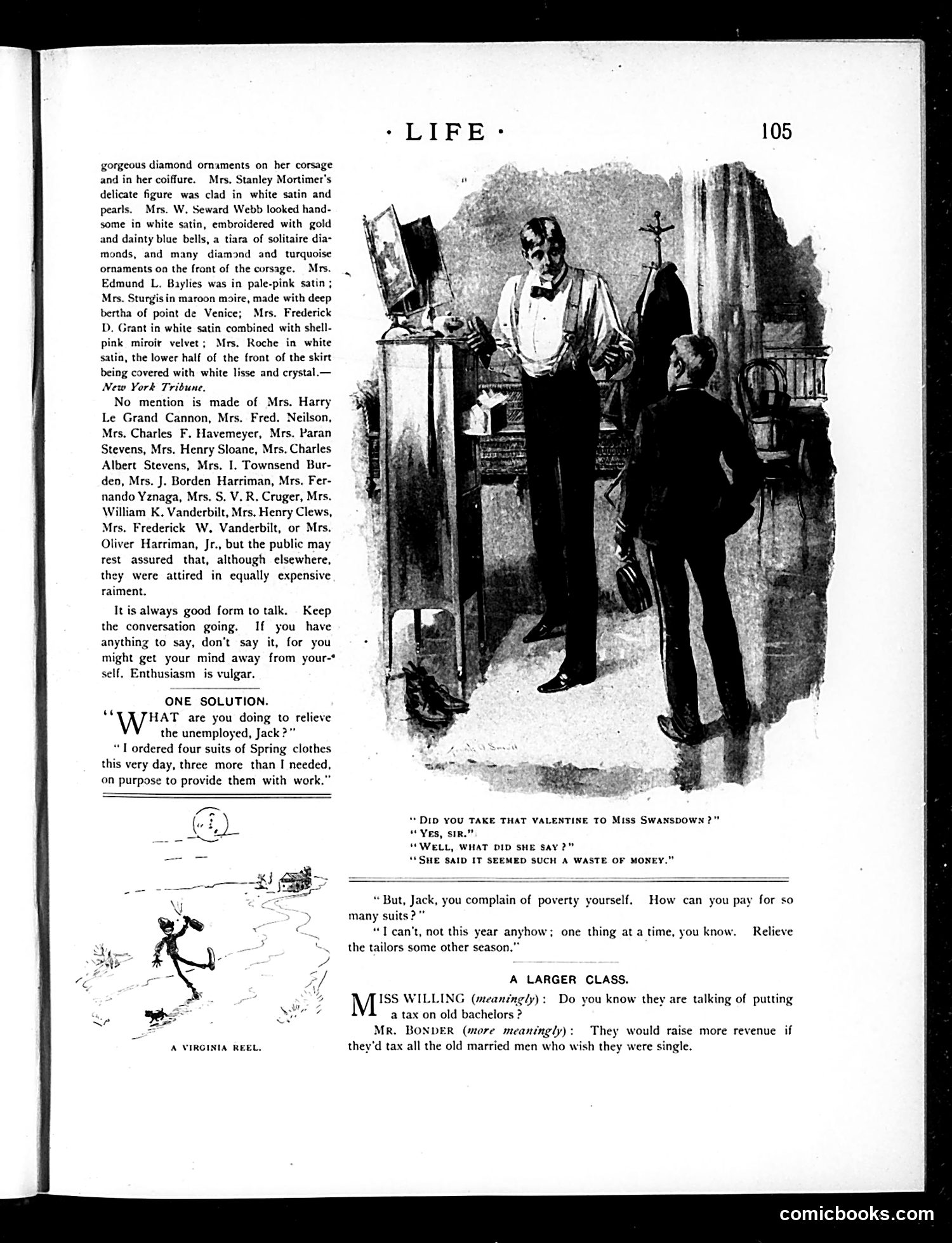
This page from *Life* magazine contains social satire about wealth and class distinctions. The upper section describes lavish formal attire worn by wealthy attendees at an event, listing expensive fabrics and jewelry in mock-admiring detail—likely satirizing conspicuous consumption among the wealthy. The main cartoon shows two men in formal dress discussing unemployment relief. One claims he ordered extra Spring clothes "on purpose to provide them with work"—a satirical jab at the wealthy's self-serving justifications for their spending habits as economic stimulus. Below, "A Virginia Reel" depicts a dancing figure, while the final dialogue between Miss Willing and Mr. Bonder jokes about taxing bachelors versus married men—satirizing tax policy debates and suggesting the wealthy use marriage strategically for financial advantage. The overall theme critiques how the rich rationalize excessive spending during economic hardship.
📄 Transcribed text from this page (OCR, searchable)
Machine-transcribed from the original scan — historical spelling and the odd misread are preserved.
gorgeous diamond ornaments on her corsage and in her coiffure. Mrs. Stanley Mortimer's delicate figure was clad in white satin and pearls. Mrs. W, Seward Webb looked hand- some in white satin, embroidered with gold and dainty blue bells, a tiara of solitaire dia- monds, and many diamond and turquoise ornaments on the front of the corsage. Mrs. Edmund L. Baylies was in pale-pink satin ; Mrs. Sturgis in maroon moire, made with deep bertha of point de Venice; Mrs. Frederick D. Grant in white satin combined with shell- pink miroir velvet; Mrs. Roche in white satin, the lower half of the front of the skirt being covered with white lisse and crystal.— New York Tribune. No mention is made of Mrs. Harry Le Grand Cannon, Mrs. Fred. Neilson, Mrs. Charles F, Havemeyer, Mrs. Paran Stevens, Mrs. Henry Sloane, Mrs. Charles Albert Stevens, Mrs. I. Townsend Bur- den, Mrs. J. Borden Harriman, Mrs. Fer- nando Yznaga, Mrs. S. V. R. Cruger, Mrs. William K. Vanderbilt, Mrs. Henry Clews, Mrs. Frederick W. Vanderbilt, or Mrs, Oliver Harriman, Jr., but the public may rest assured that, although elsewhere, they were attired in equally expensive raiment, It is always good form to talk. Keep the conversation going. If you have anything to say, don’t say it, for you might get your mind away from your-* self, Enthusiasm is vulgar. ONE SOLUTION. HAT are you doing to relieve the unemployed, Jack?” “T ordered four suits of Spring clothes this very day, three more than I needed, on purpose to provide them with work.” “DID YOU TAKE THAT VALENTINE TO Miss Swanspown ?"” “Yes, SIR.” “WELL, WHAT DID SHE SAY?” “SHE SAID IT SEEMED SUCH A WASTE OF MONEY.” _— a: —— — “ But, Jack, you complain of poverty yourself. How can you pay for so many suits “Tcan’t, not this year anyhow; one thing at atime, you know. Relieve the tailors some other season,” A LARGER CLASS. M SS WILLING (meaningly): Do you know they are talking of putting a tax on old bachelors ? MR. BONDER (more meaningly): They would raise more revenue if A VIRGINIA REEL, they'd tax all the old married men who wish they were single. comicbooks.com