
Life, 1893-05-18 · page 9 of 18
Life — May 18, 1893 — page 9: what you’re looking at
What you’re looking at
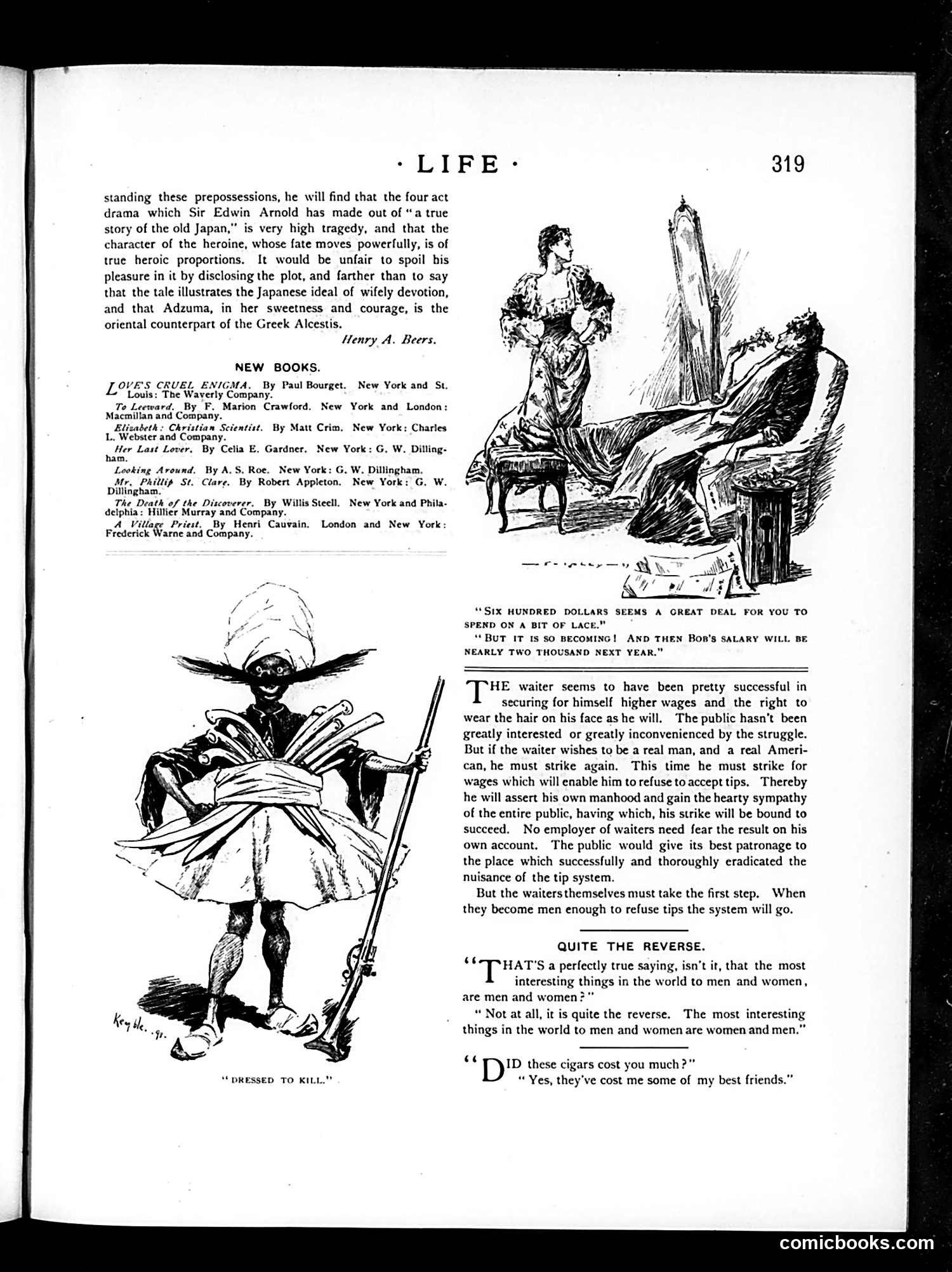
This page contains literary reviews and social commentary rather than political cartoons. The main illustrations are satirical drawings accompanying discussion of labor relations. The prominent "Dressed to Kill" illustration depicts a skeletal figure in fancy dress with weapons—likely representing death or destructive consequences of labor conflict. The upper illustration shows a conversation between two figures about wages and lace—satirizing workplace negotiations and consumer aspirations. The text discusses waiters' labor organizing efforts to secure higher wages and eliminate the tipping system. The satire suggests that while workers seek dignity and fair pay, there's tension between individual advancement and collective action. The closing dialogue joke ("cost me some of my best friends") mocks how wealth differences create social friction—a theme relevant to early 20th-century class tensions in America.
📄 Transcribed text from this page (OCR, searchable)
Machine-transcribed from the original scan — historical spelling and the odd misread are preserved.
- LIFE: standing these prepossessions, he will find that the four act drama which Sir Edwin Arnold has made out of “a true story of the old Japan,” is very high tragedy, and that the character of the heroine, whose fate moves powerfully, is of true heroic proportions. It would be unfair to spoil his pleasure in it by disclosing the plot, and farther than to say that the tale illustrates the Japanese ideal of wifely devotion, and that Adzuma, in her sweetness and courage, is the oriental counterpart of the Greek Alcestis. Henry A. Beers. NEW BOOKS. LOVES CRUEL ENIGMA, By Paul Bourget. New York and St. Louis: The Waverly Company. To Leeward. By F. Marion Crawford. New York and London: Macmillan and Company. Elizabeth: Christian Scientist, By Matt Crim, New York: Charles L. Webster and Company. nafler Last Lever, By Celia E. Gardner, New Vork: G. W. Dilling- m. Looking Around. By A.S. Roe. New York: G. W. Dillingham, Mr. Phillip St. Clare. By Robert Appleton, New York: G. W. Dillingham, The Death of the Discoverer. By Willis Stecll, New York and Phila- delphia: Hillier Murray and Company. A Village Priest, By Henri Cauvain, London and New York: Frederick Warne and Company. “SIX HUNDRED DOLLARS SEEMS A OREAT DEAL FOR YOU TO SPEND ON A BIT OF LAC! ‘““BUT IT Is SO BECOMING! AND THEN Bos's SALARY WILL BE NEARLY TWO THOUSAND NEXT YEAR.” HE waiter seems to have been pretty successful in securing for himself higher wages and the right to wear the hair on his face as he will. The public hasn't been greatly interested or greatly inconvenienced by the struggle. But if the waiter wishes to be a real man, and a real Ameri- can, he must strike again. This time he must strike for wages which will enable him to refuse to accept tips. Thereby he will assert his own manhood and gain the hearty sympathy of the entire public, having which, his strike will be bound to succeed. No employer of waiters need fear the result on his own account. The public would give its best patronage to the place which successfully and thoroughly eradicated the nuisance of the tip system. But the waiters themselves must take the first step. When they become men enough to refuse tips the system will go. QUITE THE REVERSE. i HAT'S a perfectly true saying, isn’t it, that the most interesting things in the world to men and women, are men and women?" “ Not at all, it is quite the reverse. The most interesting things in the world to men and women are women and men.” os ID these cigars cost you much ?” “DRESSED TO KILL.” “ Yes, they've cost me some of my best friends.” comicbooks.com